You know the drill. Drive less gas-guzzling miles. Cut the carbon. Stop funding foreign oil. Maybe you’ve even thought about ditching the pump for something greener. A flex-fuel sedan? A hydrogen pod? But here’s the catch you always forget until it’s too late. How do you actually fill it up?
Let’s cut through the marketing fluff and look at the map. The U.S. Department of Energy has a specific list of what counts as an alternate fuel. It’s not just “magic juice.” It’s concrete chemistry.
- E85 Ethanol : The flex-fuel staple.
- Biodiesel : Made from oils or fats.
- Natural Gas : Split into compressed (CNG) and liquefied (LNG).
- LPG : Propane. You know it from grills.
- Hydrogen : The shiny future that keeps getting delayed.
- Electricity : The elephant in the room.
Methanol? Dead. No manufacturer is building cars for it anymore. It’s mostly used to make biodiesel now. So if you’re looking for a methanol sedan, you’re looking for a ghost.
The Hardware: Pumps and Pressures
This is where it gets interesting. The infrastructure isn’t just a hole in the ground with a nozzle.
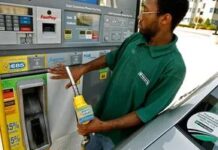
Liquid fuels like E85 and biodiesel? Easy. They come from slightly modified versions of your standard gas station pump. You pull up. You pump. You pay. It’s familiar.
Then there are the pressurized gases. CNG and LPG used to be the domain of the attendant. You rolled down your window. The guy with the clipboard did the work. It was slow. It was personal. But that’s changing.
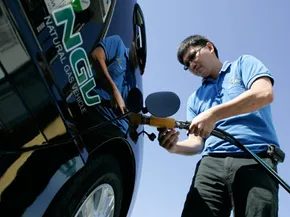
Self-service pumps for pressurized fuels are rolling out. They look like gas pumps. They act like gas pumps. You get a hose. You plug in. The machine calculates the volume and the cost. It’s 24/7 availability. No waiting for a human.
“Self-service pumps help make it possible to offer pressurized alternate fuels 24/7, just like gasoline and other liquid fuels.”
This shift matters. It’s not just about convenience. It’s about scalability. You can’t build a national network if every station needs a full-time attendant standing by a Propane tank.
The Regional Divide: Geography is Destiny
Will one fuel win? Probably not. The U.S. is too big, too varied, and too politically divided for a single victor. The map is already drawn in ink and soil.
In the East, electric vehicles (EVs) are taking over. Specifically, the dense metro areas. New York, Boston, Philly. The congestion is too high for internal combustion to make sense. The grid is already there. The charging ports are popping up like weeds. Analysts see this dominance as inevitable.
The Midwest? That’s ethanol’s playground. Corn grows there. Ethanol is made from corn. The supply chain is built into the local economy. It’s not glamorous, but it’s practical. If you’re in Iowa or Nebraska, you’re likely filling up on E85.
The West Coast is a different beast. Another electric megalopolis. Los Angeles to San Francisco. The push for zero-emission vehicles is strongest here. Biodiesel might creep in, but electrons are king.
What about the wide-open spaces? The American heartland where the horizon disappears? That’s where diesels and biodiesel thrive. The fuel efficiency is unmatched for long hauls. If you’re driving across Texas or the Dakotas, you want range. You want torque. You don’t want to stop every 200 miles for a charge.
The Landscape Ahead
We’re just scratching the surface. The next step is looking at the actual distribution of these stations. Where are they? Why are some areas ignored? How does the infrastructure density
You want to drive green. That’s great. But unless you live in a bubble, you need to know where to actually put the juice in your tank. Makers of alternative fuels aren’t just trying to save the planet; they’re trying to make sure you can fill up without pulling into a deserted field.
Some fuels are everywhere. You’ve seen the pumps. Others are scarce, hiding behind specialized attendants or requiring home installations. Here is the no-nonsense status report on what’s actually out there right now.
Flex-Fuel and Biodiesel: The Liquid Reality
Flex-Fuel Vehicles (FFVs) run on E85. That’s 85 percent ethanol, derived from renewable resources like corn or switchgrass, mixed with 15 percent gasoline. It’s the easiest switch to make. You pull up to a pump. You insert the nozzle. It looks just like a regular gas station. The infrastructure is mostly there.
Biodiesel is slightly different. It adds a green tint to diesel efficiency, both literally and figuratively. The standard is B20, which is 20 percent renewable biodiesel and 80 percent fossil fuel diesel. You’ll find this at dedicated stations, mostly regionally adjusted. It dispenses just like other liquid fuels, so no special adapters needed.
“Biodiesel blends add a green tint to diesel engine fuel efficiency.”
Natural Gas and Propane: High Pressure, High Complexity
Natural gas vehicles (NGVs) are a different beast. Most run on Compressed Natural Gas (CNG). Big trucks? They use Liquefied Natural Gas (LNG). You need special high-pressure tanks and extra vehicle equipment. You can’t just bolt this on to a Corolla.
“Bi-Fuel” vehicles are the hybrids of the gas world. They can switch between CNG and gasoline tanks. This is crucial for long hauls where CNG stations vanish. Fueling is usually done by an attendant at authorized centers. Self-service pumps are starting to appear, but don’t count on finding them in rural Kansas.
However, in California and a few other states, you can legally fuel your NGV at home. It requires a appliance called “Phill” (a home fueling station). It’s niche. It’s specific. But it exists.
Liquefied Petroleum Gas (LPG), also known as propane, is another clean-burning option. Factory LPG vehicles stopped being offered in 2004. If you want one, you’re looking at aftermarket conversions. These are readily available. You’ll find LPG at truck rental stores and RV centers. An attendant typically handles the fueling, though 24/7 self-service stations do exist.
Hydrogen and Electric: The Future (And The Present)
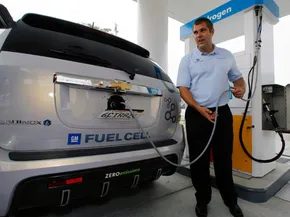
Hydrogen has promise. It has challenges. The infrastructure is sparse. Most stations supply commercial fleets with restricted access. Public self-service pumps are rare announcements. The vision is “hydrogen highways”—national corridors where you can drive coast-to-coast. We aren’t there yet.
Electric cars (EVs) and plug-in hybrids rely on charging stations. These sit in parking garages or on curbsides. But here’s the kicker: virtually any accessible conventional electrical outlet is a potential charging station. You don’t need a special pump. You need a plug.
Where Are These Stations? A Data Dive
How do you find them? You don’t guess. You use data.
The Alternative Fuels and Advanced Vehicles Data Center (AFDC), sponsored by the U.S. Department of Energy, is your primary resource. It maps over 6,100 alternative fueling locations across the United States. You search by address or ZIP code. It’s free. It’s accurate. Use it.
The AFDC report reveals stark regional disparities.
E85 Availability
Flex-Fuel owners have 1,860 locations across the lower 48 states.
* Minnesota: 358 locations (The leader).
* Illinois: 187 locations.
* Indiana, Iowa, Wisconsin: Over 100 each.
* New York: Just 30.
* New Jersey: Zero.
* California: Only 19.
It’s a Midwest phenomenon. If you’re in California or New Jersey, good luck.
Biodiesel Reach
There are 691 stations nationwide. At least one in every state.
* South Carolina: 75 stations.
* North Carolina: 69 stations.
* Washington: 42 stations.
* Oregon: 36 stations.
* California: 48 stations.
The Pacific Northwest and the Southeast are holding strong.
Natural Gas (CNG and LNG)
* CNG: 777 stations nationwide. California dominates with 189.
* LNG: Only 37 outlets nationally. 27 are in California.
If you drive a heavy-duty truck, you’re likely in California. Elsewhere, you’re planning your route carefully.
Propane (LPG)
Over 2,100 locations. It’s the most widely available alternative fuel.
* Texas: 485 stations.
Oil-rich Texas leads. It makes sense.
Hydrogen
Initiatives are concentrated.
* California: 27 of the 59 national stations.
* Michigan: 7 stations.
* 32 states: Zero stations.
Most of the country has no hydrogen infrastructure. Yet.
Electric Charging
* California: Over 400 public stations. Many are free-use, solar-powered.
* Oregon: 14 stations.
* Massachusetts: 12 stations.
* 32 states: No public charging stations reported.
* 12 states: Fewer than 10.
The gap is massive. California is in a league of its own.
The Bottom Line
Use the AFDC website. Check your locale. But don’t stop there.
Call the stations. Ask the attendants.
- What are the hours of operation?
- Is my vehicle compatible?
- Do I need special credentials or membership?
Information is power. You need to know this before you “go green.” The infrastructure is growing, but it’s uneven. Be prepared.
The Infrastructure Reality Check
Reading about alternative fuels is one thing. Driving down a road where you can actually buy them is another. The tech isn’t the bottleneck anymore. It’s the pipes, pumps, and plugs.
If you’re looking to ditch gasoline for something cleaner, you need to know where the stations are. And frankly, they aren’t everywhere.
E85 ethanol is your best bet if you live in the Midwest. Ford and others pushed hard for the “Midwest Ethanol Corridor,” creating a network of flex-fuel pumps across states like Iowa, Nebraska, and Illinois. If you’re outside that zone? You’re likely stuck at home.
Hydrogen is the opposite problem. Too few stations, but they’re popping up in pockets. Irvine, California got a new hydrogen filling station in late 2008. The “Hydrogen Highway” concept is real, but right now, it’s mostly a California dream. You can check maps at HydrogenCarsNow.com or the Fuel Cell Today archives to see where the three new U.S. stations opened up in August 2008. It’s sparse.
Natural gas has a foothold. Honda’s 2009 Civic GX is a dedicated natural gas vehicle (NGV). You don’t need a flex-fuel tank. You need a CNG dispenser. Kraus Global makes the dispensers you’ll see at these stations. Honda itself provides refueling maps for the Civic GX. It’s not just for fleet trucks anymore, but the infrastructure is still thin outside major metro areas.
LPG (Liquefied Petroleum Gas) is seeing a resurgence. Kenworth is producing LPG trucks, proving it works for heavy duty. But for consumers? It’s niche.
Charging Up: The EV Grid
Electric cars are the most talked about, but also the most misunderstood regarding daily use.
You can’t just “fill up.” You charge. And that’s the shift.
ChargePoint started installing public charging stations in early 2009. This was a big deal. It meant you didn’t have to rely solely on Level 2 home charging. The Electric Auto Association (EAA) maintains a database of EV charging maps and links. If you own an EV, you’re looking at those sites constantly.
The U.S. Department of Energy’s Alternative Fuels Data Center tracks all of this. It’s the definitive source for where advanced vehicles can actually operate. They cover everything from methanol to biodiesel.
The Carbon Math
Why do we care? Because the oil addiction is a problem.
The EPA’s SmartWay Grow & Go program tracks how freight and logistics can cut emissions. It’s not just about your sedan. It’s about the supply chain.
Carbon Counted breaks down alternative fuels and carbon footprints. The math varies.
- Biodiesel reduces lifecycle emissions significantly. The National Biodiesel Board has a buyer’s guide for consumers who want to support domestic production.
- Methanol is gaining traction. Gregory Dolan from the Methanol Institute argues the time has come for methanol fuels. It’s cleaner than gasoline in many metrics.
- Hydrogen is clean at the tailpipe. Zero emissions. But how you make the hydrogen matters. If you use natural gas reforming, you’re still emitting carbon upstream.
The Hybrid Compromise
If you aren’t ready to change your fuel source, you can hybridize.
How Hybrid Cars Work explains the energy recovery. You brake, you charge. You coast, you charge. It’s a small battery, not a wall plug.
Electric Car Batteries are getting better, too. But range anxiety is real. The ChargePoint network helps. So does the EPA’s Fuels and Fuel Additives guide.
The Bottom Line
There is no silver bullet.
- If you want E85, go West to East through the Midwest.
- If you want Hydrogen, stay in California.
- If you want Natural Gas, check Honda’s Civic GX map.
- If you want Electric, plan your route around ChargePoint.
The U.S. Department of Energy says the infrastructure is growing. It’s growing slowly.
You have to be intentional. You can’t just assume the pump will be there.
“America Needs a Natural Gas Transportation Infrastructure” – Michael Fitzsimmons, Seeking Alpha.
The infrastructure needs to catch up to the cars. We’re waiting.