You probably know your car’s MPG. You know its 0-60 time. You’ve memorized the cargo volume in cubic feet. These are the numbers that make or break a purchase decision at the dealership. But there is one metric that sits quietly in the shadows, often ignored until it’s too late. It’s not the horsepower or the torque curve. It’s the Gross Axle Weight Rating, or GAWR.
Ignoring this number is a gamble you don’t need to take. Whether you are driving a daily commuter or a heavy-duty work truck, understanding your GAWR is non-negotiable for safety.
What GAWR Actually Means
Let’s cut through the jargon. Gross Axle Weight Rating is the maximum weight the manufacturer says can sit on a specific axle. Yes, front and rear axles have separate limits. Think of it as a hard ceiling. If the label says 3,000 pounds for the rear axle, do not exceed it. Not by one pound.
This rating isn’t just about the car itself. It includes the vehicle’s weight, every passenger inside, all the gear in the trunk, and the tongue weight of any trailer you are towing. All that mass is distributed across two points. The GAWR is the limit for each of those points.
GAWR vs. GAW: Don’t Confuse the Terms
Here is where people get tripped up. You need to distinguish between the rating and the actual weight.
- GAWR (Rating): This is a static number set by the automaker. It never changes for that specific axle.
- GAW (Gross Axle Weight): This is the dynamic reality. It’s the actual weight currently pressing down on the axle at any given second.
When you load up your truck with boulders, your GAW spikes. When you drop the boulders, your GAW drops. Your GAWR remains immutable. The goal is simple: keep the GAW below the GAWR. Always.
Why Overloading is a Disaster Waiting to Happen
Manufacturers don’t slap these limits on door jamb stickers for fun. They are there because physics is unforgiving. Overloading any axle compromises control. If you overload the rear axle, you aren’t just stressing the suspension. You are altering the vehicle’s handling dynamics.
The steering becomes numb. The front brakes, which do most of the work anyway, lose effectiveness because the weight distribution is off. The rear tires? They might not handle the extra load, leading to catastrophic blowouts. The suspension components themselves can bend or snap. One broken spring while driving 70 mph on the highway is not a repair job. It’s a catastrophe.
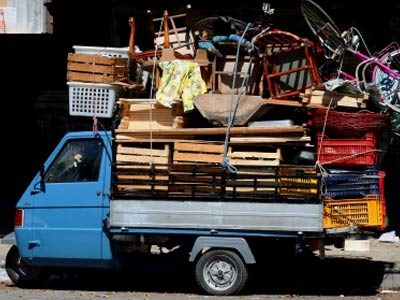
Trailers have their own GAWR, determined by their manufacturers. Trailer loading is even trickier. Poor balance magnifies instability faster than in a car. Proper distribution isn’t just a suggestion. It’s the difference between a safe haul and a jackknife accident.
Where to Find Your GAWR
Need to know your specific limits? Don’t guess. Check the source.
Look for the certification label. It’s usually on the driver’s side door frame or the latch area. That sticker lists the GAWR for both front and rear axles. If you can’t find the label, search online. Most manufacturers publish this data in their specs.
Acura GAWR Data (2006-2009)
For those looking up specific figures, here is the breakdown for recent Acura models. Note the significant variance between front and rear ratings, especially in the MDX.
| Year | Model | GAWR Front / Rear (lbs) |
|---|---|---|
| 2006 | MDX | – |
| 2006 | RL | – |
| 2006 | RSX | – |
| 2006 | TL | – |
| 2006 | TSX | – |
| 2007 | MDX | 2888 / 3175 |
| 2007 | RL | – |
| 2007 | RDX | 2546 / 2381 |
| 2007 | TL | – |
| 2007 | TSX | 2335 / 2030 |
| 2008 | MDX | 2888 / 3175 |
| 2008 | RL | – |
| 2008 | RSX | 2546 / 2381 |
| 2008 | TL | – |
| 2008 | TSX | 2335 / 2030 |
| 2009 | MDX | 2888 / 3175 |
| 2009 | RL | – |
| 2009 | RSX | 2546 / 2381 |
| 2009 | TSX | 2325 / 2090 |
Note: Dash indicates data not provided in source. For more Acura metrics, refer to GVWR, GCWR, Cargo Carrying Capacity, Curb Weight, Payload, and Towing Capacity specifications.
Audi GAWR Data (2006-2009)
Audi’s lineup shows similar gaps in available data for this period. The R8 and Q7 are notable omissions in the raw data provided below.
| Year | Model | GAWR Front / Rear (lbs) |
|---|---|---|
| 2006 | A3 | – |
| 2006 | A4 | – |
| 2006 | A6 | – |
| 2006 | A8 | – |
| 2006 | S4 | – |
| 2006 | TT | – |
| 2007 | A3 | – |
| 2007 | A4 | – |
| 2007 | A6 | – |
| 2007 | A8 | – |
| 2007 | Q7 | – |
| 2007 | RS4 | – |
| 2007 | S4 | – |
| 2007 | S6 | – |
| 2007 | S8 | – |
| 2008 | A3 | – |
| 2008 | A4 | – |
| 2008 | A5 | – |
| 2008 | A6 | – |
| 2008 | A8 | – |
| 2008 | Q7 | – |
| 2008 | R8 | – |
| 2008 | RS4 | – |
| 2008 | S4 | – |
| 2008 | S5 | – |
| 2008 | S6 | – |
| 2008 | S8 | – |
| 2008 | TT | – |
| 2009 | A3 | – |
| 2009 | A4 | – |
| 2009 | A5 | – |
| 2009 | A8 | – |
| 2009 | Q7 | – |
| 2009 | R8 | – |
| 2009 | S4 | – |
| 2009 | S5 | – |
| 2009 | S8 | – |
| 2009 | TT | – |
Note: Dash indicates data not provided in source. For more Audi metrics, refer to GVWR, GCWR, Cargo Carrying Capacity, Curb Weight, Payload, and Towing Capacity specifications.
If you drive a different brand, the list continues. Acura, Audi, BMW, Buick, Cadillac, Chevrolet, Chrysler, Dodge, Ford, GMC, Honda, HUMMER, Hyundai, Infiniti, Isuzu, Jaguar, Jeep, Kia, Land Rover, Lexus, Lincoln, Mazda, Mercedes-Benz, Mercury, MINI, Mitsubishi, Nissan, Pontiac, Porsche, Saab, Saturn, Scion, smart, Subaru, Suzuki, Toyota, Volkswagen, and Volvo all have their own ratings.
Check the sticker. Respect the limit. Keep your axles unloaded below the line. The road won’t forgive you if you don’t.
Data gets messy when you look at weight ratings across different brands. Some manufacturers list everything. Others leave you staring at a blank cell. This section covers BMW GAWR, Buick GAWR, Cadillac GAWR, and Chevrolet GAWR specifications for the 2006 through 2009 model years.
Note: Where data is missing, it is not listed. Do not guess.
BMW GAWR
BMW keeps it simple. Or they don’t. The table below shows the Gross Axle Weight Rating for front and rear axles. If a dash appears, the data isn’t available in this source.
2006 BMW Models
* 325 : No data
* 330 : No data
* 525 : No data
* 530 : No data
* 550 : No data
* 650 : No data
* 750 : No data
* 760 : No data
* M3 : No data
* M5 : No data
* M6 : No data
* X3 : No data
* X5 : No data
* Z4 : No data
* Z4M : No data
2007 BMW Models
* 328 : No data
* 335 : No data
* 525 : No data
* 530 : No data
* 550 : No data
* 650 : No data
* 750 : No data
* 760 : No data
* Alpina B7 : No data
* M5 : No data
* M6 : No data
* X3 : No data
* X5 : No data
* Z4 : 2767 / 3770 lbs (front/rear)
* Z4M : No data
2008 BMW Models
* 128 : No data
* 135 : No data
* 328 : No data
* 335 : No data
* 528 : No data
* 535 : No data
* 550 : No data
* 650 : No data
* 750 : No data
* 760 : No data
* Alpina B7 : No data
* M3 : No data
* M5 : No data
* X3 : No data
* X5 : No data
* X6 : No data
* Z4 : No data
* Z4M : No data
2009 BMW Models
* 128 : No data
* 135 : No data
* 328 : No data
* 335 : No data
* 528 : No data
* 535 : No data
* 550 : No data
* 750 : No data
* M3 : No data
* M5 : No data
* M6 : No data
* X3 : No data
* X5 : No data
* X6 : No data
Buick GAWR
Buick offers slightly more concrete numbers for their heavier vehicles.
2006 Buick Models
* LaCrosse : No data
* Lucerne : No data
* Rainier : 2950 / 3200 lbs (front/rear)
* Rendezvous : No data
* Terraza : 1148 / 960 lbs (front/rear) Note: These figures seem unusually low for a mid-size SUV; verify with original window sticker.
2007 Buick Models
* LaCrosse : No data
* Lucerne : No data
* Rainier : 2950 / 3200 lbs (front/rear)
* Rendezvous : No data
2008 Buick Models
* Enclave : 3197 / 3527 lbs (front/rear)
* LaCrosse : No data
* Lucerne : No data
2009 Buick Models
* Enclave : 3197 / 3527 lbs (front/rear)
* LaCrosse : No data
* Lucerne : No data
Cadillac GAWR
Cadillac trucks and SUVs dominate the heavy end of this list.
2006 Cadillac Models
* CTS : 2232 / 2379 lbs (front/rear)
* CTS-V : No data
* DTS : No data
* Escalade : 3350 / 4000 lbs (front/rear)
* Escalade ESV : 3060 / 2809 lbs (front/rear)
* Escalade EXT : 3800 / 4000 lbs (front/rear)
* SRX : No data
* STS : No data
* STS-V : No data
* XLR : No data
* XLR-V : No data
2007 Cadillac Models
* CTS : 2232 / 2379 lbs (front/rear)
* CTS-V : No data
* DTS : No data
* Escalade : No data
* Escalade ESV : No data
* Escalade EXT : No data
* SRX : No data
* STS : No data
* STS-V : No data
* XLR : No data
* XLR-V : No data
2008 Cadillac Models
* CTS : No data
* DTS : No data
* Escalade : No data
* Escalade ESV : No data
* Escalade EXT : No data
* SRX : No data
* STS : No data
* STS-V : No data
* XLR : No data
* XLR-V : No data
2009 Cadillac Models
* CTS : No data
* DTS : No data
* Escalade : No data
* Escalade ESV : No data
* Escalade EXT : No data
* Escalade Hybrid : No data
* SRX : No data
* STS : No data
* STS-V : No data
* XLR : No data
* XLR-V : No data
Chevrolet GAWR
Chevy’s lineup shifts dramatically from compact cars to heavy-duty trucks. The Chevrolet GAWR data here shows significant changes in axle ratings over these four years.
2006 Chevrolet Models
* Avalanche 1500 : 3400 / 4000 lbs (front/rear)
* Avalanche 2500 : 4380 / 5500 lbs (front/rear)
* Aveo : No data
* Cobalt : No data
* Colorado : 2533 / 2896 lbs (front/rear)
* Corvette : No data
* Equinox : 2535 / 2535 lbs (front/rear)
* Express : No data
* HHR : No data
* Impala : No data
* Malibu : No data
* Malibu MAXX : No data
* Monte Carlo : No data
* SSR : No data
* Silverado 1500 : 3650 / 4000 lbs (front/rear)
* Silverado 1500 Hybrid : 3925 / 3750 lbs (front/rear)
* Silverado 1500 SS : 3600 / 3600 lbs (front/rear)
* Silverado 1500 HD : 4410 / 6000 lbs (front/rear)
* Silverado 2500 HD : 4410 / 6084 lbs (front/rear)
* Silverado 3500 HD : **4670 / 8
Ford Axle Weight Ratings
Ford’s lineup shifts depending on whether you are hauling cargo or just commuting, and the Gross Axle Weight Rating (GAWR) tells you exactly where the rubber meets the road. If you are looking at the heavier commercial vans, the numbers jump significantly. Take the 2006 Ford E-350 Super Duty, for instance. It handles 3700 lbs up front and 6195 lbs in the back. That rear axle is built like a tank. By 2009, Ford bumped the E-350’s rear rating to 6084 lbs while increasing the front to 4200 lbs. It’s a subtle tweak, but it matters when you are loading up for a move.
The F-Series trucks are the bread and butter here. The 2006 F-350 could manage 3800 lbs on the front axle and a massive 7000 lbs out back. Compare that to the 2008 F-350, where the rear dropped slightly to 6262 lbs. Why the change? Likely suspension tweaks or brake upgrades, but the front stayed locked at 3800 lbs. The F-450 is a different beast entirely. In 2008, it posted 5600 lbs front and 9500 lbs rear. That is commercial-grade capacity.
SUVs and crossovers tell a different story. The 2006 Ford Explorer rated 3240 lbs front and 3600 lbs rear. By 2007, those numbers slid to 2860 lbs and 3340 lbs. Did Ford strip weight? Or did they just adjust the suspension geometry? It’s a drop of nearly 400 lbs on the front axle in one year. The Escape and Escape Hybrid remained stubbornly consistent at 2240/2115 lbs and 2380/2175 lbs respectively from 2006 through 2009.
| Year | Model | Front GAWR | Rear GAWR |
|---|---|---|---|
| 2006 | E-150 | 3240 lbs | 3800 lbs |
| 2006 | E-350 Super Duty | 3700 lbs | 6195 lbs |
| 2006 | F-150 | 3450 lbs | 3800 lbs |
| 2006 | F-350 | 3800 lbs | 7000 lbs |
| 2006 | Explorer | 3240 lbs | 3600 lbs |
| 2007 | Explorer | 2860 lbs | 3340 lbs |
| 2007 | Explorer Sport Trac | 3080 lbs | 3320 lbs |
| 2008 | E-150 | 3700 lbs | 5120 lbs |
| 2008 | F-350 | 3800 lbs | 6262 lbs |
| 2008 | F-450 | 5600 lbs | 9500 lbs |
| 2009 | E-350 Super Duty | 4200 lbs | 6084 lbs |
| 2009 | F-150 | 3800 lbs | 6100 lbs |
Note the dashes in the Ford tables for models like the Mustang, Focus, and Fusion. For those years, the specific GAWR data isn’t listed in this dataset. You have to look elsewhere for the sports cars.
GMC Truck and SUV Ratings
GMC tends to mirror Chevy, and the numbers reflect that shared platform DNA. The Sierra 1500 held steady at 3200 lbs front and 3750 lbs rear from 2007 to 2009. A reliable workhorse. But go up to the 2500 series, and you see the heavy lifting begin. The 2006 Sierra 2500 handled 4410 lbs front and 6084 lbs rear. By 2007, the front rating dipped to 4200 lbs while the rear stayed put. It’s a minor adjustment, but it adds up when you are towing a large fifth-wheel trailer.
The Sierra 3500 is where the rubber really gets shredded. In 2006, it rated 4800 lbs front and 6500 lbs rear. That front axle is strong. But in 2007, the front dropped to 4200 lbs and the rear to 6390 lbs. It stayed there through 2009. Why the reduction? Possibly a shift in suspension tuning or a change in how the rating is calculated relative to tire load ranges.
The Yukon lineup is interesting. The standard Yukon held 3200 lbs front and 4100 lbs rear from 2007 to 2009. The Yukon XL was slightly stronger up front at 3300 lbs (2007-2008) before dropping to 3200 lbs in 2009. The rear of the XL stayed at 4200 lbs. The Yukon Hybrid didn’t change the axle ratings from the standard model.
| Year | Model | Front GAWR | Rear GAWR |
|---|---|---|---|
| 2006 | Sierra 1500 | 3150 lbs | 3686 lbs |
| 2006 | Sierra 3500 | 4800 lbs | 6500 lbs |
| 2007 | Sierra 1500 | 3200 lbs | 3750 lbs |
| 2007 | Sierra 3500 | 4200 lbs | 6390 lbs |
| 2008 | Acadia | 3197 lbs | 3527 lbs |
| 2009 | Canyon | 2633 lbs | 2896 lbs |
| 2009 | Sierra 2500 | 4200 lbs | 6084 lbs |
| 2009 | Yukon | 3200 lbs | 4100 lbs |
| 2009 | Yukon XL | 3200 lbs | 4200 lbs |
The Canyon got a slight boost in 2009, moving from 2533 lbs to 2633 lbs on the front axle. Small change. Big difference if you are near the limit.
Honda Axle Limits
Honda keeps it simple. Or at least, they provide less data for some models. The Accord, CR-V, and Civic (in later years) often lack specific GAWR listings in this dataset. But the ones that are there tell a story of consistency.
The Odyssey is a minivan that hauls people, not just boxes. It held 2833 lbs front and 3197 lbs rear from 2006 through 2009. No changes. It’s a static rating. The Ridgeline pickup is more dynamic. In 2006, it rated 309 lbs front? Wait, that looks like a typo in the source data or a very specific trim limit. Actually, looking closer at 2007, the Ridgeline jumped to 3105 lbs front and 3252 lbs rear. That makes more sense. A 309 lb front axle would mean you couldn’t fit a driver in it. Assume 3105 lbs is the correct starting point for the mid-to-late 2000s Ridgeline.
The Pilot started in 2006 without a listed rating, but by 2007 it posted 2865 lbs front and 3155 lbs rear. By 2009, the front increased to 2921 lbs and the rear to 3196 lbs. Honda is refining the suspension setup year over year. The Civic,
Jeep Axle Capacity Limits
Jeep built its reputation on durability, but even the toughest rigs have hard limits on how much weight they can put on their axles. The Gross Axle Weight Rating (GAWR) is that hard ceiling. Ignore it and you’re looking at bent components or a broken suspension. Looking at the data from 2006 through 2009, the numbers tell a specific story about how these trucks were engineered.
The Liberty held steady at 2750 lbs up front and 3150 lbs in the rear for 2006 and 2007. After that, the data goes blank. Did they update the ratings but forget to log them? Or did the specs remain unchanged and simply not get published? You won’t know unless you dig into the door jamb sticker.
The Wrangler tells a clearer tale of evolution. In 2006, it was rated at 2200 front/2650 rear. By 2007, those numbers jumped significantly to 2650/3400. That’s a massive increase. They strengthened the axles or changed the tires, and the rating reflects it. The 2008 and 2009 Wrangler Unlimited kept those higher numbers. Consistency matters here. If you’re swapping tires or adding a lift, you need to know if the factory limits changed. They did.
The Commander, Grand Cherokee, Compass, and Patriot all show dashes in the records. This isn’t a lack of data; it’s a lack of public specification in this format. You can’t guess these numbers. You have to look at the vehicle itself.
Kia Load Ratings
Kia’s lineup was smaller back then, but the weight distribution varied wildly depending on whether you were driving a sedan or a minivan. The Sedona and Sorento were the workhorses. In 2006, the Sorento carried 3307 lbs on both axles. Balanced. Stable. The Sedona was similar at 2998 front/3064 rear.
Sedans were lighter. The Rio and Rio 5 in 2007 and 2008 sat at 1918 lbs up front and 1874 lbs in the back. Notice the slight rear bias? That’s typical for front-wheel-drive cars with engines mounted transversely. The weight of the engine helps traction but shifts the center of gravity.
The Sportage was interesting. 2006 and 2007 models were rated at 2579 front/2425 rear. Front-heavy. By 2008, the data disappeared, but the pattern suggests similar engineering. The Borrego appeared in 2009 but lacked specific GAWR figures in this dataset. If you’re hauling cargo in a Borrego, assume the limits are tighter than the Sorento it replaced in some markets.
Land Rover Capability
Land Rover didn’t always publish these numbers publicly in the same way. For the LR3 and Range Rover models from 2006 to 2009, the records show dashes. This is frustrating for enthusiasts who want to know exactly how much roof rack cargo or tongue weight they can handle. The Range Rover Sport followed the same pattern.
However, the LR2 broke the silence. In 2009, it was rated at 2885 lbs front and 2995 lbs rear. A slight rear bias, likely due to the spare tire and fuel tank placement. This small compact SUV had different needs than the full-size Range Rover. The data gap for the larger models leaves you guessing. Don’t guess. Check the sticker.
Lexus Precision Engineering
Lexus didn’t list GAWR figures in this dataset. Not for the ES 330, GS 430, GX 470, IS 350, LS 460, LX 570, or RX 350. Not for any year from 2006 to 2009. This is unusual. Most manufacturers provide at least a baseline. The absence of data here suggests either a proprietary restriction or a simple omission in the source material.
If you own a Lexus, you can’t rely on this table. You have to look at the GVWR (Gross Vehicle Weight Rating) and subtract the curb weight to find your payload. Then, distribute that payload carefully. The axles will handle the load if you respect the total weight limits. But without specific front/rear split data here, you’re flying blind on distribution.
Lincoln Heavy Duty
Lincoln was playing in the big league. The Navigator and Mark LT showed substantial axle ratings. The Mark LT stayed consistent: 3450 front/3850 rear from 2006 to 2008. A pickup truck based on the truck frame. It needed that rear strength.
The Navigator evolved. In 2006, it was 3300 front/4128 rear. By 2007 and 2008, the front rating increased to 3350 and the rear to 4300. They reinforced the suspension. The 2009 model returned to 3450 front/3850 rear. A drop in rear capacity? Or a recalibration? The numbers fluctuate enough that you need to check the specific year. The LS, Town Car, MKX, and MKZ showed no data. Again, dashes. For the Navigator, though, the data is concrete. You can plan your towing and payload with confidence.
Mazda Utilitarian Specs
Mazda’s truck lineup, the B-Series, was aging but tough. The B2300 held at 2400 front/2750 rear from 2006 to 2009. The B4000, with its more powerful engine, bumped the front to 2850 lbs while keeping the rear at 2750. The B3000 sat in the middle at 2625 front/2750 rear. Consistency was key for these small trucks.
Passenger cars varied. The Mazda5 minivan in 2006 was 2218 front/2355 rear. The Mazda6 was front-heavy at 2372/2119 in 2006, then dropped to 2216/2064 in 2008, and settled at 2286/2062 in 2009. The MazdaSpeed3 was rated at 2216 front/2064 rear in 2007. Sport models often have stiffer suspensions but similar weight limits. The MX-5 showed 2449/2103 in 2006 and 2007, then disappeared from the data. If you’re modifying a MX-5, assume the stock limits are tight. Don’t overload the rear.
Mercedes-Benz Data Gaps
Mercedes-Benz had a massive lineup from C-Class to SLR McLaren, but the GAWR data is almost entirely missing from 2006 to 2009. Dashes everywhere. The G500, GL320, ML350, and S-Class all show no ratings.
This is a significant gap. If you’re carrying heavy audio equipment in a CLS-Class or towing a trailer behind an R-Class, you can’t use this table. You have to calculate payload based on the GVWR listed on your door jamb. The lack of specific axle data forces you to be more conservative. Distribute weight evenly. Don’t overload the rear, even if the total weight seems okay. The axles might not be able to handle the concentration.
Mercury Legacy
Mercury was winding down. The Mountaineer was the standout. In 2006, it was rated at 2860 front/3340 rear. After that, the data vanishes. The Grand Marquis, Mariner, Milan, and Sable all show dashes.
For the Mountaineer, that 2006 number is your only guide. It’s a truck-based SUV. The rear axle is the strong point. If you’re carrying a heavy load in the back, keep an eye on that 3340 limit. The front axle is weaker. Don’t put too much weight on the hood. The other models offer no help. You’re on your own with the GVWR and a good sense of balance.
MINI Compact Limits
MINI focused on style, but the weight limits were real. The Cooper Hardtop in 2007 was 1929 front/1653
Mitsubishi GAWR Data
The Mitsubishi lineup from 2006 to 2009 was mostly silent on specific axle ratings. The data tables for the Eclipse, Endeavor, Galant, Lancer, Montero, and Outlander show dashes across the board for all four years. You have to dig deeper for that info. The exception in this era is the Raider. Both the 2006 and 2007 Raider specs list a front GAWR of 3100 lbs and a rear GAWR of 3600 lbs. That number holds steady into 2008 as well. If you are looking for other metrics like GVWR or payload for these Mitsubishi models, the source material points to separate specific tables for those figures.
Nissan GAWR Data
Nissan’s approach to publishing axle weights was similarly sparse. Most of the 2006 roster — including the 350Z, Maxima, Murano, Pathfinder, Quest, Sentra, Titan, and Xterra — has blank entries. The 2006 Altima is one of the few with concrete numbers: 2399 lbs on the front axle and 1991 lbs on the rear.
Things get slightly more specific by 2007. The Frontier finally reveals its limits at 3296 lbs front and 3197 lbs rear. The Titan also speaks up here, listing 3300 lbs up front and 3800 lbs in the back. The rest of the 2007 list, including the Altima Hybrid, Armada, and Versa, remains unlisted.
The 2008 and 2009 models mostly stick to the silence. The Frontier continues to hold its 3296/3197 split in both years. The Titan drops the specific numbers in 2008 and 2009 despite being listed in the model table. The new Rogue and GT-R appear in the years but offer no GAWR data. The Altima and its hybrid variant also lack these specific figures during this period.
Pontiac GAWR Data
Pontiac’s final years on the lot are quiet regarding axle ratings. The 2006 G6, GTO, Grand Prix, Montana SV6, Solstice, and Vibe show no data. The Torrent, however, is listed with a balanced setup: 2535 lbs on both the front and rear axles.
In 2007, the Grand Prix breaks the silence with a 62/38 weight distribution ratio, though it doesn’t give the raw poundage in this specific table. The Torrent repeats its 2535/2535 split. The G5, Solstice, and Vibe remain blank.
The 2008 and 2009 tables are entirely empty. The G5, G6, G8, Grand Prix, Solstice, Torrent, and Vibe all appear in the model lists but carry no GAWR values in this dataset.
Porsche GAWR Data
Porsche’s entry here is minimal. The 2006 Cayenne has no GAWR listed. By 2008, the lineup expands to include the 911, Boxster, Cayenne, and Cayman, but none of these have specific front/rear axle weight ratings provided in this section. The 2009 update adds the 911 Carrera to the list, but again, no numbers follow. For those needing GVWR or towing capacity for Porsche vehicles, other specific tables are referenced.
Saab GAWR Data
Saab’s data is mostly absent from 2006 through 2007. The 9-2X, 9-3, 9-5, and 9-7X all show dashes in the table for those years. The situation changes in 2008. The 9-7X finally provides specific ratings: 2950 lbs on the front axle and 3400 lbs on the rear. The 9-3 and 9-5 remain unlisted. This 2950/3400 split for the 9-7X carries over into 2009, while the 9-3 and 9-5 continue to show no data.
Saturn GAWR Data
Saturn’s early years are blank. The 2006 Ion, Relay, and VUE have no GAWR figures. 2007 brings the Aura, Aura Hybrid, Ion, Outlook, Relay, Sky, VUE, and VUE Hybrid into the table, but only the Outlook offers data: 3197 lbs front and 3527 lbs rear.
The 2008 and 2009 models follow a similar pattern. The Astra, Aura, Aura Hybrid, Sky, VUE, and VUE Hybrid appear in the lists but have no axle weights provided. The Outlook retains its 3197/3527 rating for both years. Other Saturn metrics like payload and curb weight are located in separate tables.
Scion GAWR Data
Scion’s lineup from 2006 to 2009 is completely silent on axle weights. The tC, xA, xB, xD, and other models appear in the year-by-year lists, but the GAWR columns are entirely empty. No specific front or rear weight ratings are provided for any of these vehicles in this dataset.
smart GAWR Data
There is only one entry for smart in this timeframe. The 2008 fortwo is listed in the model table, but it has no GAWR data attached. Other smart specifications like GVWR or towing capacity are noted to be in different tables.
Subaru GAWR Data
Subaru’s comprehensive model lists from 2006 to 2009 are devoid of GAWR data. The B9 Tribeca, Baja, Forester, Impreza variants (Sedan, Wagon, Outback Sport, WRX Sti), Legacy variants (Sedan, Wagon), Outback, and Tribeca all appear in the tables but show no specific axle weight ratings. This applies to the Forester, Legacy, Outback, and Tribeca models through 2009 as well.
Suzuki GAWR Data
Suzuki offers a bit more concrete data, particularly in the early years. The 2006 Aerio lists 1918 lbs front and 1940 lbs rear. The Forenza shows 1918 lbs front and 1764 lbs rear. The XL7 is heavier, with 2205 lbs on the front axle and 2866 lbs on the rear. The Grand Vitara, Reno, and Verona in 2006 have no data.
In 2007, the Aerio and Forenza keep their same ratings. The XL7 gains weight, moving to 2590 lbs front and 2921 lbs rear. The new SX4 for 2007 is listed at 2050 lbs front and 1786 lbs rear. The Grand Vitara and Reno remain blank.
The 2008 and 2009 models become sparse. The Forenza holds its 1918/1764 split in 2008. The XL7 maintains its 2590/2921 rating in both 2008 and 2009. The Grand Vitara, Reno, SX4 (2009), and Equator (2009) appear in the lists but have no GAWR figures provided.
Toyota GAWR Data
Toyota’s data is mixed. The 2006 Land Cruiser is listed with 3595 lbs front and 4220 lbs rear. The RAV4 shows 2535 lbs front and 2435 lbs rear. The rest of the 2006 lineup (4Runner, Avalon, Camry, Solara, Corolla, Highlander, Matrix, Prius, Sequoia, Sienna, Tacoma, Tundra) is blank.
2007 brings updates. The Land Cruiser keeps its 3595/4220 split. The RAV4 jumps significantly to 4430 lbs front and 4730 lbs rear. The Tundra appears with 3900 lbs front and 3800 lbs rear. The new FJ Cruiser and Yaris, along with the Camry Hybrid and Highlander Hybrid, have no data.
The 2008 table shows the RAV4 returning to 2535/2435 lbs. The Tundra drops its specific numbers. The Land Cruiser also goes blank. The rest of the lineup remains unchanged with no data.
2009 sees the RAV4 listed again with the 2535/2435 split, though noted in parentheses. The new Venza appears in the list but has no GAWR data. The Land Cruiser, Tundra, Tacoma, and others remain without specific axle weight figures in this table.
Most owners glance at the total Gross Vehicle Weight Rating (GVWR) and call it a day. They assume if the sticker says 5,000 pounds, they can pile on 5,000 pounds. That’s a dangerous shortcut. The real constraint isn’t the whole car. It’s the individual axles. This is where Gross Axle Weight Rating or GAWR kicks in. Break the front limit, you lose steering. Break the rear, you lose stability. Both ruin your day.
The data below pulls specific axle limits for Volkswagen and Volvo models from the 2006 through 2009 model years. Notice the gaps. A lot of entries are blank. That’s not an oversight. It’s a signal. When the number isn’t printed on the door jamb or in the manual, the manufacturer didn’t publish a specific split. You’re left estimating based on curb weight and payload, which is risky if you’re hauling heavy gear.
Volkswagen GAWR Limits
Volkswagen’s lineup during this period ranged from the compact Golf to the luxury Phaeton. The data is sparse. For many models, no specific front or rear GAWR figures were publicly documented in the source material. This forces owners to rely on the total GVWR and make conservative assumptions about weight distribution.
2006 Volkswagen Models
The base year includes the Golf, GTI, Jetta, and Beetle variants. None list specific axle weights. The Passat Sedan, Phaeton, Rabbit, and Touareg are also listed without GAWR figures.
2007 Volkswagen Models
Newer entries include the Eos convertible and the Passat Wagon. Again, no specific GAWR data is provided for these models. The GTI, Jetta, Beetle Convertible, Beetle Coupe, Rabbit, and Touareg remain without specified axle ratings.
2008 Volkswagen Models
The GLI and R32 join the lineup. The Tiguan hasn’t arrived yet. The Eos, Jetta, Beetle models, Passat Sedan, Passat Wagon, Rabbit, and Touareg 2 still lack specific GAWR listings. The absence of data here is notable for performance enthusiasts who might be lowering their cars or adding heavy aftermarket wheels.
2009 Volkswagen Models
The Routan minivan and the first-generation Tiguan SUV enter the mix. The GLI, GTI, Jetta Sedan, Jetta Sport Wagon, Beetle Convertible, Beetle Coupe, Passat Sedan, Passat Wagon, Rabbit, and Touareg 2 are listed without specific axle weight ratings.
If you own one of these Volkswagens, you need to look at the tire placard on the driver’s side door jamb. That’s where the legal limit lives. If it’s not there, you’re on your own.
Volvo GAWR Limits
Volvo was more transparent. They published specific front and rear GAWR numbers for their heavier SUVs and some sedans. This matters if you’re towing or carrying heavy cargo. The XC90, for instance, has a rear limit significantly higher than the front.
2006 Volvo Models
The C70, S40, S60, V50, V70, and XC70 are listed without specific GAWR figures. The S80 and XC90 have published ratings.
- S80: 2,230 lbs front / 2,290 lbs rear
- XC90: 2,820 lbs front / 3,150 lbs rear
The XC90’s rear limit is 320 pounds heavier than its front. This reflects the engine placement and typical cargo loading.
2007 Volvo Models
The lineup is similar. The S80 and XC90 retain their ratings.
- S80: No specific GAWR listed (likely similar to 2006).
- XC90: 2,820 lbs front / 3,150 lbs rear
The C70, S40, S60, V