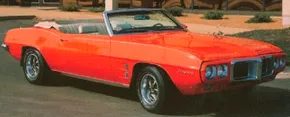
Less than twenty-four months after the original Firebird hit the streets, Pontiac decided the first generation needed an update. The result was a 1969 model that stretched 2.3 inches longer and gained an inch in width. It wasn’t just about numbers, though. The wheel arches flattened out, giving the car a more planted stance, while windsplits began decorating the bodysides and front fenders.
The Endura Front End and Heavier Stance
The most obvious change lived up front. Pontiac wrapped the nose in Endura plastic, a material that doubled as the bumper. It was a bold move that gave the Firebird a distinct look compared to its 1967 and 1968 predecessors. The split grille shrank, narrowing significantly, while the quad headlamps moved into separate compartments.
The rear stayed relatively consistent with slim, fluted taillamps, but they sat on a revised panel. The overall effect was a car that looked heavier. Some of the GTO’s aggressive character had leaked over into the Firebird design, making it feel less like a pony car and more like a muscle car in waiting.
Sprint Power and Handling
Under the hood, the base engine remained the 175-horsepower, 250-cid overhead-cam six. But if you wanted performance, you looked to the Sprint. This trim level got a more potent 230-horsepower version of that six-cylinder engine. It breathed through a four-barrel carburetor instead of the single-throat setup on the base model.
For an extra $121, the Sprint package included:
* Racing stripes
* Sport suspension
Contemporary testers loved it. They found the Sprint delightfully responsive on the open road, particularly when mated to a four-speed manual transmission. It was quick, sharp, and exactly what enthusiasts were looking for in a mid-60s pony car.
V-8 Options: Base vs. HO
For those who believed horsepower comes in cylinders, not sixes, Pontiac offered the 350 cubic-inch V-8. The standard 350 delivered 265 bhp on regular fuel. It was a solid, reliable powerplant that handled daily driving with ease.
But if you wanted more, there was the 350 HO (High Output). This engine featured new cylinder heads and a camshaft with higher lift. It came paired with a heavy-duty three-speed transmission and dual exhausts. There was one catch, however. Ordering the 350 HO meant you forfeited the side stripes that came with the Sprint package.
The 1969 Firebird wasn’t just a facelift. It was a refinement that tightened up the design and expanded the powertrain options. It kept the soul of the original while adding enough weight and presence to stand out in a crowded segment. The question now was whether the heavier stance would compromise the agile handling that made the first year so special. Early tests suggested the balance held. But as the year progressed, rumors of more powerful engines began to swirl.
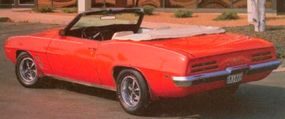
The 400 HO and Ram Air Dominance
The lineup got serious when Pontiac introduced the muscular 330 horsepower 400. It wasn’t just about raw power though. You got hood scoops to feed those cylinders, a special handling suspension to keep the nose down, and chrome engine dress-up components that screamed performance under the hood.
The old-school 400 HO was gone. Replaced by two distinct Ram Air versions you could order. The top-tier Ram Air IV was the real threat. High-output cam. Oversize valves. The result? Quarter-mile times near 14 seconds. That’s not just fast. That’s territory that made other muscle cars look sluggish.
Inside, the Firebird got a fresh look. New instrument-panel facing. A brand-new steering wheel. It felt newer. Sharper.
Options piled up fast. Rally II wheels were popular. But for the first time ever, you could spec all-leather bucket seats. Luxury meets aggression.
Safety didn’t get ignored. Shoulder belts were standard in coupes. Bench seats were optional, sure, but nobody really bought them. They wanted buckets. Everyone wanted buckets.
Brakes got the attention they deserved. Close to one-fourth of Firebirds rolled off the line with front disc brakes. Essential when you’re packing 330 horses.
To learn more about muscle cars, see:
-
Pontiac Firebird Reviews by Consumer Guide
-
Muscle Cars