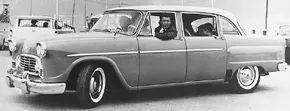
Checker Automobile Corporation didn’t start out trying to seduce suburban families. Founded in 1922 in Kalamazoo, Michigan, the company built its reputation on one thing: indestructible taxicabs and airport limousines. For decades, the Kalamazoo factory ignored private buyers. Then, in 1959, they finally offered the Superba to the public. Some industry lore suggests “pleasure cars” were sold as early as 1948, but Checker stuck to its guns. 1959 was the official debut.
Finding a dealer was nearly impossible. Checker never expanded its network, leaving the Superba a rare sight on civilian roads. What you did get was a vehicle that looked less like a car and more like a rolling brick. It retained the tank-like silhouette of the mid-1950s to mid-1980s cabs. The A8 chassis, introduced in 1956, featured a 120-inch wheelbase. That was compact by 1950s standards, but heavy. Sedans tipped the scales at 3,400 pounds. The boxy wagons weighed in closer to 3,800.
Morris Markin, the founder, was a man of few changes. He refused to alter a design that worked for taxi drivers who needed reliability over style. If it survived a crash and could run all day, he kept it. The Superba was no different. Aside from a front-end facelift featuring trendy quad headlamps and the removal of the “hire light,” it was essentially the A8 in a different coat. Standard trim came in sedan and wagon configurations. Special trim added minor interior deluxe touches, but the difference was negligible.
Powering the Beast
Under the hood sat a 226-cubic-inch L-head six from Continental Motor Company. This was the same engine Kaiser had used previously, but Checker offered it in two distinct flavors with zero price difference.
The side-valve version ran on a low 7.3:1 compression ratio. It produced a pathetic 80 horsepower. It was clearly designed for regions with abysmal fuel quality, where high-octane gas wasn’t an option. The overhead-valve (ohv) unit was the better bet. It squeezed the mixture at 8:1 compression and delivered a respectable 122 bhp. Drivers could choose between a standard three-speed column-shift manual or a Borg-Warner automatic transmission.
Interior Practicality Over Luxury
Checker prioritized function. The sedan could be equipped with rear jump seats, bringing the total passenger capacity to eight. This was a direct carryover from its taxi heritage. The wagon featured a roll-down tailgate window and a similarly roomy back seat. Folding these seats down created a massive cargo deck. Uniquely, the seat-folding mechanism was powered by an electric servo. This gimmick, combined with the extra bodywork, made the wagon roughly $350 more expensive than the sedan.
Checker also refused to shrink its wheels. While mainstream American cars rolled on 14-inch rims in 1959, the Superba stuck with 15s. The larger diameter provided a smoother ride over the pothole-ravaged streets of urban America. The tall doors and ruler-flat floors were another taxi holdover. They ensured easy entry and exit, plus plenty of foot space for passengers in hats and coats.
Luxury was not on the menu. The interior featured rubber mats instead of carpeting. The headliner was basic hardboard. Safety features common in the late ’50s were conspicuous by their absence. There were no padded dashboards. No sun visors. No dished steering wheel. No seatbelts. The dashboard itself was flat-faced with plain round gauges. It looked like a 1951 Plymouth design, and remarkably, that exact dashboard layout would remain unchanged until Checker closed its doors decades later.
Why the Checker Superba Matters Today
If you are looking for a piece of automotive history that defies the typical American car narrative, the Checker Superba is it. It wasn’t built for speed or style. It was built to survive.
“There’d be no change to this dumpy but practical design so long as there were buyers for reliable, durable, ‘taxi-tough’ cars.”
The Superba represents a specific era where durability trumped comfort. It’s a reminder that not every car was designed to be a dream machine. Some were just designed to get you from point A to point B, no matter how many times you hit a pothole.
The Legacy of the Kalamazoo Factory
Checker’s refusal to modernize its interior or exterior design created a cult following. Decades later, collectors hunt for these cars not because they are fast, but because they are authentic. They are time capsules of a time when American cars were built like ships.
The Superba’s engine choices reflect the transition from older technology to more efficient designs. The side-valve six was a relic, while the
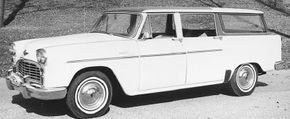
The 1961 Checker Marathon and Superba Evolution
Checker tried to boost nonfleet sales in 1961 by slapping the Marathon badge on the Superba Special. They also standardized the overhead valve engine across the wagon lineup and swapped out the 15-inch rims for smaller 14-inch wheels on both sedans.
Prices didn’t budge.
The base Superba sedan started at $2,542. The Marathon wagon jumped to $3,004 if you wanted more cargo space. Adding air conditioning ran you an extra $411. Power steering was a steal at just $64.
1962 brought back the model quartet. The only hardware change? Sedans got their 15-inch wheels back. But Checker decided to push into the luxury market with a new Town Custom limousine. It sat on a long 129-inch wheelbase and came with a vinyl roof and a partition window separating the driver from the passengers.
Optimistically priced at $7,500, it included a full suite of power options.
Did it sell? Hardly.
Demand was low, likely because even the most expensive non-limousine Cadillac cost less. It was a niche play that didn’t really stick. The only other change for 1963 was bumping the overhead valve engine output to 141 bhp across the board.
By 1964, prices crept up about $100. The Superba nameplate was dropped entirely.
Things got interesting in 1965 when Checker switched to modern Chevrolet powertrains. The base engine was a 140-bhp, 230-cid six-cylinder. If you wanted muscle, you could spec a 283 V-8 for 195 bhp or step up to the big-block 327 for 250 bhp.
The Town Custom limo lingered, but only by special order.
The cost to customize? A 283 V-8 added $110. Automatic transmission was $248. Overdrive brought another $108 to the tab.
Checker tried to stabilize the lineup in 1966 by adding a Marathon Deluxe sedan and a cheaper limousine priced at $4,541. This re-established the four-model structure.
Both disappeared in 1967.
The Deluxe sedan returned in 1968. The limousine followed in 1969. The cycle continued, shifting but never quite finding a permanent rhythm.
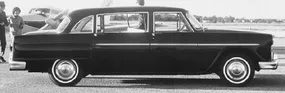
The switch to Chevrolet V-8s changed everything for the post-1964 Checker. The earlier six-cylinder models were adequate, sure, but they were sluggish by comparison. The V-8s made the Checkers genuinely fast. And that wasn’t the ceiling.
Chevrolet’s engine lineup shifted under the hood with ruthless efficiency. The old 283 small-block disappeared in 1967. It was replaced by a 307-cid unit that pushed 200 bhp, but it had a short shelf life—available for 1968 only.
Then came 1969. This was the big year. The 327 remained, but a new 350 cubic-inch small-block entered the fray. Factory output sat at 300 bhp. That number didn’t last.
Emissions regulations tightened. By 1970, the 350’s power dropped to 250 bhp. The metal was still there, but the soul was being choked by compliance.
Despite the growing muscle, the price tag for an upgrade remained surprisingly low. You could spec a 307 for just $108 in 1968. The 327 cost $195. For a fleet buyer, that was a no-brainer.
Sales during the ’60s were steady, not explosive. Checker needed to move 6,000 to 7,000 units annually to keep the lights on. They hit that target. Their best year of the decade was 1962. They built 8,173 cars. Most were taxis. The rest were just variations on the same theme.
Morris Markin, the founder, never blinked. His mission was simple. Build a taxi that could survive hell. He wasn’t interested in aesthetics. He was interested in survival.
There was a moment where history almost took a different turn. Nathan Altman approached Checker. He wanted them to build the Avanti II. Altman had vision. He had design flair.
Markin’s response was brutal. He told Altman the Avanti was too ugly to bother with.
“The Avanti was too ugly to bother with.”
Markin didn’t care about style. He cared about steel and torque. He wanted a brick that could take a beating and keep driving. The Avanti was glass and hope. Checker was iron and gas.
The Golden Era wasn’t about speed records. It was about utility. It was about the 350 small-block turning over in a steel body while the city burned around it. It worked. For a while.
But the world was changing. The fuel crises were coming. The taxi fleets were shrinking. The V-8s would soon be liabilities.
The End of the Line
The decline started quietly. It wasn’t a single event. It was a slow erosion.
Checker’s sales dropped. Not dramatically at first. Just a trickle. But the trickle became a stream. The stream became a flood.
The company couldn’t pivot. Markin’s philosophy was set in stone. You couldn’t make a taxi-friendly car into a sports car. You couldn’t make a heavy sedan into a
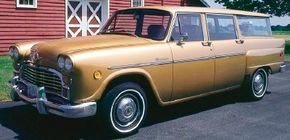
The Slow Squeeze: Price, Competition, and Decline
David Markin took over Checker after his father Morris died in 1970. For a while, he kept things exactly as they were. Nothing changed until the mid-70s. Then Edward N. Cole stepped in. Cole had retired as GM president two years earlier. He joined Checker to start a new model development program. It was a lifeline. A plane crash killed him before anything came of it.
Checker’s decline started in 1970. The fleet market got crowded. Detroit’s Big Three needed those sales. Passenger car sales slowed down during the OPEC oil embargo. Sales dipped again at the end of the decade. Fleet buyers went where the discounts were.
Checker was too small. Low volume. High overhead. They could not compete on price. Passenger car numbers plummeted. Fewer than 400 moved in 1970. Sales looked better between 1971 and 1974. Six hundred to 1000 units a year. Then it dropped back under 500.
Inflation drove prices up. Hard. The standard sedan hit almost $4,000 by 1973. Near $5,400 by 1975. Over $6,000 in 1977. Close to $8,000 by 1980. That is Chrysler or Buick money. Why pay that for a dull car with questionable build quality? It made no sense.
Model lineup shrank. Sales dwindled. The decade started with the usual Marathon sedan and wagon. Plus a long-wheelbase Deluxe sedan. And a limo. The limo lost money. Dropped after 1971. The wagon vanished after 1974. The sedan and the long-wheelbase Deluxe lived on until the end.
Under the hood, things shifted too. After 1970, the standard engine was a stroked Chevy 250 inline-six. It made 145 horsepower through 1971. Then it dropped to 100-115 hp. The 350 V-8 stayed optional. Rated low at 145-170 bhp SAE net from 1972 to 1979. A 305-cid small-block added 145 hp after 1976. A 350-cid diesel offering 105 hp appeared for 1980-1982.
Why Checker Couldn’t Compete on Price
Checker’s pricing strategy collapsed under inflation. By 1980, an $8,000 price tag was a dealbreaker. Buyers had better options. The Big Three offered more space. Better reliability. Lower prices.
Checker’s fleet sales relied on volume. They lacked the scale. Detroit manufacturers could absorb lower margins. Checker could not. Each unit sold ate into profits. The company bled out slowly.
The engines tell a story of desperation. The 250 six lost power. The 350 V-8 got down-rated. A diesel arrived too late. Too few options. Not enough appeal.
Checker’s end was not sudden. It
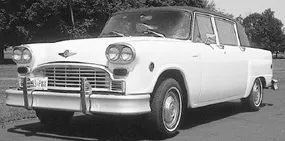
Checker Motors held onto its outdated platform with a stubbornness that bordered on self-sabotage. Even as the 1970s dragged on, the company ignored every suggestion to refresh the aging silhouette. Then came 1974 and the federal mandate for crash-worthy bumpers. The result? Massive, girder-like steel lumps bolted to the front and rear. It didn’t just look old anymore. It looked ugly.
The irony? Better designs were sitting on shelves, gathering dust.
Why the New Checker Never Happened
In 1970, Ghia, the renowned Italian coachbuilder, drafted a sleek, modern prototype for a next-generation Checker. Checker management looked at the drawings and said no. Five years later, Autodynamics of Madison Heights, Michigan, proposed “Galva II.” This design was intentionally stark and rectilinear, built to minimize tooling costs. It should have been the pragmatic choice. It failed anyway. Probably due to a lack of funds. Or maybe just the same managerial inertia that had plagued the company for decades.
The Last Gasp: Ed Cole’s Hatchback Ambition
Things shifted briefly when Ed Cole arrived. This was Ed Cole, the dynamic architect behind the Corvette and the small-block V8, who had a vision for Checker’s survival. He started planning a complete overhaul immediately.
The target was 1983. The concept? A boxy, square-lined four-door hatchback sedan. It would use front-wheel-drive mechanicals borrowed from the GM X-car compacts, a platform Cole knew well. The chassis would be a sturdy, undisclosed box-section design. Three variations were on the table:
- A 109-inch wheelbase six-passenger model
- A 122-inch eight-seater
- A massive 128-inch nine-seater
Engineers even contemplated low-cost, easily replaceable plastic body panels and a rear suspension system using solid rubber springs. Design work progressed far enough to produce a single full-scale mockup. It was tangible. It was real.
Then Cole died.
The project lost momentum overnight. By the time the dust settled, Checker’s core taxi business had shrunk to a marginal status. There was no market left to support a new model. The Kalamazoo plant ceased all production in mid-1982. The hatchback died in the drawing board, another casualty of corporate rigidity.
Is a Checker Worth Collecting?
Despite the grim history, Checkers are starting to tickle the collector market. But not every model is in high demand. The low-volume Town Limousines and the enormous, multidoor Aerobus wagons used for airport shuttles are the ones showing signs of appreciation.
They are becoming minor collector’s items.
Morris Markin, the company’s founder, would likely be amazed. He built a machine for utility, not status. Now, decades later, the very cars he refused to modernize are becoming rare artifacts.
Collectors are hunting for the Aerobus and Town Limousines, proving that utility vehicles can have a second life.
The story of Checker Motors is a study in missed opportunities. From the rejected Ghia design to the premature end of