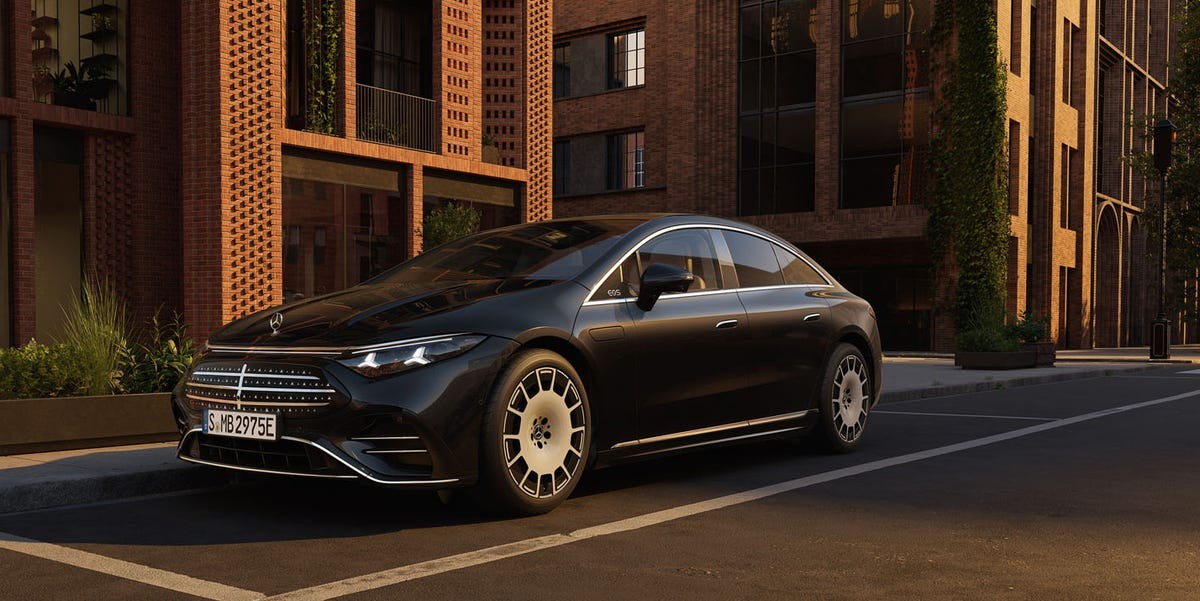
Mercedes-Benz has unveiled the 2027 EQS sedan, a refresh that prioritizes deep technical evolution over dramatic aesthetic changes. While the car’s silhouette remains largely familiar, the updates under the skin represent a significant leap in electric vehicle (EV) architecture, range, and driving technology.
The updated lineup—comprising the EQS450+ (rear-wheel drive), the EQS500 4Matic (all-wheel drive), and the flagship EQS580 4Matic —is expected to hit the market in the second half of this year.
Efficiency Through Architecture and Chemistry
The most critical upgrade is the transition to an 800-volt electrical platform. This shift is a game-changer for long-distance EV travel, as it allows for much faster charging speeds. The 2027 EQS can now tap into 350-kW charging stations, a significant jump from the previous 200-kW limit.
Beyond charging speed, Mercedes has optimized the battery’s physical efficiency:
– Increased Energy Density: Using revised battery chemistry, the usable energy has increased from 118 kWh to 122 kWh without increasing the physical size of the battery pack.
– Extended Range: This combination of better chemistry and faster charging pushes the estimated range to approximately 425 miles (EPA), up from the previous 390 miles.
Mechanical Innovations: Two-Speed Gearboxes and Recuperation
To maximize efficiency, Mercedes has moved away from the single-speed setups common in many EVs. The new model features in-house-developed motors and a two-speed transmission on the primary rear drive unit. This allows for aggressive acceleration in first gear while maintaining high efficiency at cruising speeds by allowing the motor to run at a lower, more optimized RPM.
Additionally, the vehicle’s energy recuperation capabilities have improved by roughly one-third, now capable of recovering up to 385 kW. This high level of regenerative braking means that in most daily driving scenarios, the physical brake pads and rotors may never even need to be used.
The Future of Driving: Steer-by-Wire and the Yoke
In a move toward future autonomy, Mercedes is offering an optional steer-by-wire system. This is most visible through a new yoke-style steering wheel.
Unlike a traditional wheel, this yoke has a total rotation of only 170 degrees, meaning the driver never has to move their hands far to navigate a turn. While this provides an unobstructed view of the dashboard and a more futuristic cabin feel, it requires a shift in driving habits, as the lack of a top rim makes casual “hand-over-hand” steering impossible. This technology is a stepping stone toward SAE Level 4 autonomous driving, where the steering wheel may eventually retract entirely.
Intelligence and Comfort: MB.OS and Car-to-X
The 2027 EQS is more “connected” than its predecessor through several high-tech integrations:
– MB.OS Operating System: A new digital backbone that ensures instantaneous responsiveness for all user interfaces and vehicle subsystems.
– Car-to-X Adaptive Damping: The car can receive data from other vehicles to “see” upcoming road imperfections, allowing the suspension to adjust before the car hits a bump, effectively smoothing out the ride.
– Safety-First Comfort: New features include heated front seatbelts—designed to encourage drivers to remove heavy coats for a more secure fit—and rear seatbelts equipped with integrated airbags.
The Bottom Line: The 2027 Mercedes-Benz EQS is less about a new look and more about a fundamental technological leap, focusing on faster charging, longer range, and the transition toward autonomous driving.
While official pricing has not been released, industry estimates suggest the lineup will begin at approximately $102,000.