You’ve isolated the issue. It’s not the bulb, it’s not the fuse. The culprit is the brake light switch or the wiring behind it. Now you need to understand how to connect to the brake light wiring circuit without tearing apart the dashboard or guessing.
The circuit is straightforward in theory but messy in practice. It’s a run of power from the battery, through the fuse block, out to the switch, and then to the lights. Some modern cars route this signal through a body controller too. Usually, it’s all hidden inside a thick wiring harness that snakes through the car’s frame.
If your repair involves rewiring the switch, start at the source. The fuse block. Find the hot side of the block. You’ll need to run a new power wire from the brake light fuse terminal or another live pin on the block. This wire feeds the switch.
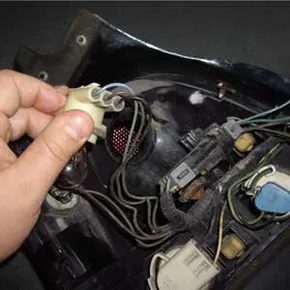
The switch doesn’t usually have bare ends. It sits in a plug. So you’ll likely need to splice your power wire into the existing power line coming out of that plug. Crimp it tight. Seal it. Don’t rely on electrical tape alone.
Once the switch has juice, you connect its output to the rest of the brake light wiring harness. Here’s where things get tricky. You can’t just guess which wire in that bundle carries the signal. You need a wiring diagram for your specific vehicle. It tells you exactly which wire to splice into.
“A wiring diagram for your specific vehicle will show you which wire in the bundle to splice.”
Most of the time, you won’t need to replace entire sections of the circuit. Just find the faulty wire or component. Replace that. Done. The rest of the harness is fine.
But what if the diagram doesn’t match your car? What if the harness is corroded? Or the plug is melted? That’s a different problem. For now, assume the circuit is intact. Just broken at one point.
Find that point. Fix it. Test it. Press the pedal. Watch the lights. If they don’t flash, you’ve got another loop to trace. But that’s for the next page.