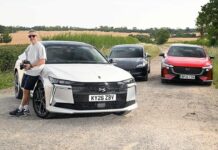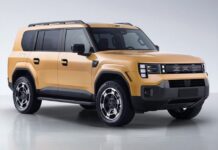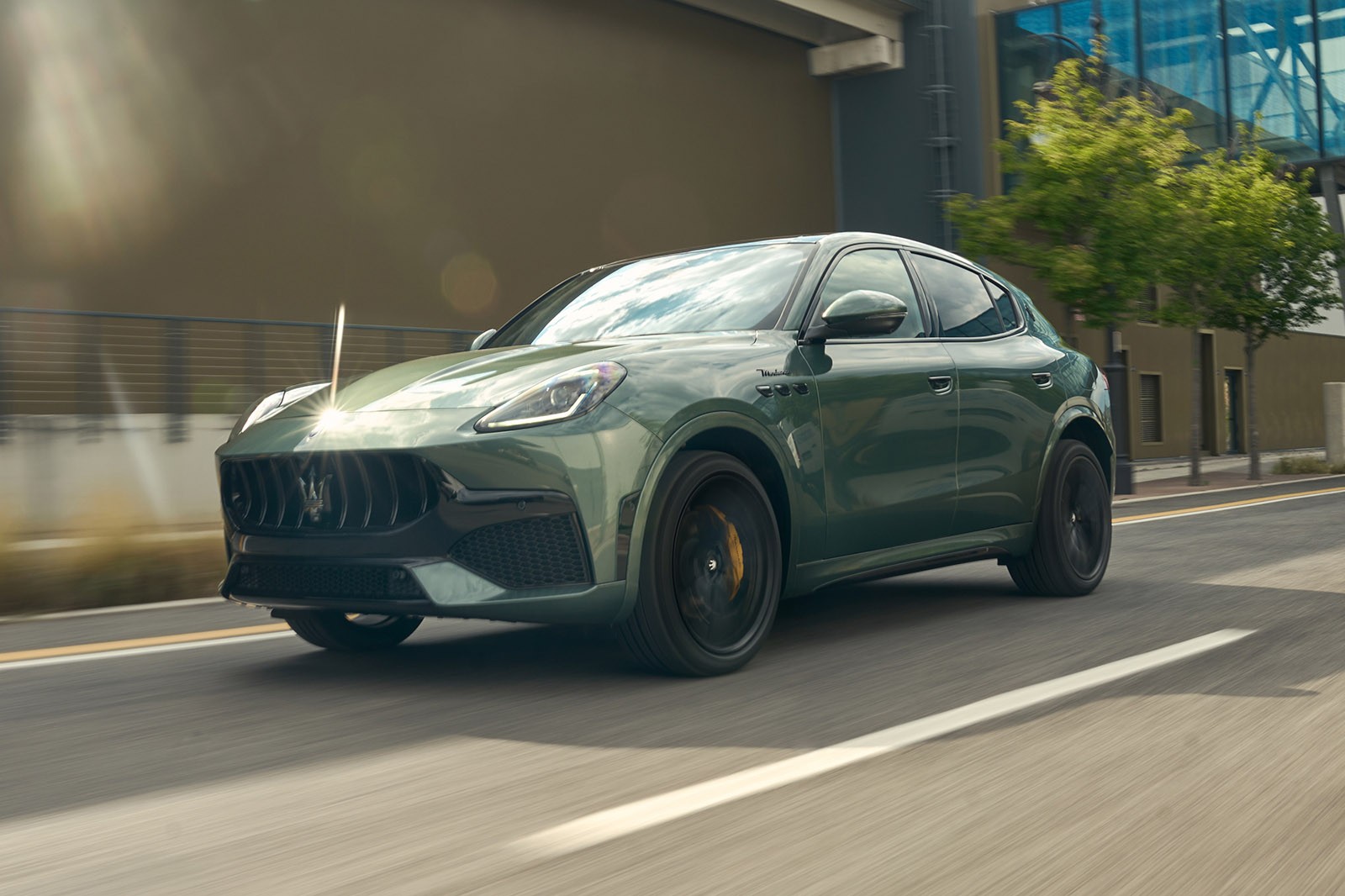
The 2026 Maseriti Grecale isn’t just a refresh. It is an attempt to define what this SUV actually is.
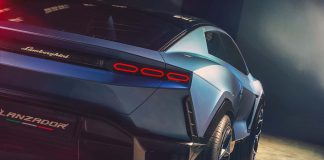
Maserati took the design cues from the MCXtrema—that track-focused hypercar that ignores road regulations—and slapped them on the Grecale. The result? Aggressive bumpers. Chunkier intakes. A look that screams presence. You’d think this circuit-slaying, 724bhp monster wouldn’t have much in common with a posh family hauler. Yet, the changes make it stand out. It clearly separates itself from the old Levante, which was looking dated.
But let’s strip back the bodywork. What exactly is the new Grecale?
It is more than a stretched Alfa Romeo Stelvio, even if they share the Giorgio platform. Maserati lengthened that platform. We are talking 172mm longer overall. An 83mm longer wheelbase. That extra space matters. It allows for rear legs that don’t feel cramped. But the bigger shift is electrification.
The four-cylinder models are hybrids. Mild, yes, but the 48V battery sits under the boot floor. This reduces cargo space slightly. Meanwhile, the fully electric Folgore version arranges its 150kWh cell pack in a T-shape. Why? To keep the driving position low.
Then there is the heart of the matter: the engine.
The Netuno V6: Pure Maserati or Rebranded Alfa?
The top-tier Modena and Trofeo models ditch the Alfa 2.9-litre unit. Instead, Maserati installed its own 3.0-litre Netuno V6. We first saw this in the MC20 supercar. Now it powers the Granturismo, Grancabrio, and this Grecale.
It hasn’t stayed raw, though. The supercar version has a dry sump. This SUV version uses a wet sump. It adds cylinder deactivation. It has been detuned.
The Trofeo outputs 523bhp. The Modena drops to 385bhp. Peak power arrives earlier now—at 6,500rpm instead of 7,500rpm. This makes the V6 more accessible in daily driving.
All internal combustion Grecales get the ZF eight-speed automatic. They all have rear-biased all-wheel drive. The V6 cars get an electronically controlled limited slip differential on the rear axle. The four-cylinder models? Mechanical LSD or an open diff. Simple. Effective.
Interior: Luxury Meets Fiat Reality
Here is the uncomfortable truth. Open the door. Grab the handle. It is squeeze-electronic. Same as a Fiat 500. Press the button to open it again. Fiat 500.
The pedals? Alfa Romeo. Column stalks? Alfa. The main multimedia screen? Fiat 500 again.
You might notice the drive selector has been improved. It is sleeker. More intuitive. But those PRND buttons arranged horizontally below the screen? That is parts-bin plundering. You will find that same layout in the Fiat 600. Even the Jeep Avenger.
Does it matter? The parts feel quality. Bentleys use Audi stalks too. But a Grecale owner sees a Fiat 500 parked next to theirs and wonders why the connection couldn’t be hidden.
Still, there is charm here. The design is restrained. The materials are top-tier. Real metal. Neat stitching. Soft leather. New for 2026 is the digital clock atop the dash. It looks bespoke. Much better than the old Porsche-style faux-analog piece.
And the Trofeo test car? Glossy carbon fiber can look cheap in luxury cars. Maserati opted for a matte, rough-touch material instead. It feels different. It feels intentional.
Technology: Digital, Clean, But Uninspired
The instrument cluster is fully digital. It is clear. Navigable. Moderately customizable. Not especially memorable. The facelift adds new graphics and a higher frame rate, which helps.
Secondary controls? Digital too. A smaller screen sits under the main unit. Climate? Check. Ride height? Check. Lights? Check. It works well. But it feels very Audi. Not intrinsically Maserati.
The Uconnect system is the standard one found in Fiats, Jeeps, and Alfas. Nothing here screams Italian identity. It is pleasant, though. Logical. Smooth.
Maserati claims the Nettuno V6 is “10 Driving Excellence.” Looking at the engine bay, you see the same plastic cover as the Alfa. They look alike. The Netuno exists because Maserati wanted a high-revving, dry-sumped engine for the MC90. Now it is wet-sumped and detuned.
Performance: Torque, Turbos, and Hops
In the Trofeo, that 523bhp is just 20bhp up from the Alfa Stelvio Quadrifoglio. But it sheds 0.4 seconds in the 0-60mph sprint. And unlike some rivals limited to 155mph, the Grecale keeps pulling hard on the autobahn.
During our test, the roads were damp. The Trofeo hit its claimed 0-62 time of 3.8 seconds. It might be quicker in perfect conditions.
Or might not.
Leaping off the line is not graceful. Unlike the Stelvio, the Trofeo has launch control. Revs build to 3,000. Then 457lb ft of torque hits the axles. The car rears up. Why? Soft, underdamped suspension.
The front wheels hop. They struggle for traction. The suspension bounces. It is disconcerting.
Once moving, the gearbox rifles through ratios. The short gearing makes the Trofeo engaging. You can redline second gear and still not break 60mph in third. This gives you a reason to use those metal paddles.
A dual-clutch might shift faster. But the ZF eight-speed is smoother. More drivable. That matters for a family SUV.
You also notice the Alfa DNA in the sound. It is heavily turbocharged. You need revs to fill the lungs. The exhaust is gravelly. Hoarse. Smoother at higher revs. Exciting. Free-revving. Not tuneful. Just a typical high-performance V6 roar.
The Modena V6 takes that same non-electrified Netuno engine. Downtuned to 385bhp. 369lb ft torque.
0-62mph in 4.9 seconds. Top speed of 160mph. It lines up against the BMW X3 M50. The Audi SQ5. Both cost £10,000 less, though.
On paper, the power deficit looks big. In reality, the Modena V6 is still amusingly quick. Charismatic engine. Snappy gearbox. Massive metal paddles that feel incongruously large.
The only complaint? The synthesized exhaust note is too exaggerated. You can tell because tunnels don’t change the sound. In Normal mode, it would be nice to be quieter.
Driving Dynamics: Plush But Disconnecting
Is the Trofeo a track car? Obviously not. The suspension is soft. But once you adjust to the body roll, it handles reasonably well.
Grip comes from Maserati-specific Bridgestone Potenza Sports. Feedback in the steering is enough to settle the car into corners. The all-wheel-drive system sends power to the outside rear wheel via the eLSD. It rotates the car nicely.
But if you expect Porsche-like tautness, look elsewhere. The Macan GTS was firm. The Trofeo is relaxed.
In comfort modes, it is plush. Too plush sometimes. The suspension lacks consistency. It is slightly underdamped. More body movement than needed. It flattens some bumps. It throws your head around others. It thwacks through potholes.
It absorbs well for its class. But in a confounding way.
You would expect the steering wheel dial to firm up the suspension as you switch modes. It does. A little. But the disconnected feeling never fully leaves. Like a Ferrari, you get more aggressive modes. No individual customization. You can only soften the dampers.
In Sport mode, there is still significant body roll at corner entry. It takes time to gain confidence. Ideally, you want Corsa mode for control. But that turns off ESC. Which seems unnecessary.
Even in Corsa, responses are delayed. The car squats on exit. The inside front wheel lifts. It is not perfect. But it has character. And character often comes at the cost of precision.