Kevin Shu isn’t just here for a photo op. He’s here because GAC Australia has already crushed its initial sales targets and is eyeing the throat of the market leaders.
The Chinese automaker’s local boss says broad customer acceptance of Chinese-made cars isn’t a trend anymore. It’s the new baseline. And GAC is banking on that momentum to rival two giants: Toyota and BYD.
Speaking at the Melbourne City FC A-League sponsorship announcement, Shu didn’t mince words. “In the coming two years, we are 39.6 percent market share,” he claimed, noting that Chinese brands have surged from 18.6 percent share in June 2025 to nearly 40 percent a year later. “So Chinese brands are welcomed by customers.”
The numbers back the ambition, if not the timeline. GAC has sold around 4,000 vehicles since its official Australian launch in November 2023. It’s “over target.” Shu confirmed they are on track to surpass that 4,000 mark in the second half of 2016, though he refused to pin down an exact final figure for the year.
“GAC is the only Chinese brand that can offer all segment products, all engine types.”
Can a Newcomer Take Toyota and BYD?
It sounds insane on paper. The top 10 spots in Australia’s car market are locked down by entrenched incumbents. MG sits at 10th place with over 41,000 sales in 2023. Tesla grabbed 10th spot in the first half of 2024 with just under 24,000 units.
GAC’s current trajectory places it around 23rd in the rankings. Its 4,000-unit half-year rate is closer to Land Rover’s 8,339 annual sales figure from 2023 than it is to the top 10.
Shu admits this gap. But he expects GAC to break into the top 10 sooner than the original 2030 target. He’s now looking at 2028. Maybe even sooner.
His confidence rests on three pillars. First: the general acceptance of Chinese brands. Second: a product avalanche. And third: a dealer network that’s actually spreading out.
China’s BYD has rocketed up the sales charts, hitting second place overall in May 2016 and finishing just 243 units behind leader Toyota in June. GAC sees that trajectory as replicable. If BYD can do it, Shu argues, so can GAC. But they need more than just a couple of popular cars. They need volume.
The Ten-Model Offensive
This is where the rubber meets the road. Or rather, where the SUVs meet the driveways.
GAC launched in Australia with only four models: the Emzoom hybrid hatchback, the Aion V electric mid-size SUV, the M8 hybrid people mover, and the Aion UT electric hatch added in March.
Four isn’t enough to sustain a top-10 challenge against brands with decades of history and dozens of variants.
“We previously planned to take more than 10 new models to market over five years,” Shu told CarExpert. “But currently, we’ve confirmed in the next three years, we will bring more than 10 models.”
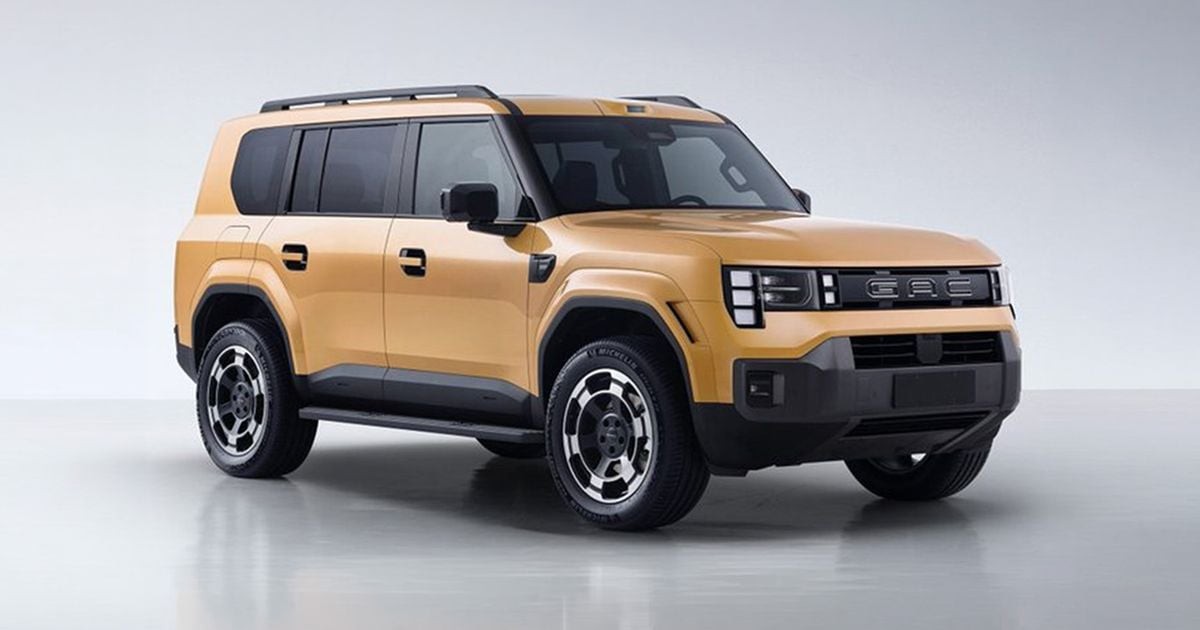
That acceleration is aggressive. The company has already teased the lineup. We’ve seen the S7, an SUV that looks suspiciously like a Range Rover if it had a cybernetic upbringing. There’s the Hyptec HT, an electric SUV designed to fight the Tesla Model Y. The boxy Yue 7 is also a candidate, aiming directly at large plug-in hybrid rivals like the Denza B5.
“All of the models from GAC are mass-production ready within the next six months.”
Shu made it clear: GAC isn’t betting on one powertrain. They’re covering all bases. The upcoming influx will include Light SUVs, Small SUVs, Medium SUVs, and Large SUVs. Each category will likely feature Plug-in Hybrid (PHEV), Battery Electric (BEV), and Extended-Range Electric Vehicle (EREV) options.
One model remains undecided in terms of powertrain: a ute. It’s not named yet. But it’s coming in 2017, targeting the Ford Ranger. The Ranger is a beast in Australia. Beating it requires a product that works just as hard, if not harder.
EVs vs. Hybrids: The Long Game
Shu is clear on his technological preference. He believes EVs will eventually surpass hybrids in popularity.
“I’m sure EV will be much better,” he said. “Not only for cost saving, but also for driving experience, technology, voice control, automatic driving features, and so on.”
His argument is visceral. “When you drive an EV car, you never go back to ICE [Internal Combustion Engine] cars.”
It’s a bold claim in a country where charging infrastructure remains patchy outside major cities and hybrids still dominate sales volume due to their practicality. But Shu is playing the long game. He sees the technological leap—from voice control to autonomous features—as something that EVs simply execute better right now.
Network Expansion
Products are useless without shelves to sit on.
GAC’s dealer strategy is critical. They need 60 sites across Australia by the end of 2016. That’s a massive rollout for a brand that only officially entered the market recently.
“We have a clear product planning,” Shu said. “A clear network planning. Of course, providing high service for our customers is the priority.”
Being the “only Chinese brand with all-segment products, all engine types” is their unique selling proposition. It’s how they differentiate themselves from other Chinese newcomers who might be focused on budget city cars. GAC wants to be everywhere, selling everything.
GAC remains excluded from the Federal Chamber of Automotive Industries (FACI) monthly VFACTS reports. For now, it’s flying under the radar of the main industry data sets. Expect to change that later this year when they are officially included.
Until then, Shu is watching BYD. Watching Toyota. Watching the numbers. And plotting a path that leads to 4,000 sold, 10 models launched, and a top-10 finish within three years.
The market isn’t ready to surrender to a Chinese brand yet. But Shu doesn’t think he needs them to surrender. He just needs them to show up at the dealership.