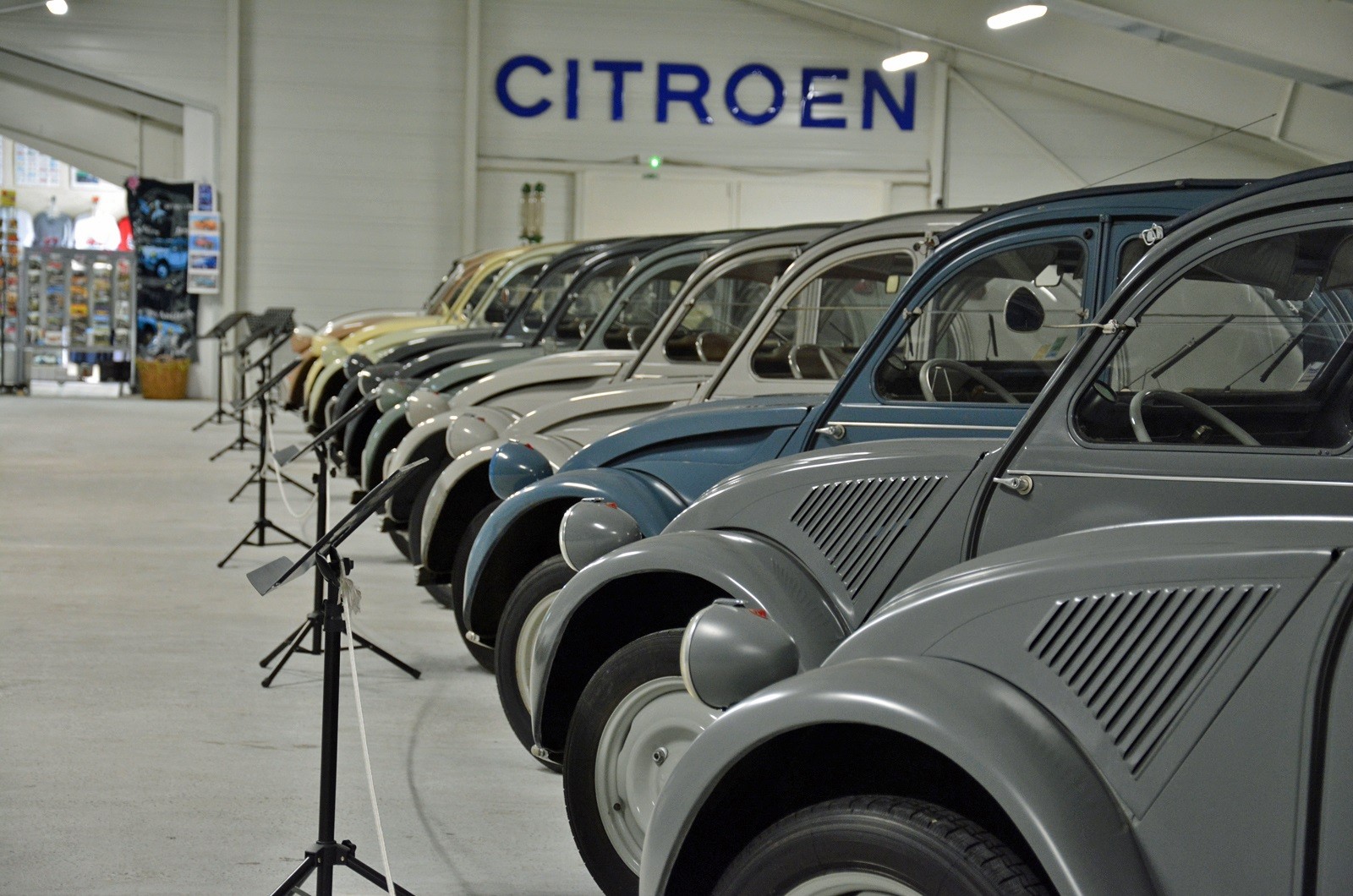
Most car museums are polite. They have three vintage Fiats, a dusty Porsche, and a placard that explains why you can’t touch the glass.
Henri Fradet is not polite.
Fradet doesn’t collect cars to look pretty. He hoards them. For forty years, the French enthusiast has hunted down post-war Citroëns with the patience of a monk and the budget of a whale. The result? 120 Citroën vehicles housed in the CitroMuseum, a sprawling complex in Castellane, deep in the scenic French Alps.
He doesn’t want restored showpieces. He wants low-mileage survivors. Cars that smell like 1950s vinyl and old gasoline. Cars that haven’t been buffed into oblivion.
He travels all over France to find them. And he found the good ones.
The Three Chambers of Time
The museum isn’t one room. It’s a triptych.
First, you step into the Traction Avant and DS/ID era. These are the cars that defined French engineering arrogance.
Then, you hit the 2CV zone. The little two-seater, the tractor, the joke that became a legend.
Finally, there’s the modern wing. Cars from the 70s to the 90s. The era when Citroën started trying to be normal.
But Fradet isn’t just stacking metal. If you look past the fenders, the walls are covered in original R&D documents, dealer signs, and model kits. This is a archive. A obsession made physical.
“I didn’t want to just park cars in a warehouse. I wanted the story.”
Traction 15/6: The Post-War Survivor
Strictly speaking, the Traction Avant launched in 1934. Pre-war. But the production line didn’t stop when the war ended. It limped through.
The last example rolled off the line in 1957.
This specific 1952 model has a 2.9-liter inline-six. It pushes 77 horsepower. That’s not a lot. But in a front-wheel-drive sedan that felt like it was floating on a cloud? It’s enough.
This one has covered 40,000 kilometers (25,000 miles). Since new.
It sat with its original owner, stored indoors, cherished. A collector bought it in 1973. Fradet acquired it in 2016. The tires are still hard. The leather is still soft.
DS Chassis 32: The First of Its Kind
Here is the crown jewel.
The DS (and its sister, the ID) is legendary. But most examples were built in February 1956, when mass production finally kicked in.
This black 1955 DS? It’s different.
Chassis number 32. The 14th DS ever sold. The oldest series-produced example that still exists.
The first 13 were likely scrapped decades ago. Lost to rust, war, or indifference. This one survived.
It was built entirely by hand before the assembly lines took over. Delivered to a dealer in Valence as a demonstrator. Instead of returning it to headquarters, the owner sold it to a loyal customer.
It drove 69,000 kilometers. Then it slept in a museum in Holland for 13 years.
Fradet brought it home in 2004.
ID 19: The Blue Ghost
The DS was expensive. The ID was the budget cousin. Less fancy, same hydraulic heart.
This 1963 ID 19 is painted Bleu de Provence. An unusual shade. A quiet shade.
It has 27,000 kilometers on the clock.
Fradet bought it from the second owner. He was living in Norway at the time. The hydraulic pump broke on a Belgian roadside. A stuck valve. A broken pump.
Did he send it back to France for repairs? No.
He took off the high-pressure pump. Drove it on mechanical brakes to Norway.
Is that a terrible idea? Yes.
Is that exactly the kind of thing you do with a rare classic? Also yes.
DS 21 Cabriolet: The Dream
The list continues.
The DS 21 Cabriolet from 1966 sits in the corner. Sunroof up? No, this is a Citroën. The sunroof is down. Always.
There are hundreds of more cars to see. Over 120 in total. Each with its own history of neglect, recovery, and stubborn preservation.
Most collectors want their cars to shine.
Fradet wants his cars to breathe.