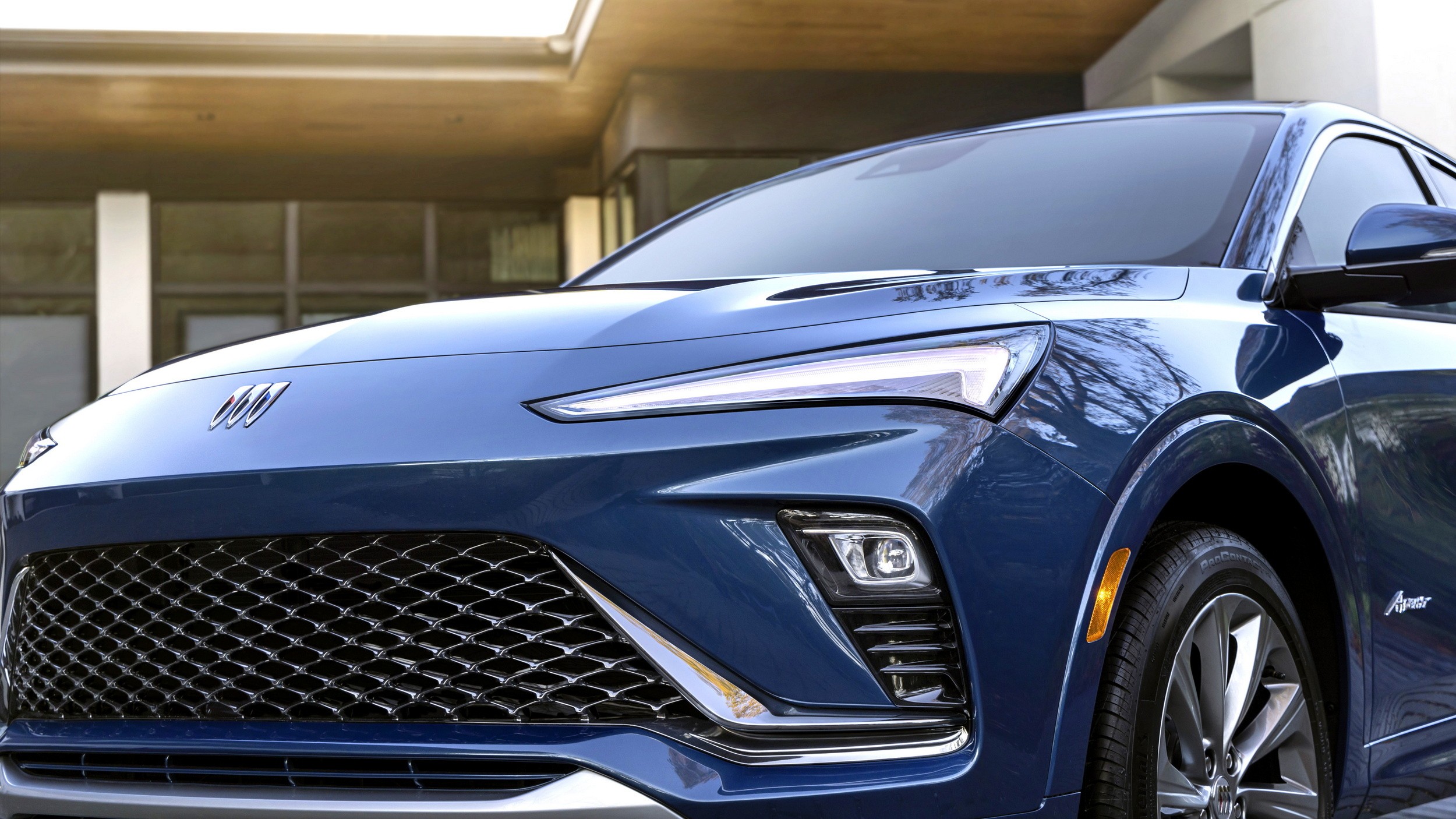
General Motors (GM) has signaled that it will continue to rely heavily on South Korean manufacturing for its US market, despite significant trade barriers. Even with a 15% tariff applied to imported vehicles, the math suggests that importing remains more cost-effective than shifting production to American soil.
The Scale of Korean Production
GM is doubling down on its South Korean operations by investing an additional $600 million into its local assembly plants. These facilities are currently responsible for producing several key models for the US market, including:
– Chevrolet: Trax and Trailblazer
– Buick: Envista and Encore GX
Currently, approximately 90% of the vehicles assembled in South Korea are exported to the United States. Last year, these plants produced roughly 460,000 vehicles; with the new investment, GM aims to reach a full capacity of 500,000 units annually.
The Economics of Importing vs. Building
At first glance, paying a tariff seems counterintuitive. A 15% tax adds roughly $2,000 to the cost of every vehicle imported from South Korea. However, when viewed through a broader lens of capital expenditure and operational costs, the “tariff penalty” is actually the cheaper route.
The decision to stay in South Korea is driven by three primary economic factors:
1. Massive Upfront Capital Requirements
Moving production to the US is not as simple as moving a machine. To replace the Korean supply chain, GM would need to invest billions of dollars into:
– New manufacturing facilities.
– Entirely new domestic supply chains.
– Extensive workforce training.
2. The Labor Cost Gap
There is a significant disparity in hourly wages between the two regions. While South Korean workers typically earn between $20 and $30 per hour, US workers in similar roles generally earn between $30 and $40 per hour. If the United Auto Workers (UAW) union is involved, those costs can climb as high as $60 per hour.
3. Speed and Political Volatility
Building a new plant is a slow process, typically taking two to four years. Furthermore, trade policy is subject to political shifts. GM must weigh the long-term cost of building US plants against the possibility that a change in US administration in 2028 could result in the sudden removal of these tariffs, rendering a massive domestic investment redundant.
The Financial Impact
The cost of these trade policies is not negligible. GM expects tariffs to impact its bottom line by $3 billion to $4 billion this year. The financial strain is already visible in the company’s Korean division, which saw a 60% drop in operating profit and a 12% decline in revenue in 2025 due to the impact of these tariffs.
Despite the multi-billion dollar hit to annual profits, the structural costs of domesticating the supply chain remain too high to justify abandoning the South Korean manufacturing hub.
Conclusion
GM’s strategy highlights a complex reality in global manufacturing: even high tariffs cannot always offset the massive costs of labor and infrastructure required to move production home. For now, the company is choosing to absorb the tariff costs rather than undergo the multi-billion dollar upheaval of domesticating its supply chain.