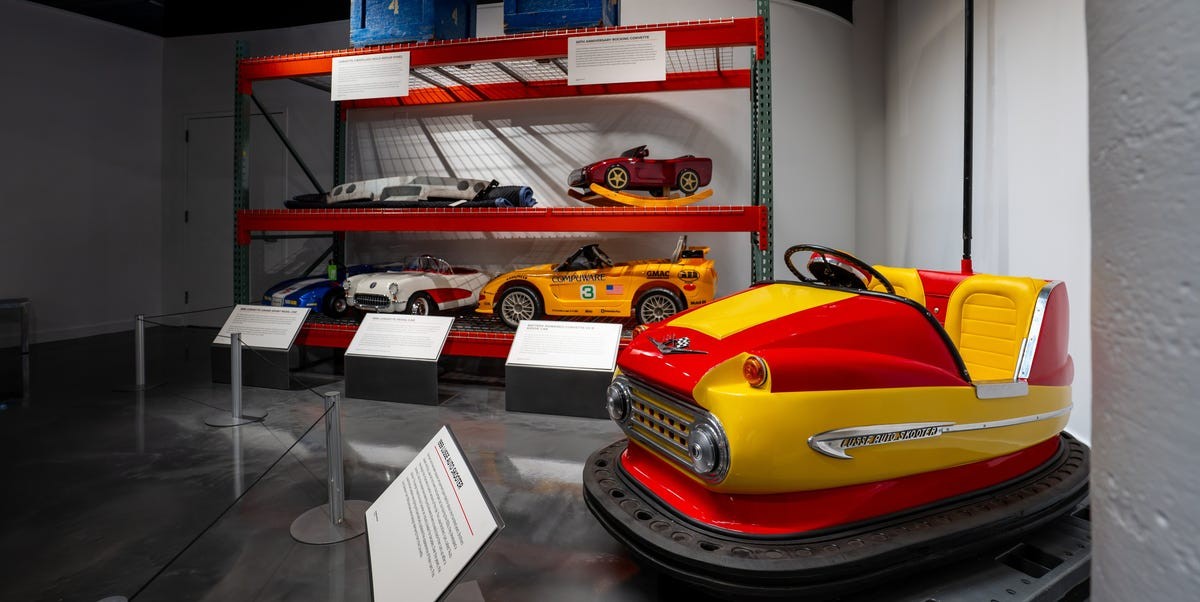
While the National Corvette Museum in Bowling Green, Kentucky, is primarily famous for its massive collection of over 100 historically significant Corvettes, a new exhibit is shifting the focus. The museum has launched a specialized display in its Limited Engagement gallery, moving the spotlight away from the vehicles themselves and onto the human stories, tools, and oddities that shaped the Corvette legacy.
The Human Side of Automotive History
Large-scale museum exhibits often rely on “showstopper” objects to draw crowds, but it is often the smaller, more intimate artifacts that provide a deeper connection to the past. Much like how a collection of ancient toys can humanize the builders of the pyramids, this new exhibit uses non-automotive objects to illustrate the culture and people behind the brand.
The collection includes several nostalgic pieces that bridge the gap between professional racing and family life:
– Vintage Pedal Cars: Including a model dating back to the 1956 refresh, these represent the “playthings” of the Corvette era.
– Racing Heritage: A Hinchman-sewn racing suit belonging to pioneer Dick Guldstrand is on display. This relic serves as a stark reminder of the era before modern fire-retardant Nomex, highlighting the immense bravery required to race an L88 Sting Ray at Le Mans in 1967.
– Motorsports Culture: Items such as a vintage UAW-GM motorsports jacket—signed by multiple racers—and Corvette-themed pinball machines from the museum’s 1994 opening provide a glimpse into the community surrounding the car.
From the Executive Desk to the Design Studio
The exhibit also connects the technical evolution of the Corvette to the leadership and design processes at General Motors.
The Legacy of Ed Cole
One of the most significant pieces in the gallery is the actual desk of former GM CEO Ed Cole. As Chevrolet’s chief engineer in the 1950s, Cole was instrumental in introducing the small-block V-8 to the lineup. His leadership provided the institutional support necessary for legends like Zora Arkus-Duntov and Bill Mitchell to transform the Corvette into a global performance icon.
The Art of Color and Form
To understand how a car’s aesthetic is perfected, the exhibit features “frogs”—shoe-sized paint testers used in GM’s design studios. These tools allowed designers to observe how light interacted with prototype colors over the complex curves of a vehicle’s body, a critical step in the development of the Corvette’s visual identity.
Why This Matters
By showcasing the tools of the trade—from an executive’s desk to a racer’s thin fabric suit—the museum provides context that a car alone cannot. It illustrates the intersection of engineering, high-stakes bravery, and corporate vision that allowed a single model to become an American icon.
This exhibit serves as a vital layer of storytelling, proving that the Corvette’s history is defined as much by the people and processes behind the scenes as it is by the cars on the showroom floor.
The new exhibit offers a deeper look into the Corvette’s DNA, enriching the visitor experience by connecting the legendary machines to the human ingenuity that created them.