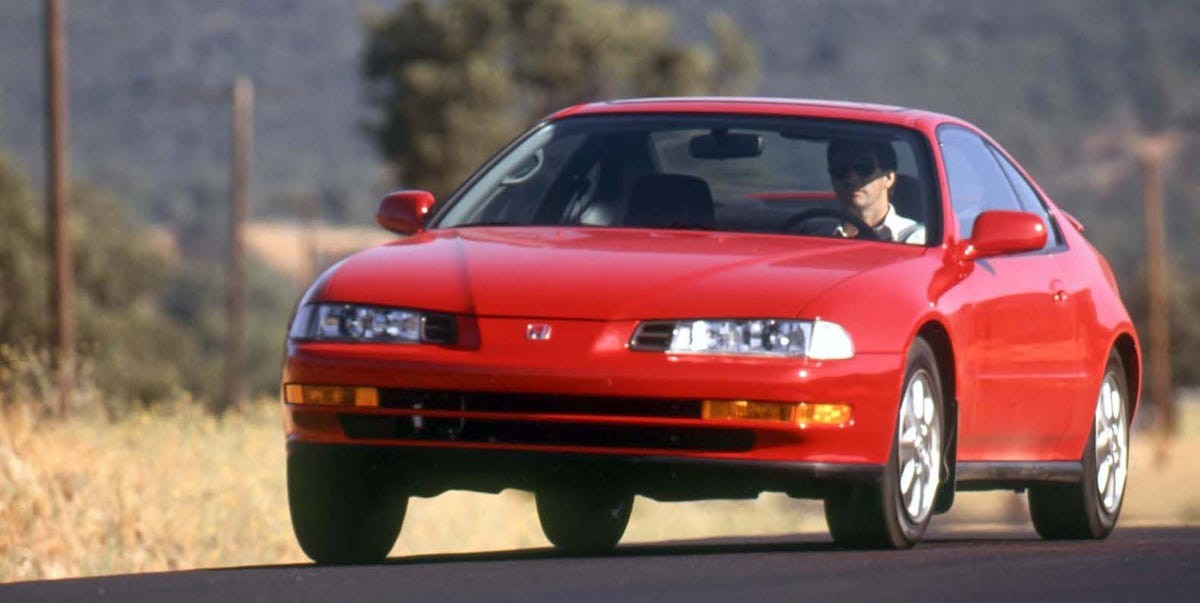
A year after the initial release of the Honda Prelude sports coupe, the manufacturer has introduced a high-performance evolution: the VTEC model. While previous iterations of the Prelude won praise for their chassis poise and steering precision, they were occasionally criticized for their interior design. With the arrival of the 1993 VTEC, Honda is addressing performance directly, adding 30 horsepower through advanced engine technology.
The Magic of VTEC Technology
The defining feature of this new model is Honda’s Variable Valve Timing and Lift Electronic Control (VTEC). This system solves a classic engineering dilemma: engines typically have to choose between smooth, low-speed drivability and high-speed power.
VTEC bypasses this compromise by using three different cam lobes instead of the standard two:
– Low-to-Mid Range: At lower RPMs, the engine uses conventional, less radical lobes to ensure smooth operation and fuel efficiency.
– The Transition: Once the engine reaches approximately 4,800 rpm, an electronic controller uses oil pressure to lock the rocker arms together.
– High-RPM Performance: This lock-up engages a third, “radical” cam lobe with higher lift and longer duration. The result is a sudden surge in power—a sensation often described as the engine “waking up”—allowing the 2.2-liter engine to pull aggressively toward its 7,400-rpm redline.
Engineering and Mechanical Refinements
To accommodate the higher-revving nature of the VTEC system, Honda has made several strategic mechanical adjustments:
- Engine Displacement: The stroke was reduced by 4.3 mm, bringing displacement down slightly from 2259 cc to 2157 cc. This change lowers engine stress and vibration at high speeds.
- Durability: The engine retains the liner-free aluminum block, utilizing cast-in carbon fibers and aluminum oxide for wear resistance.
- Transmission Tuning: Because the engine delivers power differently, the five-speed manual gearbox features shorter gear ratios from second through fifth gear to better harness the new power band.
- Weight and Handling: Despite carrying roughly 70 pounds more than the standard Si model, the Prelude maintains its reputation for excellent handling, thanks to its finely balanced control-arm and multilink suspension.
Performance Gains: VTEC vs. Si
Early testing of the pre-production model indicates a clear performance leap over the standard Prelude Si:
| Metric | Prelude Si | Prelude VTEC (Est.) |
|---|---|---|
| Horsepower | 160 hp | 190 hp |
| 0–60 mph | ~7.2 seconds | 6.9 seconds |
| 1/4 Mile | 15.6 sec @ 89 mph | 15.4 sec @ 91 mph |
| Top Speed | 129 mph | 135 mph |
Interior and Practicality
While the mechanical upgrades are significant, the cabin remains a compromise. The rear seating is extremely limited, functioning more as a storage area than a place for passengers. However, Honda has made minor improvements, such as lowering the rear center console to reduce the sense of claustrophobia. Standard features for this premium tier include driver and passenger airbags and an upgraded seven-speaker stereo system.
“The transition to the high-speed cam lobes is clearly felt in the cockpit as a sudden awakening, the car kicking into hyperdrive as the tach needle swings past five grand.”
Conclusion
The 1993 Prelude VTEC represents a successful marriage of sophisticated engine technology and proven chassis dynamics. By utilizing VTEC to bridge the gap between daily usability and high-RPM excitement, Honda has created a more potent, engaging sports coupe that justifies its premium price tag.