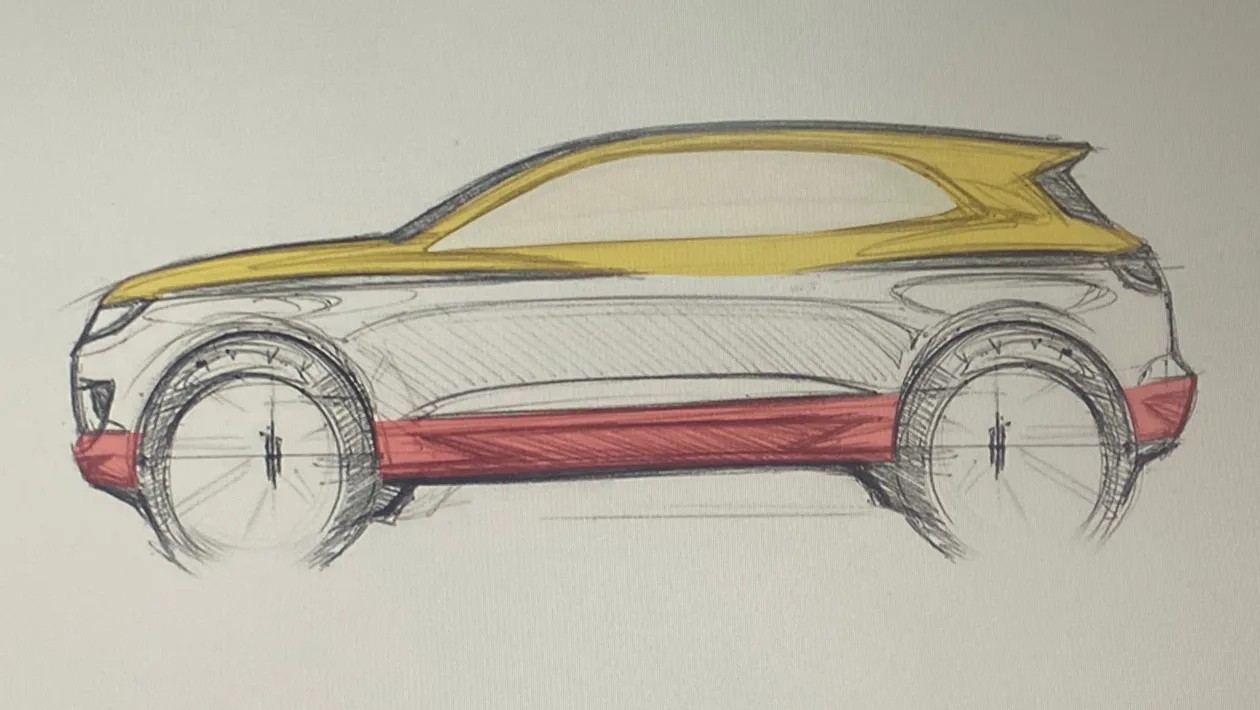
Shell has unveiled a preview of its upcoming Triple 10 Challenge Concept Car, a project designed to prove that the next generation of electric vehicles (EVs) can solve the industry’s most persistent pain points: charging speed, energy efficiency, and carbon footprints.
Unlike many concept cars that serve as impractical “dream machines,” Shell is focusing on a realistic B-segment SUV —a vehicle class similar to the Ford Puma Gen-E or Kia EV3. The goal is to demonstrate how scalable, real-world technologies can make EVs more practical for everyday drivers.
The “Triple 10” Philosophy
The concept is built around three ambitious performance targets, as reflected in its name:
1. Sub-10 minute rapid charging: Dramatically reducing the time spent at a plug.
2. High efficiency: Achieving over 10km (6.2 miles) per kilowatt-hour.
3. Low carbon footprint: Maintaining a total lifetime CO2 impact of under 10 tonnes.
Breaking the Heat Barrier with Immersive Cooling
The cornerstone of this concept is immersive battery cooling technology. In traditional EVs, batteries are typically cooled by air or indirect liquid systems. Shell’s approach involves encasing the battery cells directly in a non-conductive cooling fluid.
This method offers two critical advantages:
– Faster Charging: By more effectively redistributing heat during high-speed charging, the battery can maintain peak speeds for longer periods without overheating.
– Increased Efficiency: Better thermal management allows for a more consistent flow of electrons, optimizing energy use during both acceleration and cruising.
While this technology has been explored in high-end models like the Mercedes AMG GT 63 S E-Performance and various Renault concepts, Shell aims to prove it can work in a mass-market, scalable format.
Engineering for Lightness
To maximize efficiency, Shell’s engineers have prioritized weight reduction. The team is targeting a kerb weight of approximately 1,000kg —roughly 25% lighter than a small-battery Renault 5.
This lightweight approach is achieved through several strategic choices:
– Smaller Battery Packs: Rather than using massive, heavy batteries, the concept relies on a smaller unit made more effective by the immersive cooling.
– Advanced Materials: The use of eco-friendly composite materials, including carbon fiber for the body and wheels, helps shed unnecessary mass.
Why This Matters: The Bigger Picture
While the Triple 10 Concept will not enter mass production, its purpose is to act as a “proof of concept” for the evolving mobility landscape. This project highlights two significant trends:
- Business Diversification: As the world shifts away from fossil fuels, energy giants like Shell are looking to pivot. Developing advanced, high-performance coolant fluids could represent a significant new revenue stream for the company.
- Infrastructure Optimization: Faster-charging cars are a win-win for both consumers and energy providers. For Shell, vehicles that charge in under 10 minutes allow for a much higher “turnover” rate at their existing Shell Recharge rapid-charging stations, increasing the efficiency of their infrastructure.
“The team started with a blank sheet of paper… We asked ourselves: what’s the best we can achieve with not weird rocket materials, but things that are available and scalable now?” — Dr. Cara Tredget, VP of Mobility and Lubricant Technology
Conclusion
The Shell Triple 10 Concept serves as a vital demonstration that EV limitations—such as long charge times and heavy battery weights—are not permanent. By focusing on thermal management and lightweight engineering, Shell is signaling a future where electric mobility is as fast and efficient as it is sustainable.