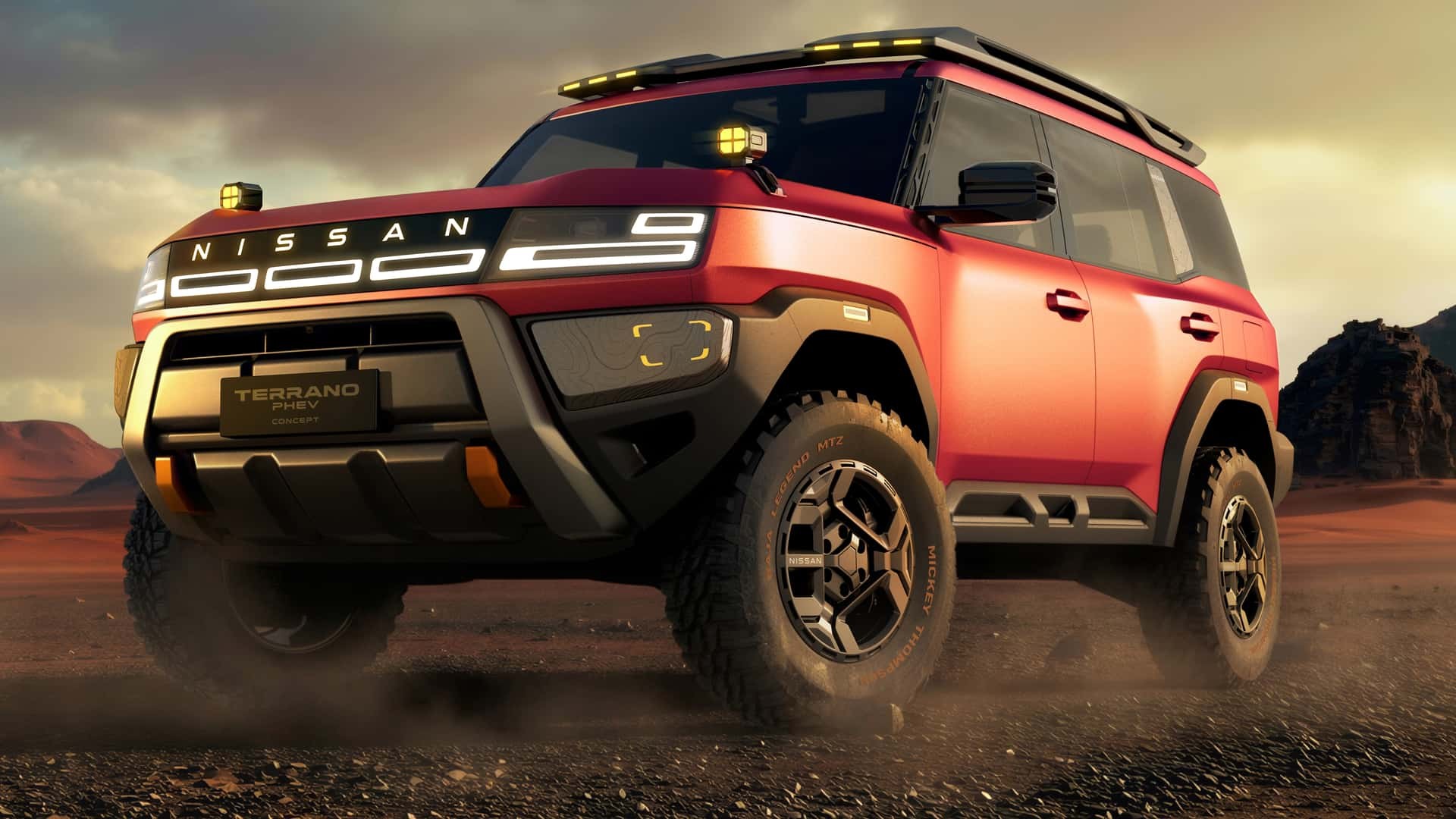
Nissan has officially signaled its intent to re-enter the rugged SUV market by unveiling the Terrano plug-in hybrid (PHEV) concept. Set to debut at the 2026 Beijing Auto Show, this concept represents more than just a nostalgic nameplate revival; it marks a strategic move toward electrified, off-road capable vehicles.
A Return to “Body-on-Frame” Roots
While many modern SUVs utilize unibody construction for better fuel efficiency and on-road handling, the new Terrano concept appears to embrace a traditional ladder-frame (body-on-frame) setup. This architecture is essential for serious off-roading, providing the structural rigidity needed to handle uneven terrain and heavy loads.
The design language is unapologetically utilitarian, featuring:
– Enhanced Geometry: Shaved bumper corners to improve approach and departure angles for climbing obstacles.
– Rugged Hardware: Squared-off wheel arches, heavy-duty skid plates, and auxiliary lighting.
– Utility Features: A side ladder for roof rack access and an externally mounted spare wheel, suggesting a side-hinged tailgate.
The Powertrain: Electrification Meets Off-Roading
Although specific technical details are being kept under wraps, the Terrano’s PHEV designation suggests a technological link to the Frontier Pro PHEV. This connection is significant because it moves Nissan beyond its “e-Power” technology—which uses a combustion engine solely as a generator for an electric motor—into true plug-in hybrid territory.
If the Terrano shares the Frontier Pro’s DNA, consumers can expect:
– A turbocharged 1.5-liter gasoline engine paired with an integrated electric motor.
– High-performance output, potentially reaching up to 402 horsepower and 590 lb-ft of torque.
– An electric-only driving range supported by a substantial battery pack (estimated around 33 kWh).
Strategic Market Positioning
The production version of the Terrano is slated for a 2027 launch, primarily focusing on the Chinese market through a joint venture with Dongfeng. While Nissan has indicated the vehicle will be available in “selected global markets,” its arrival in North America or Europe seems unlikely.
This regional strategy is likely a response to Nissan’s broader portfolio restructuring. As the company streamlines its lineup by cutting low-performing models, it is prioritizing high-growth regions like China to fast-track development and reduce costs. In Western markets, the Terrano would likely face stiff competition from Nissan’s own upcoming Xterra or established mid-size rivals.
Why this matters: Nissan is currently in a period of aggressive recovery. By leveraging partnerships in China and blending electrification with traditional off-road capability, the company is attempting to capture a niche market of consumers who want rugged utility without sacrificing modern, low-emission technology.
Conclusion
The Terrano concept marks a pivotal step in Nissan’s effort to diversify its lineup with specialized, electrified off-roaders. If successful, this model will prove that traditional ruggedness and modern plug-in hybrid technology can coexist in the evolving global automotive landscape.