Midsize sedans are vanishing. Fast.
It used to be the norm. Back in the early 2010 s, you could walk into a showroom and pick a sedan without looking over your shoulder. Not anymore. SUVs and crossovers hold roughly three-quarters of the market now. Sedans are shrinking into a minority share that drops every year.
Efficiency is dead. Long live volume.
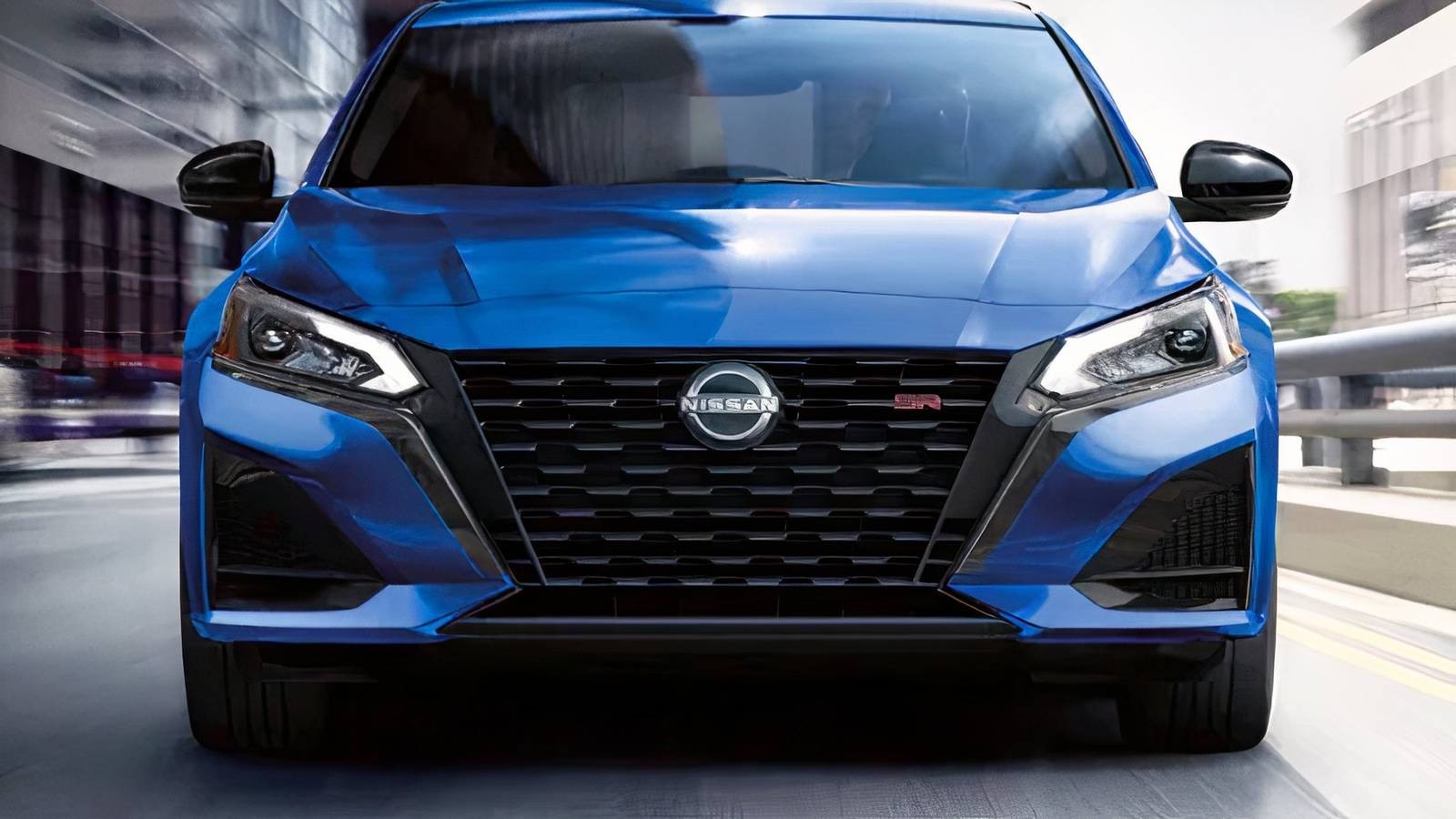
Engineers love the Altima though. It slices through air with a 0.27 drag coefficient. Compact SUVs usually struggle around 0.30 to 0.35. Add its light weight—around 3,200 pounds—and it sips fuel. Front-wheel-drive models hit 39 mpg on the highway. 27 in the city. Real numbers. Not EPA wishful thinking.
But people don’t buy cars based on aerodynamics alone.
We want height. We want to look down at the road. We want cargo space. SUVs deliver that now. They get 35+ mpg highway thanks to turbo fours and hybrids. They offer 8 inches of ground clearance. Manufacturers see this too. Building a sedan platform like the CMF-CF for a dying breed makes zero economic sense. Shared SUV architectures support multiple models globally. That spreads the cost. Sedans don’t. So brands cut them loose.
Why The Altima Is Still Here (Barely)
The 2026 Altima survives because it is simple. Cheap to make. Easy to drive.
Nissan isn’t chasing luxury badges. It’s pushing core utility. The base 2.4-liter engine (often referred to as the QR25 family lineage) outputs 188 hp for FWD. Drop it to 182 hp for AWD. All paired with the Xtronic CVT. You know the type. Some hate the rubber-band feel. They miss the clunk of a gear shift. The Altima doesn’t care. That CVT keeps mileage high. Up to 32 mpg combined for FWD. 28 for AWD.
Space? It works for families. 43.8 inches upfront. 35.2 in the back. That rivals some midsize crossovers. Trunk space sits at 15.4 cubic feet. It’s not a hatchback. It won’t hold your mountain bike upright. But it fits a stroller. And groceries.
Price is the real weapon though. You can walk in the door for the mid-20k range. Competitors? They start higher. They creep past 30k the moment you add safety tech. Nissan throws ProPILOT Assist and adaptive cruise at you early. It keeps the Altima relevant on an old platform. Cost. Space. Efficiency. That’s the triad keeping it alive while others fold.
The SUV Stranglehold
The SUV boom rewired every major automaker’s brain.
Models like the Rogue and RAV4 run on flexible architectures. You can plug them in. You can hybridize them. You can build them in Mexico, the US, or Japan. Nissan loves its crossovers because they sell. Crossovers routinely crack 300k US sales annually. The Altima plays small ball.
And the SUVs are getting smarter. Engines. Tech.
A 1.5 or 2.0 liter turbo in an SUV now makes 180-250 hp. Mileage matches sedans thanks to cylinder deactivation and fancy transmissions. Hybrids? They’re doing 40 mpg combined in compact bodies. Meanwhile, sedans are stuck. Low ride height makes battery placement tricky for EVs. Low roofs limit cargo hacks. Sedans handle better. Sure. Aerodynamics win. Sure. Does the average buyer care? No. Engineering superiority doesn’t sell units.
Why Nissan Thinks Gas Is Still King
Nissan has a point.
Comfort is math. Not emotion. The Altima rides smoother on highways. Lower center of gravity helps. MacPherson struts in front. Multi-link rear. It isolates bumps better than heavy, chunky entry-level SUVs. Unsprung mass eats road feel. The Altima swallows it.
Fuel costs still matter too. At 39 mpg highway, it beats many compact SUVs by several gallons. Drive 15k miles a year. Gas prices spike. The savings add up.
Nissan also plays the long game with platform sharing. The CMF-CD backbone serves models globally. This amortizes costs. Building a new sedan from scratch costs hundreds of millions. Who knows if anyone wants to buy it. So Nissan keeps the Altima running as a “stability” product. Not growth. Just… presence. Coverage.
It’s not about selling more. It’s about not disappearing entirely.
If It Goes, What Remains?
Discontinuing the Altima hurts choice. Specifically under 30k.
You’re left with the Camry and the Accord. They’re good. They’re often hybrids. And they’re pricier. You’d lose one of the last affordable mainstream sedans with AWD. The Altima’s intelligent AWD splits torque actively. You rarely see that in non-luxury midsizers. It’s standard issue on cheap SUVs now. Not sedans.
Running costs shift too. SUVs are heavy. 200-500 pounds heavier. Tires wear faster. Brakes take more heat. Fuel tanks drain quicker. Fleets feel this immediately. High-mileage duty needs efficiency. Sedans deliver it. Turbos and extra weight complicate maintenance for truck drivers.
So the Altima’s exit wouldn’t just mean fewer buttons in a car.
It would mean the death of a specific idea. One built on simplicity. On affordability. On the belief that you shouldn’t have to pay a premium to go from point A to point B comfortably.
When that philosophy fades from the lot.
It’s hard to get it back.