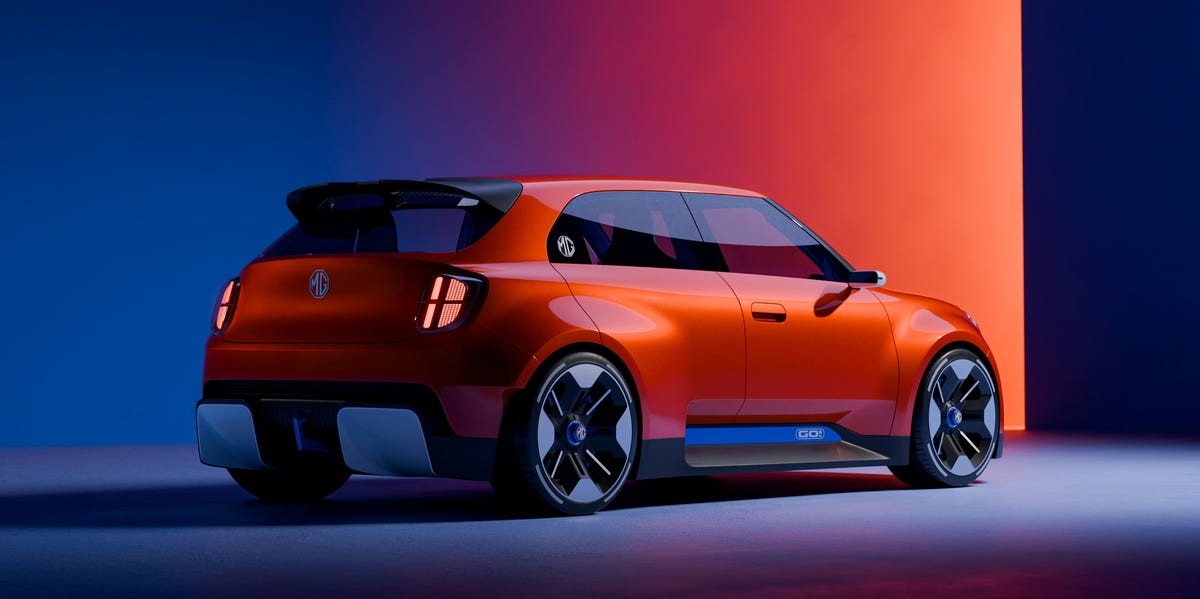
MG dropped a concept car at the Goodwood Festival of Speed. It’s called the MG GO! Note the exclamation point. They meant it.
It’s small. Electric. Looks like a hatchback that actually wants to win a drag race against traffic.
MG belongs to SAIC, China’s big auto group. They’ve been having a nice little run in the U.K., building practical EVs that people apparently enjoy driving. The Cyberster is there, too—a convertible roadster with nearly 500 horses under the hood and a name that sounds like it belongs to a 2030 villain. It works.
Let’s talk about America.
We haven’t officially sold a new MG in the States since the MGB left us in 1980. By then, it was ancient. Rubber bumpers that mocked the chrome lines of its youth. A suspension soft enough for cross-country rallies—maybe even the MGB Dakar. Which sounds ridiculous. I wouldn’t have minded that.
Overseas, MG survived. For a while. Inside the Rover fold. They made cars that probably would have sold if someone had just shipped them west. Take the MG ZT 260.
Think about that car.
Ford Mustang V8. Rear-wheel drive. Manual stick shift. That wasn’t a tweed jacket. That was a proper sports car. A strong cup of tea indeed.
But that’s not the memory Americans keep. We remember the oil stains. The rust. The constant tinkering. Owning a classic MG felt like caring for a very affectionate but deeply incontinent elderly dog. You loved it. You also laid down newspapers. Constantly.
Then SAIC bought the rights. And everything changed.
The old romantic slob is gone. Replaced by a manufacturer of efficient, cheerful electric boxes. The MG4 crossover is selling in Europe. People like it. It’s affordable. It has the vibe. Even if it’s not built on British soil. It doesn’t matter. It drives well enough.
Now look at the new lineup from Goodwood.
There’s a large EV called the Cyber. It’s rounder. Polished. Looks like someone fed a Ford Mach-E to a blender and strained it. Solid choice. Safe choice.
Then there is the GO!.
It’s a hot hatch. Really one. It sits right in that gap left by cars like the Renault 5 E-Tech Electric, which is already giving North America serious longing pangs. If you strip away the pretend aerodynamics and the concept car lights, what’s left is sensible. Affordable. Fun.
Can a Chinese-built hatch with a British badge survive in the U.S.? Maybe not. The politics are tricky. But the product strategy works elsewhere.
Look at Mini. BMW bought that brand twenty-five years ago. Rebuilt it from the ground up. Sold thousands of tiny, quirky boxes to Americans who liked the joke and the engineering. The GO! is trying to be the new Mini.
In the U.K.? It has a fighting chance. In America?
Well.
The U.S. doors aren’t opening. Not yet. Maybe not ever.
But you could fly to the UK. Rent the thing in 2027. Drive it to Goodwood. No oil leaks. No electrical gremlins haunting your garage like ghosts. Just a loud battery and a fast turn-in.
Not bad.
A badge isn’t just history. It’s a permission slip to drive something silly without apologizing for it.
Do we miss the chaos of the old days? The grease? The noise?
Sure.
But the silence of a fast EV isn’t the enemy of fun. Just a different flavor.
Let’s see if people notice.