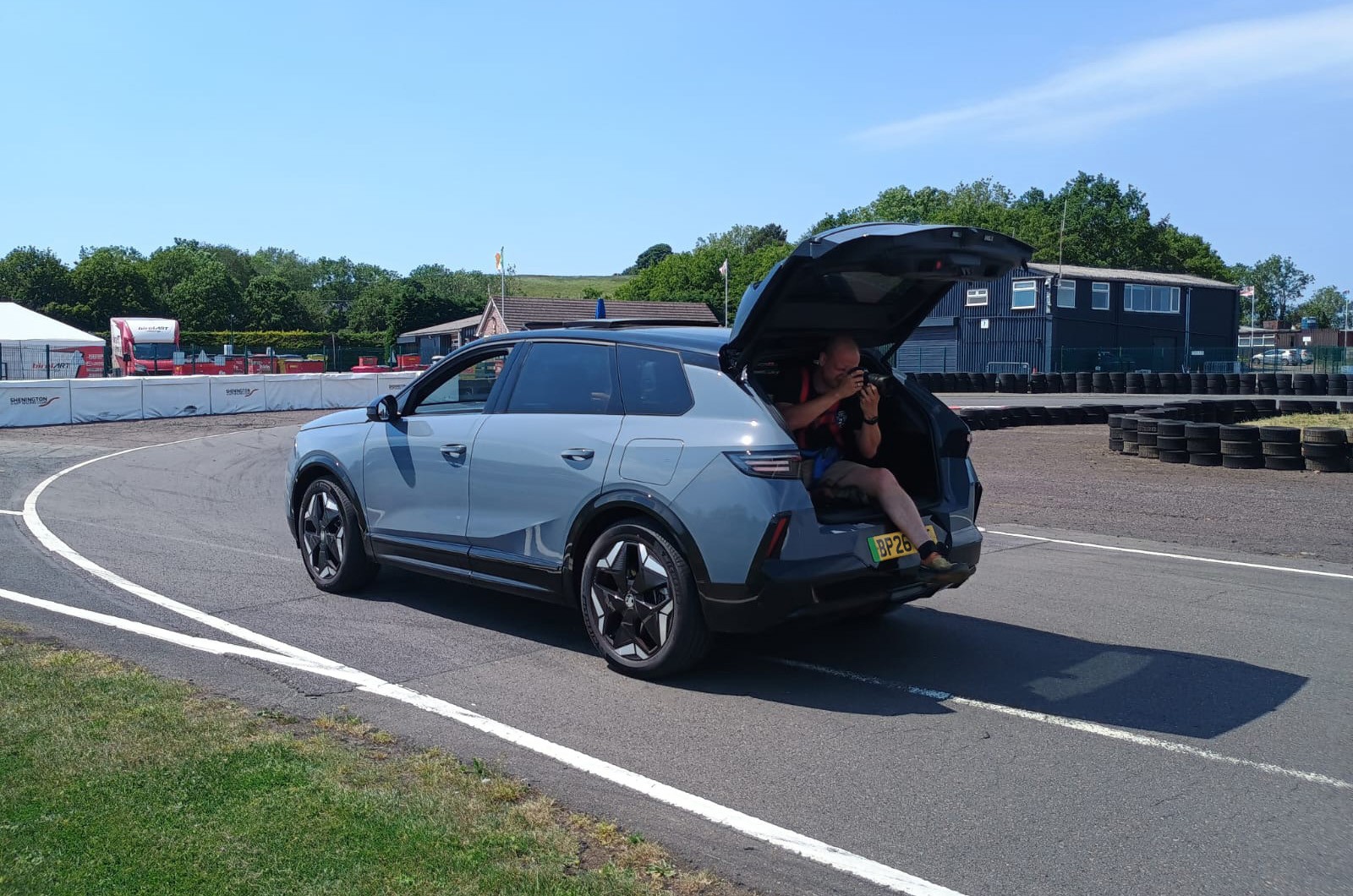
I spent the first few weeks of driving my Vauxhall Grandland wondering if Vauxhall had traded comfort for cornering poise. I thought I should explain why. For a large family SUV, this thing hardly rolls. It corners with surprising agility.
The steering is sharp and accurate. It is not the over-sensitive kind found in the Stellantis group’s Peugeot siblings. But it lacks feel. It is also too light. That’s not the main issue, though.
The main issue is physics. This SUV weighs 2215 kg. That includes the driver. It is a tall vehicle. To stop it from leaning like a ship in a storm, Vauxhall had to fit very stiff springs and dampers. You cannot have that kind of agility without that kind of firmness.
Why the Ride Feels Choppy
So, what is the cost? The ride is choppy. It borders on uncomfortable. This becomes obvious on poor road surfaces. We do not have the best roads in the UK. Let’s be honest about that. Tarmac is rarely billiard-smooth here.
The problem is made worse by the wheels. All-wheel-drive models come with 20-inch alloy wheels as standard. Large wheels mean less sidewall to absorb bumps. Combine that with the stiff suspension. You feel every imperfection.
Is the Sporty Drive Worth It?
Does this mean you should avoid the Grandland? Not necessarily. If you prioritize handling, this SUV delivers. It stays flat in turns. It feels planted. But if you value a plush, floating ride, you will feel the compromise.
The trade-off is real. You get the handling of a smaller car, but you pay for it in ride quality. On smooth highways? Fine. On broken city streets? Not so much.
It’s a specific setup. It targets drivers who want their large SUV to feel small and agile. Just know that “agile” often means “stiff.” There is no VXR badge to explain it away. It is just engineering reality.
And in a country with potholes that seem to multiply overnight? That reality hits hard.