Launching a business is hard. Launching a brand new industry that promises to redefine how millions of people commute? That is a different beast entirely. If you are an electric vehicle manufacturer, you know this struggle intimately.
We are on the brink of a rollout. Over the next two years, the market will see everything from the compact Mitsubishi i-MiEV to commercial workhorses like the Ford Transit Connect Electric. But don’t let the shiny brochures fool you. Success is not guaranteed. The industry is facing a tangled mess of challenges. It is a knot so tight that unraveling it might take more than just engineering.
The Cost Barrier
Here is the first hurdle. Costs.
Battery technology is expensive. To make an electric car practical for average drivers, those batteries need to hold a massive charge. That requires high-grade materials that are difficult to procure and incredibly pricey to manufacture. The result? Electric cars cost significantly more to build. They also cost more to buy.
This creates a classic adoption trap. Consumers are hesitant. It is the free-range chicken and organic egg problem. You need scale to lower prices. You need lower prices to get scale. But you can’t get one without the other.
Range Anxiety Is Real
Beyond the price tag, manufacturers have a lot of convincing to do. Not everyone is sold on the idea that switching to electricity makes sense for their daily life. The culprit is range anxiety.
People are worried about what happens when the battery peters out. With a gas car, running low is no big deal. You pull into a station. You fill up. You are back on the road in five minutes.
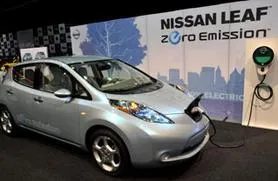
Charging is not so simple. Most production electric cars hitting the market soon can only go about 100 miles (160.9 kilometers) on a single charge. Unless you have access to a specialized charging station—which are currently in short supply—a full charge takes around eight hours.
Most people drive less than 40 miles a day. They can easily charge overnight. For city driving, it works. But for road trips? It is a non-starter.
Consider this scenario. You drive 80 miles. You come home. Then an emergency strikes. You need to drive another 30 miles. Can you make it? The math doesn’t work for the average consumer. This is a huge hurdle.
The Infrastructure Gap
Charging stations are the missing link. They could alleviate a lot of these concerns. But electric cars represent a vast change to the country’s infrastructure.
Right now, most charging needs to happen at home. In a garage. If you live in shared housing or rely on street parking, you are screwed. You likely have the hardest time charging.
Some companies are trying trial phases. Best Buy has put out stations at their stores so shoppers can recharge while they browse. But that is niche. If infrastructure improved, more people would buy electric cars. But infrastructure won’t improve until more people buy electric cars and demand it.
See the pattern? It is the chicken and the egg thing again. The cycle continues.