Buying a car is usually a exercise in finding the least painful compromise. You want safety and cargo space? You sacrifice handling. You want efficiency? You shrink the interior and dull the steering. It is a zero-sum game. Almost no vehicle offers a perfect trifecta of utility, performance, and environmental friendliness.
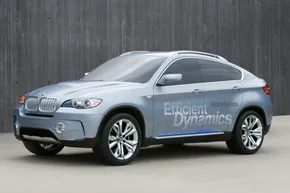
Carmakers are trying to break that cycle. BMW is leading the charge with a strategy that refuses to let buyers accept trade-offs. They are building SUVs and sedans that handle like sports cars, haul like family trucks, and, increasingly, breathe cleaner. A few years ago, the company pulled a surprise with the X6. It looked wrong at first glance. It wasn’t an SUV. It wasn’t a coupe. It was something else entirely.
The X6 blurred every category. It had the tall stance of a crossover but the sloping roofline of a grand tourer. It sat on big tires for off-road capability while boasting a low center of gravity. Under the hood sat turbocharged six- and eight-cylinder engines that pushed it hard. It offered substantial cargo room and eye-catching style. But there was a catch. The fun came with a heavy tax on your wallet at the pump.
The Fuel Economy Penalty
The regular X6 with a V8 engine was thirsty. It managed about 12 miles per gallon in the city. On the highway, that number crept up to 18 miles per gallon. That is not bad for a heavy, wide vehicle. But the M version, a high-tuned beast with a 555-horsepower V8, was worse. It was as fast as the previous M3 sedan. It was thrilling. It was also grossly inefficient.
So why build a hybrid? The logic is simple. You can have performance without the emissions. You can have speed without the waste. BMW built the X6 ActiveHybrid concept to prove this. It combines a gasoline engine with an electric motor. This setup boosts fuel economy. It reduces greenhouse gases. It allows the car to do more with less.
Design and Efficiency
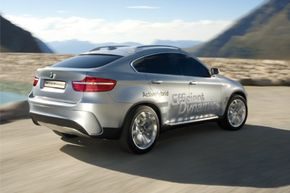
The ActiveHybrid X6 takes that already controversial design and adds a layer of tech that changes the driving experience. It is not just about adding a battery. It is about “Efficient Dynamics.” This is BMW’s term for a suite of technologies that work together to shave weight and improve aerodynamics.
The car looks sharp. The lines are aggressive. But look closer at the details. The wheels are designed for low rolling resistance. The suspension is tuned for efficiency as well as handling. The engine runs on a Miller cycle for better thermal efficiency. The electric motor provides instant torque. This means you get that fast start without spinning up the gas engine fully.
This is not a compromise. It is an evolution. The X6 ActiveHybrid shows that you do not have to choose between being fast and being green. You can have both. The technology is here. The car is ready. The only question is whether buyers are ready for it.

The first thing you notice about the BMW X6 ActiveHybrid isn’t the hybrid badge. It’s the silhouette. Like the standard, non-hybrid X6, this vehicle demands attention. It borrows its aggressive, coupe-like profile from the Volkswagen CC and Mercedes-Benz CLS. The roofline curves sharply toward the rear. BMW refuses to call it an SUV. They market it as a “Sports Activity Coupe.” This is odd given it has four doors.
Critics and fans alike are divided. The automotive press has praised and panned its looks with equal fervor. It’s not for everyone. The X6 sits on massive 21-inch tires. A unique front bumper adds to its intimidating stance. It looks fast, even when standing still.
Mechanically, it shares DNA with the conventional X5. But that curvy roof costs you space. Rear headroom is tighter. Hauling ability takes a hit. The X6 seats four people in two rows. The X5 offers three rows. The X6 is lower. It is also longer.
Inside the Cockpit
Stepping inside, the technology jumps out. The gear selector looks like a video game joystick. You toggle it up and down to change gears. It’s a distinct departure from a traditional lever.
BMW’s iDrive system is here too. It’s the latest version. A knob and computer screen let you control audio, climate, and navigation. It’s familiar for BMW owners. It feels out of place if you expect a minimalist interior.
Handling and Safety Tech
The X6 doesn’t feel like a 5,000-pound (2,268 kilograms) brick. That’s by design. The xDrive all-wheel-drive system works in tandem with Dynamic Performance Control. The car distributes engine power to any of the four wheels based on conditions.
This setup allows for agile handling. You get exact control. You wouldn’t expect this from a vehicle of its weight. It inspires confidence on every surface.
The Hybrid Edge
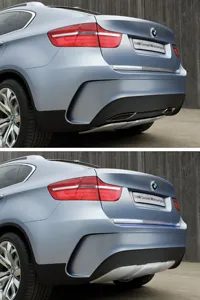
The hybrid concept was unveiled at the 2007 Frankfurt Auto Show. It features unusual tricks to emphasize electric running. Aluminum plates underneath the car slide out. They cover up the exhaust tips. This happens when the car runs solely on electric power. It’s a small detail. But it signals the car’s intent to hide its emissions when possible.
What Powers the X6 ActiveHybrid?
We’ll dig into the engine bay next. We’ll see what makes the BMW X6 ActiveHybrid tick. How does the electric motor boost fuel economy? How does it enhance performance? The numbers are coming.

How the Two-Mode Hybrid System Works
Skip the twin-turbo inline-six or the standard V8 for a moment. The BMW X6 ActiveHybrid concept strips that out entirely. Instead, it relies on a V8 engine paired with two electric motors. This isn’t a simple parallel hybrid. It uses a proprietary two-mode transmission system developed through a joint effort between General Motors, BMW, and Daimler.
Inside the gearbox, three gearsets split power flow between the combustion engine and the electric motors. A large battery pack keeps those motors fed. The transmission itself decides the power source. It switches between electric-only, gasoline-only, or a blend of both.
The system is ideal for SUVs because of its ability to pull large amounts of weight.
This specific setup has been proven on GM transit buses for years. It handles heavy loads without breaking a sweat.
Two Distinct Driving Modes
The name “two-mode” isn’t just marketing fluff. It describes two distinct operating states.
Mode one kicks in when you’re pulling away from a stop or driving at low speeds. Here, the electric motors take the lead. They prioritize efficiency. The electric motors hit peak torque instantly from a standstill. No lag. Just instant shove.
Mode two engages for high-speed cruising or hard acceleration. The gasoline engine takes over or supplements the electric motors. This is where you get the high-RPM power you expect from a V8.
Deceleration isn’t wasted. The brakes capture kinetic energy. That energy flows back into the battery pack. It’s a closed loop of sorts. You get efficiency back into the system every time you lift off the gas.
Efficient Dynamics and Real-World MPG
BMW calls this philosophy “Efficient Dynamics.” The goal is simple. Create a vehicle that is exhilarating to drive without sacrificing fuel economy. Combine the best assets of both worlds. Electric torque for launch. Gasoline power for sustained speed. The result is a fast car that burns less fuel to achieve high performance.
BMW hasn’t released final horsepower or MPG figures. They’re keeping those cards close to the vest. But the math is straightforward. They claim a 20 percent increase in fuel economy over the standard V8 X6.
If that holds up, you’re looking at nearly 22 miles per gallon on the highway. That’s about 9.4 kilometers per liter. Think about that. An SUV that weighs as much as a small house and prioritizes spirited driving. Getting 22 mpg on the highway is respectable. It’s not a Prius. But it’s far from the gas guzzlers of the past.
The Trade-Offs of Hybrid Luxury
There’s always a cost. Physics doesn’t allow for free lunches.
The ActiveHybrid system adds weight. Batteries are heavy. Motors are heavy. The transmission is heavier than a standard gearbox. It also adds cost. Developing this joint technology between three major manufacturers is expensive.
But the concept, possibly set for production by 2010, suggests we might have our cake and eat it too. You get SUV capability. You get performance. You even get Earth-friendly emissions levels. Is that realistic? Maybe. The technology exists. The execution is the challenge.
Follow the links if you want to dig deeper into hybrid tech. The landscape is changing fast.