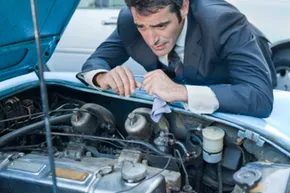
It happens to the best of us. You’re cruising down the highway, music down, windows up, and then it cuts through the silence. A metallic rattle from deep within the block. Is it exhaust? Maybe. But if it sounds like a marble rolling around in a tin can, you’ve likely identified engine knock.
Or “pinging.” Or “detonation.”
Pick your poison. All three terms describe the same unsettling reality: fuel is not burning the way it should. It’s not a smooth, controlled wave of energy driving the piston down. It’s an erratic explosion. And while the terminology might vary, the anxiety it induces is universal. You aren’t alone in worrying. The name itself suggests violence. Metal hitting metal. Something breaking.
But here’s the thing about engine knock—it’s rarely a single culprit. It’s a symptom. It’s the check engine light of combustion. To fix it, you have to understand why the fireball is acting up in the first place.
The Chemistry of a Bad Burn
Inside a cylinder, fuel and air need to mix and burn in a precise timeline. The spark plug fires. The flame front spreads evenly. The piston moves down. Power. Repeat.
When engine knock occurs, that timeline shatters. The fuel detonates before the spark plug can do its job, or the pressure builds so fast that the fuel ignites spontaneously. It’s a premature explosion. A mini-bomb goes off while the piston is still trying to compress the mixture. That shockwave hits the cylinder wall and the piston head. That’s the noise. And over time, that repeated shock can crack pistons, blow head gaskets, and generally ruin your day.
So, what causes this premature detonation? It usually boils down to three main problems.
Low Quality Fuel
You are what you eat. Your engine is no different.
Gasoline has an octane rating. This number is a measure of how much compression the fuel can withstand before it self-ignites. High-performance engines with high compression ratios need fuel that can handle that pressure without exploding too early. That’s why you can’t put regular pump gas in a Ferrari. The engine will knock itself to death.
But it’s not just about expensive cars. Even standard vehicles struggle with sub-par fuel. Low-quality gasoline often has inconsistent chemical compositions. It burns hotter. It creates higher cylinder pressures. This leads to pre-ignition—the fuel catches fire before the spark plug even fires.
When pre-ignition happens, the burn is incomplete. You’re left with unburned hydrocarbons and carbon compounds that don’t just disappear. They stick to the walls of your combustion chamber. This debris buildup creates a nasty cycle.
Deposits on the Cylinder Walls
It’s a vicious loop. Bad fuel causes pre-ignition. Pre-ignition causes deposits. Those deposits then cause more knocking.
Think of carbon deposits like cholesterol in your arteries. They take up space. In a cylinder, space is precious. The volume available for the air-fuel mix shrinks as carbon builds up on the piston crown and cylinder walls.
Why does this matter? Because it raises the compression ratio.
You didn’t change the mechanical compression ratio, but the effective volume is smaller. So when the piston reaches top dead center, it’s compressing a denser, smaller pocket of gas. Higher pressure equals higher temperature. And higher temperatures make fuel more likely to self-ignite.
So, a layer of gunk makes your engine run hotter and harder, which creates more knock, which creates more gunk. It’s a self-perpetuating nightmare for your piston rings.
The Wrong Spark Plugs
People love to save a few bucks. They look at the OEM recommendation for a set of iridium plugs that costs $80 and see a set of copper-core replacements for $20. They buy the cheap ones.
Bad move.
Spark plugs aren’t just switches. They are precision instruments. They control the heat range of the combustion chamber. If you install a plug that runs too “hot” for your engine’s conditions, it can act as a glow plug. It ignites the fuel before the spark actually fires. If you install one that runs too “cold,” it might not self-clean, leading to fouling and misfires.
Either way, incorrect spark plugs disrupt the delicate balance of the internal environment. They contribute to the deposit buildup mentioned above. They lead to improper running temperatures. And we already know that heat and deposits lead to engine knock.
It’s not just the big three, though. Dirty fuel injectors can create uneven fuel distribution, leading to lean conditions that run hot. A faulty knock sensor might not tell the ECU to pull timing, allowing the damage to continue. Worn piston rings allow compression to leak, messing up the pressure dynamics. Or the cooling system could be failing, simply letting the whole assembly run too hot.
Fixing the noise requires a systematic approach. You can’t just throw parts at it. You have to diagnose the root cause. Is it the fuel? The plugs? The carbon buildup?
Once you know the source, you can start the process of restoring proper combustion. The next steps involve cleaning, replacing, and adjusting to get that smooth, even burn back.

Fixing Engine Knock: Fuel, Additives, and Spark Plugs
You fixed the issues listed in part one, so the knock should be gone. Maybe. Sometimes you misdiagnose. Sometimes there are two problems hiding behind one sound. Sometimes your car is just old and prone to pinging. Mike Allen at Popular Mechanics says an older car with a persistent ping is likely not in immediate danger.
If the noise is new? Unbearable? Then take action.
Start with the fuel. Buy higher quality fuel. Check your owner’s manual or the sticker near the gas cap. Most US cars need 87 octane. High-end and performance cars need higher ratings. The Federal Trade Commission suggests switching to a higher octane rating only if it alleviates knocking. Suspect old gas? Add an octane boost additive. Run through three full fill-ups with fresh gas before judging the results.
Try detergent additives too. Fuel injector cleaner helps dirty combustion chambers and injectors. Run three full tanks. If that fails, switch gasoline brands. These steps don’t hurt.
Cleaning Combustion Chambers
Decreasing the compression ratio can help. Dirty cylinders are another culprit. Carbon components in gasoline build up over time. Small deposits compound. Higher compression increases deposit formation. The problem gets worse fast.
It’s easier to run a cleaning additive through the gasoline at the manufacturer’s recommended interval. That keeps cylinders reasonably clean. You don’t want to fiddle with compression and temperatures to accommodate existing deposits. Those deposits will just get larger.
Detergent cleaning additives are required by the U.S. Environmental Protection Agency. That’s why you see ads for “cleaner engine” fuels at gas pumps. All octane levels should perform similar cleaning functions.
Checking Spark Plugs
Check the spark plugs. It’s a simple process. If you’re uncomfortable or lack tools? Leave it to a mechanic.
Pull the plugs. Compare model numbers stamped onto them with your manufacturer’s recommendation. Found in the owner’s manual.
If the spark plugs were wrong? You’re already at the mechanic. Your car has other problems.
Engine Knock FAQ
Can bad spark plugs cause engine knock?
Yes. Spark plugs control the engine’s internal environment. They operate under precise conditions. Wrong plugs create sub-par conditions for burning fuel. They lead to combustion chamber deposit buildup. Improper running temperatures follow.
What causes an engine knock?
Low quality fuel. Deposits on cylinder walls. Using wrong spark plugs. All can lead to an engine knock.
How do you fix engine knock?
Try higher quality fuel. Decrease the compression ratio. Check spark plugs. Remember it’s easy to misdiagnose the cause. See a mechanic if you can’t fix it.
What is an engine knock?
Hard sounds. Often imprecise. If produced by a lot of moving metal parts, that’s probably not good. Whether it’s an annoying ping. A persistent knock. Or a dramatic detonation. It traces to several sources.
How much does it cost to fix engine knock?
Easy to misdiagnose. Might pay a visit to your mechanic. Expect $88 to $144 for a noise diagnosis. Additional funds to actually get it fixed vary. Depends on the underlying cause.