The Japanese kei van segment moves slower than tectonic plates.
Honestly, that’s kind of the point. Stability matters when your entire life fits in the back of a Suzuki Every.
For the uninitiated, the Nissan Clipper Van isn’t really a Nissan. It is a rebadged Suzuki, just like the passenger-focused Clipper Rio. This underlying platform has sat untouched since 2015 without flinching. Not that anyone minded. They are reliable bricks of utility. But for 2026, the dust is shaking off the engine.
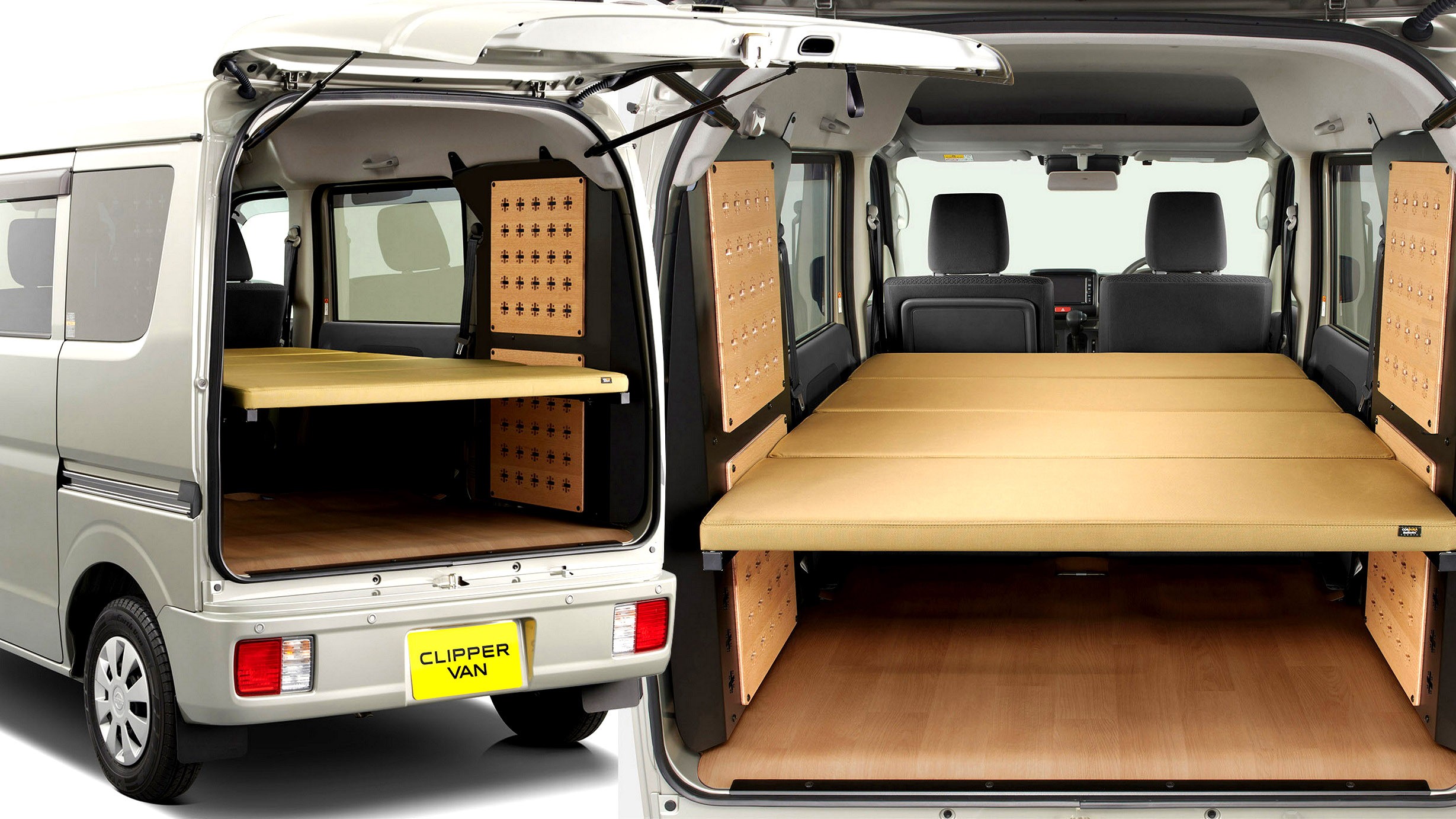
Nissan slapped a light refresh on it. More importantly, they finally built a factory-supported camper conversion. It’s worth looking at, even if only in pixels.
The Multi Rack: Not Just A Toy
The big news isn’t the paint job. It’s the Clipper Van Multi Rack.
Created by Nissan’s NMC division (because sometimes a big auto maker wants to build small stuff properly), this package turns the rear bay into something actually usable. Think overlanding on a budget. Or running a mobile coffee shop for pocket change.
“The rear cargo bay reworks into something genuinely configurable.”
Heavy-duty steel racks go up the sides. Pegboards hold tools. Multi-use brackets take the strain. The floor is utility-grade resin, meaning you can spill motor oil, coffee, or existential dread on it and it won’t stain.
If you want to sleep in it, Nissan throws in a multi-piece bed mat. Remove it. Go driving. Snap it back in. Adjust it to four different heights. Boom, flat bed. The tiny van becomes a mobile bedroom. No duct tape required.
A Facelift, Barely
The visual tweaks are… there.
The Van gets a revised bumper, blacked-out grille, and mirror caps to match. It still rides on twelve-inch steel wheels because fashion is optional and mud is inevitable.
The Rio, meanwhile, tries to look sporty. Darkened headlights, chrome grille insert, deeper side skirts, and a roof spoiler. It even gets 14-inch alloys if you pay extra. A new Majestic Deep Gray is available. Does it help? Sure. It separates it from the utilitarian Van brother. The Suzuki Every offers a rugged “J Limited” trim. Nissan skipped the off-road theater entirely. They kept it clean.
Inside, the analog dials are gone. Replaced by a digital speedometer. Progress, technically. The upholstery is now all-black fabric. Consistent. The Rio adds heated steering wheels and heat-absorbing glass for the windshield and front sides. Cold hands, warm eyes.
Safety tech caught up too, mostly because Japan made them. The 2015 architecture wasn’t ready for today’s regulatory gunpoint, so Nissan forced compliance. Lane Departure Prevention Assist. Sign recognition. Intelligent Emergency Braking. Misstep collision prevention. All standard. It saves lives. Or at least insurance premiums.
The Heartbeat
Under the hood? Same Suzuki-sourced heart. Always is.
A 658cc three cylinder. Naturally aspirated makes 48 hp. Paired with a five-speed manual or CVT.
Want a kick in the teeth? The turbo version pushes 63 hp. Comes with a CVT only. No stick shift there. Both engines can spin two wheels or all four. RWD or 4×2… wait, no. Rear-wheel drive or part-time four-wheel drive. Get it straight.
Pricing breaks down to sanity if you convert the yen.
- Clipper Van : Starts at ¥1.45m (~$9,100)
- Clipper Rio : ¥2.13m to ¥2.36m (~$13,400 – $14,900)
- Multi Rack Package : ¥2.24m to ¥2.63m (~$14,100 – $16,600)
- Chair Cab : Accessible version, around ¥2.5m (~$15,600+)
Do you see a trend?
America wants this. We want tiny houses that fit in parking spaces. We want affordable adventure that doesn’t require a second mortgage. Nissan sees it. The Japanese market demands it.
But we are locked out. Again.
Maybe you’ll buy one, learn to drive it backwards across the ocean, and keep it hidden in your garage? Just thinking. 🇯🇵