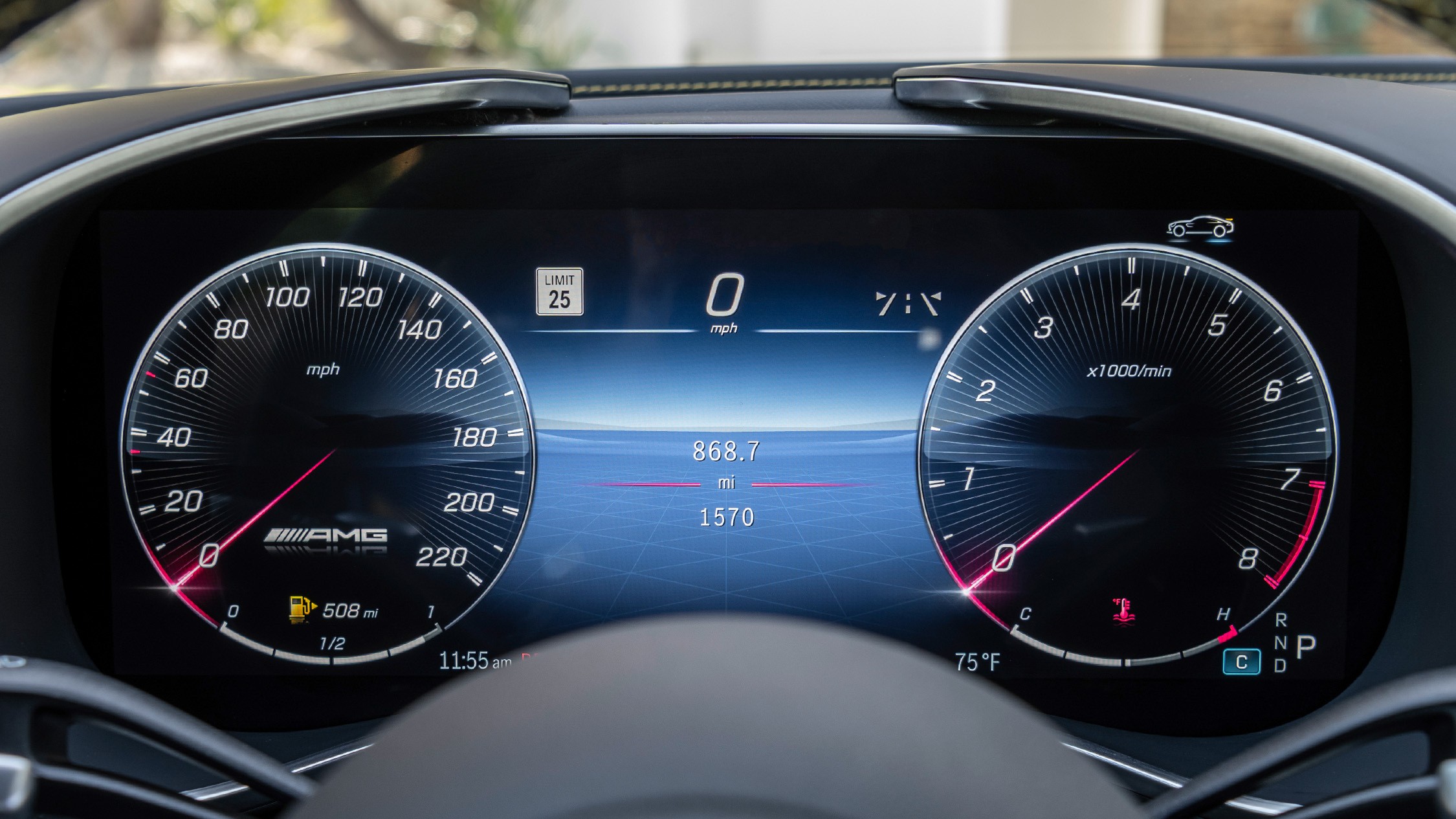
A significant safety concern has emerged within the Mercedes-Benz lineup, prompting a formal recall of 144,000 vehicles across multiple model years. The issue centers on the brand’s modern digital instrument clusters, which can unexpectedly go blank, leaving drivers without critical information such as speed, fuel levels, or warning indicators.
While digital dashboards offer advanced features like augmented reality navigation and lap timers, they introduce a vulnerability that analog gauges never possessed: total system failure. For owners of affected 2025–2026 models, this is not merely an inconvenience—it is a serious safety hazard.
The Scope of the Recall
The recall is extensive, covering a wide array of Mercedes-Benz vehicles equipped with digital displays. This is not an isolated incident limited to niche performance models; it affects core segments of the company’s sales.
Affected models include:
– C-Class sedans
– E-Class sedans
– CLE coupes and convertibles
– GLC SUVs (the largest segment of affected vehicles)
– SL roadsters
– AMG GTs and various AMG performance variants
Essentially, if a Mercedes-Benz sold between model years 2025 and 2026 features a large digital instrument cluster, it is likely included in this campaign. Older models with traditional analog dials, such as the W123 or 190E, are unaffected.
Why This Matters: The Risk of “Blind” Driving
According to the National Highway Traffic Safety Administration (NHTSA), the root cause is a software flaw within the infotainment control unit. Under specific conditions, the system triggers repeated resets as part of a fallback protocol intended to improve stability. However, during these resets, the instrument cluster may temporarily cease to function.
The Danger: Losing visibility of speed and warning lights at highway speeds (e.g., 75 mph / 120 km/h) creates immediate risks. Drivers may inadvertently speed, fail to notice low fuel, or miss critical safety warnings, increasing the likelihood of accidents.
Mercedes-Benz initially attempted to address the issue quietly through over-the-air (OTA) updates and software campaigns starting in 2025. However, as complaints mounted and regulatory pressure increased, the automaker was forced to escalate the matter to a formal safety recall.
Resolution and Next Steps
To date, Mercedes-Benz has reported no crashes or injuries linked to this defect. Nevertheless, the company acknowledges receiving numerous field reports and warranty claims.
How owners are being addressed:
– 62% of affected vehicles have already received the necessary software update remotely via OTA.
– The remaining 38% cannot be updated over the air and must visit a dealership for manual software installation.
The GLC range represents the largest portion of the recall, followed by lower-volume AMG and Maybach models. Owners of affected vehicles should check their registration status with Mercedes-Benz or visit the NHTSA website to confirm if their vehicle requires dealer service.
Conclusion
This recall highlights the growing complexity and potential vulnerabilities of software-dependent automotive systems. While digital interfaces offer enhanced functionality, they require robust engineering to prevent critical failures. For now, Mercedes-Benz owners are urged to ensure their vehicles receive the updated software to restore safe, reliable operation.