


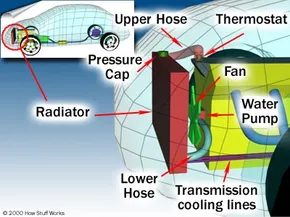
Gasoline engines are terrible at turning fuel into motion. Roughly 70% of the chemical energy in every gallon of gas you burn ends up as waste heat. If your car didn’t have a cooling system, it would melt into a puddle of scrap metal in minutes. The radiator’s job is to dump that heat into the atmosphere, dissipating enough thermal energy to heat two average-sized houses when you’re cruising on the interstate.
But cooling isn’t just about preventing explosions. It’s about precision.
Why Heat Is Necessary
Your engine doesn’t just need to stay cool. It needs to stay hot. Specifically, it needs to hit an operating temperature of about 200 degrees Fahrenheit (93 degrees Celsius). If the engine is cold, metal parts expand unevenly, friction increases, and combustion is inefficient. You get worse fuel economy, higher emissions, and accelerated wear.
The cooling system’s real job is to get the engine to 200°F as fast as possible and then hold it there. It acts like a thermostat for the entire powertrain.
Two Ways to Cool a Fire
There are only two methods for managing this thermal chaos: liquid cooling and air cooling.
Liquid cooling is what you have in your car. It’s the standard for almost every modern vehicle. A pump circulates a special fluid—coolant—through passages inside the engine block. The coolant absorbs heat from the cylinders and heads, then travels to the radiator. There, it dumps that heat into the air rushing past the fins.
Air cooling is the archaic alternative. Found in older vehicles like the original Volkswagen Beetle or the Porsche 911, this method uses no coolant. Instead, the engine block is wrapped in aluminum fins. A powerful fan forces air over these fins to strip away the heat. It’s simpler, but harder to control precisely, which is why you won’t find it in new cars.
Since liquid cooling dominates the market, that’s where we’ll focus. But before we dive into the radiator and thermostat, we need to look at the plumbing. How does that fluid move? And why does the system need to be pressurized?


Tracing the Coolant Loop
Forget the abstract idea of a “cooling system” and look at the plumbing. It’s a closed loop. You start at the water pump. It shoves fluid into the engine block, threading it through passages hugging the cylinders. From there, the fluid migrates up into the cylinder head. It’s hot. Very hot.
That’s where the thermostat sits. It’s the gatekeeper at the exit of the engine. If the engine is cold, the thermostat stays shut. The fluid bypasses the radiator entirely, circulating straight back to the pump to warm up the metal faster. Once the engine hits operating temperature, the thermostat opens. Now the hot fluid gets funneled through the radiator to shed that heat before returning to the pump.
It’s not just the engine getting attention. There’s a secondary loop for your cabin heater. Fluid pulls from the cylinder head, hits the heater core behind your dashboard, and returns to the pump. You feel the warmth? That’s waste heat you’re repurposing.
Automatic transmissions add another layer. They have a dedicated circuit built into the radiator. Transmission fluid gets pumped through a secondary heat exchanger tucked inside the radiator fins. The same airflow cooling your engine is also keeping your gearbox from boiling over.
The Chemistry of Coolant
Cars endure extremes. Sub-zero winters. Sweltering summers exceeding 100 F (38 C). The fluid inside needs to survive it all. It requires a low freezing point, a high boiling point, and significant heat capacity.
Water is excellent at holding heat, but it freezes at 32 F. That’s useless in Michigan or Minnesota. So we use a mix. Water and ethylene glycol (C2H6O2), commonly called antifreeze. Adding ethylene glycol drastically improves both freezing and boiling limits.
| Fluid Composition | Freezing Point | Boiling Point |
|---|---|---|
| Pure Water | 0 C / 32 F | 100 C / 212 F |
| 50/50 Mix (Antifreeze/Water) | -37 C / -35 F | 106 C / 223 F |
| 70/30 Mix (Antifreeze/Water) | -55 C / -67 F | 113 C / 235 F |
But look at that boiling point on a 50/50 mix. 223 F. Engine coolant can hit 250 to 275 F (121 to 135 C). At those temperatures, even ethylene glycol would boil away. The system needs another trick.
Pressure.
The cooling system is pressurized. Like a pressure cooker raises the boiling point of water, pressurizing the coolant raises its boiling point. Most systems hold pressure at 14 to 15 pounds per square inch (psi). That extra pressure boosts the boiling point by another 45 F (25 C). Suddenly, your 275 F coolant stays liquid. It doesn’t flash to steam. It remains stable.
Antifreeze also carries corrosion inhibitors. Without them, the aluminum and steel inside the block would eat themselves from the inside out.
How the Water Pump Moves Fluid
The water pump is straightforward mechanics. A centrifugal pump. Driven by a belt linked to the engine’s crankshaft. It spins whenever the engine runs. No spin, no flow. No flow, overheating.
Centrifugal force does the work. As the pump spins, fluid is thrown outward toward the casing. This creates a low-pressure zone in the center, drawing more fluid in from the inlet. The inlet is positioned near the center, right where fluid returns from the radiator. It hits the vanes. The vanes fling the fluid to the outer edge. From there, it’s pushed into the engine block.
The path is fixed. Pump → Engine Block → Cylinder Head → Radiator → Pump.
It’s a continuous cycle. The pump doesn’t push heat; it pushes fluid. The radiator does the heavy lifting of removing heat. The thermostat decides which path the fluid takes. And the pressurized, chemically treated mixture ensures the whole thing doesn’t freeze or boil away.
The engine block itself? It’s just the chamber where the heat is generated. The coolant doesn’t cool the engine by magic. It cools it by absorbing energy and moving it away. Fast. Efficient. Constant.
What happens when that belt snaps? The pump stops. The fluid stagnates. The heat has nowhere to go. The engine cooks. It’s not complicated. It’s just physics and plumbing.

Why Your Engine Needs Coolant Everywhere
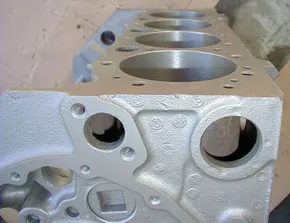
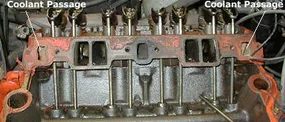
Coolant isn’t just flowing through a few big tubes. The engine block and cylinder head are full of hidden passageways. These channels are cast or machined directly into the metal. Their job is simple. They move fluid to the hottest spots.
Combustion temperatures hit 4,500 F. That is 2,500 C. At that heat, metal behaves differently. It weakens. It expands. Without active cooling, the cylinder walls would fail fast.
The exhaust valve area is the weak point. Heat concentrates there. Every bit of available space around the valves gets filled with coolant jackets. Engineers pack it in. There is no wasted room. The goal is to pull heat away before it spreads.
What Happens When Cooling Fails
Skip the coolant. Or let it leak away. The engine runs hot. Then it runs too hot.
Pistons expand. Cylinders stay rigid. Friction spikes. Heat builds. Without fluid to carry it off, the metal grabs hold. The piston fuses to the cylinder wall. Welding happens at a microscopic level. Then it becomes macroscopic.
Seizure is the result. You lose power instantly. The engine locks up. Repair is rarely possible. Destruction is total.
“If the engine goes without cooling for very long, it can seize.”
This isn’t theoretical. It’s engineering reality. Metal doesn’t forgive neglect.

Most people assume that a hotter engine is just an engine losing its mind, but in the world of high-performance engineering, heat management is a math problem. Specifically, it’s a problem of where to direct the thermal energy. By insulating critical components, engineers can keep structural metal cooler and push more waste heat out through the exhaust. This isn’t just about saving the radiator; it’s about efficiency.
The Ceramic Solution
One effective strategy for reducing the thermal load on the cooling system is to limit the amount of heat transferred from the combustion chamber directly into the engine’s metal structure. Some manufacturers achieve this by applying a thin layer of ceramic coating to the interior surface of the cylinder head’s combustion chambers.
Ceramic is a thermal insulator. It doesn’t conduct heat well. When you coat the combustion chamber walls with this material, the heat stays in the gas instead of soaking into the aluminum or iron block. The result is less heat conducted through the metal and a higher volume of thermal energy exiting via the exhaust stream. This lowers the overall thermal stress on the engine block.
Why Insulation Matters
The goal isn’t to make the engine run hotter in a way that causes damage. It’s about moving heat away from sensitive structural components. A cooler engine block means less thermal expansion, tighter tolerances, and reduced strain on the cooling system. The ceramic layer acts as a barrier, forcing the heat to remain within the combustion event long enough to do useful work before being expelled.
This approach is particularly relevant in engines where space is at a premium or where cooling efficiency is critical. By keeping the metal cooler, you reduce the risk of pre-ignition and detonation, which can be catastrophic in high-compression setups. The ceramic coating essentially allows the engine to handle more aggressive tuning without overwhelming the radiator.
Radiator Implications
When you reduce the heat entering the coolant, the radiator doesn’t have to work as hard. This isn’t just about preventing overheating; it’s about optimizing the entire thermal loop. A less stressed cooling system means the water pump runs more efficiently, and the fan engages less frequently. The net effect is a more stable operating temperature.
However, this isn’t a magic bullet. The ceramic coating must be applied correctly. If the layer is too thick, it can actually insulate the combustion chamber too much, leading to poor flame propagation and reduced power. If it’s too thin, it fails to provide adequate protection. Precision is key. The coating needs to be durable enough to withstand the extreme pressures and temperatures inside the cylinder without flaking off into the oil or fuel system.
Real-World Applications
You’ll see this technology in high-performance vehicles and racing engines where every degree of thermal efficiency matters. It’s less common in standard commuter cars due to cost and complexity, but the principle remains the same. Engineers are always looking for ways to manage heat without adding bulk. Ceramic coatings offer a lightweight solution that doesn’t require larger radiators or heavier cooling fans.
The trade-off is maintenance. If the coating degrades, it can lead to unexpected issues. But when done right, it’s a subtle yet powerful tool for managing engine heat. It’s not about eliminating heat; it’s about directing it.
The Broader Picture
Heat management is a balancing act. Too much heat in the coolant, and you risk

The Heat Exchanger Core
At its heart, a radiator is just a heat exchanger. Its job is simple: move heat out of hot coolant and dump it into the air. The fan forces air through the core, while coolant circulates inside.
Most modern vehicles use aluminum cores. They are constructed by brazing thin aluminum fins to flattened aluminum tubes. Coolant enters the inlet, travels through a parallel array of tubes, and exits at the outlet. The fins grab heat from the tubes and shed it to the passing air stream.
Inside those tubes, you might find a turbulator. It’s a fin-like insert that stirs up the fluid flow. Without turbulence, only the layer of coolant touching the tube wall gets cooled. The rest just slides by. Heat transfer relies on the temperature difference between the tube and that contact layer. If the contact layer cools too fast, the gradient drops, and heat extraction slows down. Turbulence mixes the bulk fluid with the boundary layer, keeping the contact temperature higher and ensuring every drop of coolant contributes to the cooling process.
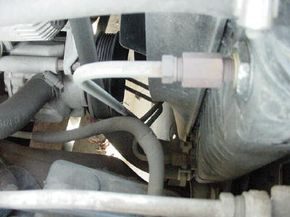
Each side of the core typically has a tank. Hidden inside is a transmission cooler. You can spot the input and output ports where transmission oil flows in. It’s a radiator within a radiator. Instead of using air, the oil swaps heat with the engine coolant.
Pressure Cap Mechanics
The radiator cap isn’t just a lid. It raises the coolant’s boiling point by about 45°F (25°C). It works on the same principle as a pressure cooker.
The cap is essentially a pressure release valve, usually set to 15 psi. As coolant heats up, it expands. Pressure builds. The cap is the only escape route. The spring tension inside determines the max pressure. Once the system hits 15 psi, the valve opens. Coolant flows out through the overflow tube into the reservoir. This keeps air from sneaking back in.
When the engine cools, the fluid contracts. A vacuum forms. A second spring-loaded valve in the cap opens, sucking coolant back from the bottom of the overflow tank. It refills the system without introducing air pockets.
The Thermostat’s Role
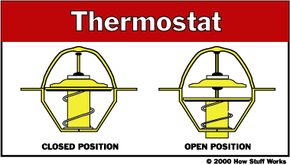

The Thermostat: Engineering Speed and Stability
The thermostat’s only real job is to get the engine hot fast, then keep it there. It doesn’t care about warmth for warmth’ sake. It cares about efficiency. To do this, it regulates how much coolant actually hits the radiator. When the engine is cold, the path to the radiator is blocked. Cold. Blocked. The coolant just recirculates through the engine block, heating up without losing energy to the air outside.
Once the coolant hits 180 to 195 degrees Fahrenheit (82–91 C), things change. The thermostat begins to crack open. It allows fluid to bleed into the radiator. By the time you hit 200 to 218 F (93–103 C), that valve is wide open. Maximum flow. Maximum cooling.
If you ever see one in action, it looks like magic. You can buy a thermostat for a few bucks at any auto parts store. Drop it in a pot of boiling water on the stove. Watch the valve open up by an inch. It just… opens. No electricity. No sensors. No computer. Just physics doing its job.
The Wax Secret
The trick isn’t in the metal casing. It’s in the small cylinder on the engine side. That cylinder is packed with a special wax. This wax has a melting point right around 180 F. (Some thermostats are tuned slightly higher or lower, but 180 is the common benchmark.)
A rod attached to the valve presses directly into this wax. When the coolant warms up, the wax melts. Here’s the thing: wax doesn’t just melt. It expands. Significantly. As it turns from solid to liquid, it pushes the rod out of the cylinder. That rod pulls the valve open.
It’s the same principle you see in old-school thermometers or those science class experiments with a bottle and a straw. Except here, the phase change from solid to liquid adds a huge boost in volume. The expansion is strong enough to move a heavy mechanical valve against spring pressure.
This wax-actuated mechanism isn’t just for cars. You’ll find it in automatic greenhouse vents and skylight openers. The only difference? Those devices use wax that melts at lower temperatures. Lower heat, early activation.
The Fan
The radiator isn’t always enough. When the car is stopped at a red light, or crawling through traffic, airflow drops to nearly zero. The coolant might be hot, but it’s not getting cooled. That’s where the fan steps in.
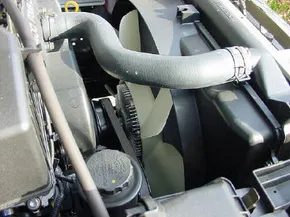
The thermostat isn’t the only thing holding the line. The cooling fan has to be controlled so that the engine maintains a constant operating temperature. If the fan runs hot and heavy when it shouldn’t, you waste fuel. If it quits when it’s needed, you cook the head gasket. Front-wheel drive platforms changed the game here.
Most front-wheel-drive cars use electric cooling fans. The layout dictates this. The engine is mounted transversely, meaning the crankshaft points sideways toward the car’s flank. This leaves a cramped engine bay where a massive belt-driven fan would create drag or fail to pull enough air at idle. Electric fans solve that. They’re controlled either by a simple thermostatic switch or, more commonly now, by the engine computer. The logic is binary but precise. When coolant temperature hits a specific threshold, the relay closes. The fan spins. When the temperature drops below that point, the circuit breaks. The fan stops.
Rear-wheel-drive cars take a different path. Longitudinal engines leave room behind the radiator for a viscous fan clutch. This isn’t just a fan blade bolted to the water pump. It’s a thermostatically controlled coupling. The clutch sits at the hub of the fan, directly in the airflow through the radiator. Inside, there’s a mixture of silicone fluid and bimetallic springs. As heat increases, the springs contract, pushing plates together. This engages the viscous fluid, transferring torque from the water pump to the fan. It’s the same principle as the viscous coupling found in many all-wheel-drive systems. More heat equals more grip, more airflow. Less heat, less drag.
Heating System
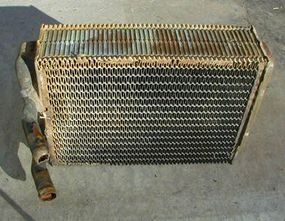
The heater core is essentially a small radiator tucked into the dashboard.
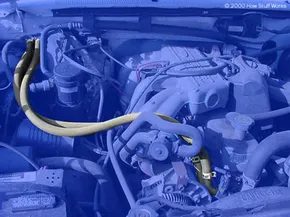
Using the Heater Core as an Emergency Coolant
You’ve probably heard the old mechanic’s trick for managing an overheating engine: crack the windows and blast the heater. It sounds counterintuitive. Why turn up the heat when your car is already cooking? The logic rests on a simple mechanical reality. Your vehicle’s heating system is not just a luxury feature. It is a secondary cooling loop that mirrors the primary radiator circuit.
The heart of this system is the heater core. Tucked away in the dashboard, it functions essentially as a small radiator. Coolant from the engine flows through it, picking up heat before being circulated back. When you turn on the cabin fan, you force air across the fins of the heater core. This transfers thermal energy from the coolant into the passenger compartment.
The heater core acts as a dump valve for excess heat.
By engaging the blower at maximum capacity, you are effectively adding surface area to your cooling system. You are pulling heat out of the engine block and dumping it into the air. If the thermostat is stuck closed or the main radiator is clogged, this auxiliary path can buy you enough time to limp to a safe stop. It doesn’t fix the root cause. But it does mitigate the immediate danger of blown gaskets or warped heads.
Why This Works (And When It Won’t)
This method is most effective in vehicles with traditional liquid-cooled engines. The coolant loop is continuous. Heat travels from the engine, through the water pump, and splits between the radiator and the heater core. Opening the heater valve allows more coolant to flow through the core. The fan then strips that heat away.
However, this trick has limits. If the engine is overheating because the water pump has failed, circulating coolant will not help. If the radiator cap is blown, pressure loss will boil the fluid regardless of where the heat goes. In those cases, turning up the heat might actually make things worse by drawing hotter coolant into the cabin without resolving the flow issue.
Still, for minor overheating caused by a failing thermostat or a restricted main radiator, it is a valid emergency measure. It is not a repair. It is a stopgap. Drive slow. Keep the windows down. And get to a shop before the temperature gauge hits the red zone.

The heater core taps directly into the hot coolant flowing from the cylinder head, sending it back to the water pump afterward. This setup ensures you get heat even if the thermostat stays shut or fails. It’s a simple loop that keeps the cabin warm regardless of the engine’s operating temperature.
Want to dig deeper into how cooling systems work? The next page has links to more details on car cooling and related topics.


