


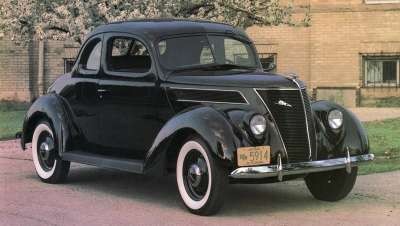
November 6, 1936. The air in Detroit wasn’t just cold, it was thick with anticipation. Nobody expected a war, but that’s exactly what William C. Cowling declared. As Ford’s sales manager, he didn’t just roll out the 1937 models. He unleashed an extravaganza. A total media blitz.
Cowling spared no effort. Why? Because the stakes were high. The new cars weren’t just an update. They were a statement.
Why The 1937 Ford Introduction Was Different
Most model year launches are quiet. A press release. A handful of photos. Maybe a dealer breakfast. Cowling wanted a spectacle. He knew the industry was watching. He knew the public was tired of the old shapes.
The date stuck in history books for a reason. The sheer scale of the promotion was unprecedented. It wasn’t just about moving metal. It was about momentum.
“Spare no effort.”
That was the directive. Cowling turned the launch into a main event.
The Strategy Behind The Hype
How do you get a good start for a new car? You make noise. You drown out the competition. Cowling understood psychology. He knew that if people talked about the new Ford, they would buy the new Ford.
The 1937 Ford represented a shift. Not just in design, but in how Detroit marketed its products. Before this, launches were polite. This was aggressive.
It worked. The attention was immediate. The impact was lasting. Cowling proved that marketing could be as important as the chassis itself.
Was it over the top? Sure. Did it matter? Not really. The cars were the star, but the launch was the spotlight. And Cowling turned it on full blast.
The magic trick that saved Ford’s brand image
Ford didn’t just roll out the 1937 lineup. They engineered a spectacle. Specifically, the 1937 Ford Model 74 needed eyes on it, and Henry Ford’s team knew exactly how to get them.
The setup was theatrical. Forty-one special trains hauled 8,000 dealers from every corner of the US and Canada into Detroit. The venue? The Detroit Coliseum, freshly dressed by Walter Dorwin Teague. Fred Waring and his Pennsylvanians played the soundtrack. It wasn’t a car show. It was a Broadway production.
Then the lights died.
A single shaft of light hit center stage. A massive V-8 emblem rose on an elevator. A twelve-year-old girl with golden curls uncoiled from it. She called her crew—sprites, elves, gnomes—pouring in from the wings.
A giant cauldron boiled over. Parts flew into it. Front fenders. Radiator grilles. Instrument panels. Engine components. Seat cushions. They were tossed in like ingredients in a potion.
When the steam cleared, the magic worked.
A shiny Club Coupe rose from the depths. It circled the stage. Then it drove down a ramp to the floor. It was new to the Ford line for 1937. The merchandising was revolutionary. The car was just the payoff to the story.
Why the theatrics? Because Ford was bleeding market share.
The truth hurts. 1936 was a bad year. Production went up. Sales didn’t.
In 1935, Ford crushed Chevrolet. Handily. But in 1936, the tables turned. Ford slipped behind its arch-rival. Sales trailed Chevrolet by more than 23 percent. That’s not a gap. That’s a canyon.
They needed a reset. They needed to remind buyers why Ford mattered. So they built a fantasy.

Why the 1937 Ford Model 74 lagged behind the competition
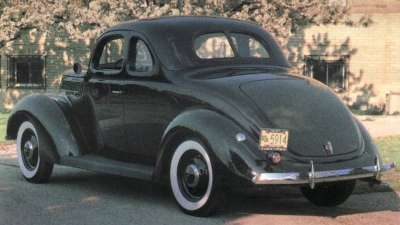
It looks odd now. That sharply sloping trunk lid on the 1937 Ford Model 74? Collectors pay a premium for the 1936 Fords. The open styles and three-window coupes command prices 50% higher than comparable 1936 Chevrolets. So why did Ford stumble in ’37?
Several factors.
Chevrolet had already sold the seamless steel Turret Top across all 1936 models, except the Standard cabriolet. Ford didn’t have that. Chevy also offered independent front suspension. GM engineers called it “Knee-Action.” It came standard. No extra cost. Ford stuck with the old ways. A solid I-beam axle on a transverse leaf spring. The same setup from the Model T days.
But here is the kicker. Knee-Action wasn’t new for ’36. It debuted on the 1934 Masters. The Turret Top showed up on the 1935 Masters. The real differentiator that year was braking.
Plymouth ran aggressive ads. They woke the public up to hydraulic brakes. “Juice” brakes. By 1936, almost every American automaker had them. Pierce-Arrow, Willys, Lincoln. Even Ford’s rivals. Ford stayed with mechanical brakes. As did Willys. Lincoln too.
How Ford redesigned the 1937 lineup to win back sales
Ford knew it had to catch up. The 1937 lineup was the answer. They wanted the sales lead back.
The new car featured an all-steel top. It swept back in an unbroken line. Ford couldn’t call it a “turret” due to copyright laws. So they didn’t. The styling was completely revised.
“A Brilliant new design that strikes the modern note in streamlined beauty,” Ford bragged in their copy.
It was wide. Roomy. Low center of gravity. Curves flowed fast from front to back. Side to side. They were trying to match the streamlined look that was taking over the industry.
“A wide roomy car with a low center of gravity — curves flowing fast from front to back and from side to side.”
The visual language was clear. Streamlined beauty. Modernity. Ford was finally moving away from the boxy past.

The V-Windshield and the Zephyr Shadow
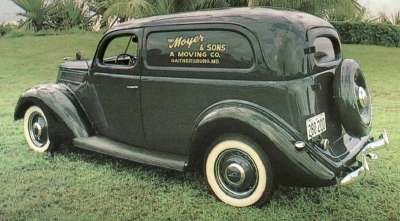
The 1937 Ford delivery sedan arrived with a face lift that mattered. Gone was the flat single-pane glass of yesteryear. In its place sat a slanting two-piece V-type windshield. It opened on all closed bodies. A small detail but it changed the cabin feel instantly.
Almond-shaped headlights tucked neatly into the front fender aprons. Integrated. Clean. Chevrolet kept their free-standing lamps until 1940. Plymouth lagged further behind, not catching the integrated trend until 1939. Ford looked ahead.
The grille? A sharp V. Clearly borrowed from the Lincoln Zephyr. The Zephyr had stunned everyone just a year prior. Ford liked the look. They copied it. The hood hinged at the rear. Opened alligator-style. Practical for maintenance. Stylish for the street.
Why Henry Ford Refused Hydraulic Brakes
Under the sheet metal, things got complicated. The steering ratio dropped. Less effort to turn the wheel. More winding to keep straight. A trade-off.
Then came the brakes. Henry Ford was nearing 74. Stubbornness was his trademark. He believed in “the safety of steel from pedal to wheel.” Hydraulic brakes? Out. He hated them. Ford stuck with mechanical binders. But they were self-energizing now. Car momentum helped apply the brakes. Tests claimed one-third less pedal pressure needed to stop.
There was a catch. Steel cables housed in flexible steel conduits controlled the new setup. Cables squeak. They judder. It sounds awful. Worse, corrosion loved those cables in bad weather. Dicey situations on the road.
Yet. When maintained properly, these cable brakes outperformed the rod-controlled mechanicals on the 1936 Ford. Better stopping power. Just noisier.
The V-8 Gets a Thirst Quencher
The 85-horsepower V-8 remained a low-price field exclusive. Ford tweaked it. Water-pump capacity jumped nearly 33%. Up to 45 gallons per minute. They moved the pump to the upper front of the block. It pushed water through the jacketing now. No more sucking. More efficient cooling.
Main bearings enlarged to 2.4 inches. Insert bearings replaced the old poured-babbitt type. Stronger. More durable.
Comfort got a shout-out too. Ford claimed a new standard of quiet. Pressure-lubricated springs. New body and engine mounting methods. Insulation updates. Exhaust piping and muffler mounts revised. Even the rear axle and drive shaft got attention. The result? A smoother Center-Poise Ride.
The dashboard changed. Smart. Practical. Gauges grouped for quick reads. Starter button on the panel. Parking brake lever tucked left under the dash. The driver’s seat adjusted as it slid. A minor luxury.
Standard vs. DeLuxe: Picking Your Poison
Seventeen models. Two trim levels. The base series would become the Standard line in 1938. It offered a three-passenger coupe, Tudor and Fordor flatback sedans, and Tudor and Fordor Touring Sedans. The Touring Sedans had built-in trunks. Useful.
The DeLuxe series added meat to the bone. Five DeLuxe models plus a new Club Coupe. A woody station wagon. And five open types. Cabriolet. Club Cabriolet. Four-door Convertible Sedan. Phaeton. Roadster.
The Roadster vanished after 1937. The Phaeton died the next year.
DeLuxe meant extras. Dual tail-lamps. Dual wipers. Walnut woodgraining on window moldings and the dash. Chrome grille. Chrome windshield frame. Rear armrests. Twin electric air horns. A “banjo” steering wheel. Locking glove-compartment. Clock.
Interior choices varied. Closed models got mohair or broadcloth. Convertibles chose Bedford cord or antique-finished leather. Leather ruled in the Phaeton and Roadster. Rumble seats across the board used imitation leather.
Ford wanted you to examine it in detail. To see the Universal Car.
Who Actually Designed the 1937 Ford?
Credit for the design usually goes to Bob Gregorie. Ford’s stylist. He denied it. Gregorie was busy prepping the 1938 Lincoln-Zephyr. He wasn’t drawing the 1937 Ford.
The real work came from Briggs Manufacturing Company. John Tjaarda led the charge. His crew included Alex Tremulis, Bob Koto, and Phil Wright. All heavy hitters. Stylists of considerable stature. They built the look. Ford sold it.

The 1937 Ford Model 78 station wagon design controversy
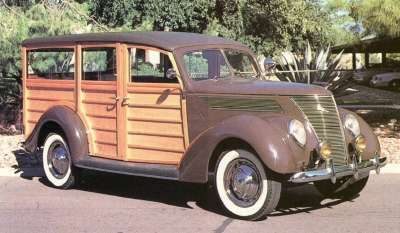
Picking the 1937 Ford Model 78 station wagon design is like walking into a room where the guests are fighting over who ordered the wrong wine. It’s messy. Historians like David L. Lewis, Mike McCarville, and Lorin Sorensen swear it’s one of the decade’s finest cars. Then you have the other crowd, the ones who lump it in with the 1938 lineup and call them the ugliest Fords ever built.
Who’s right? Neither, probably. The truth sits in the proportions.
Henry Ford couldn’t stay away from the drawing board. He personally ordered the overall length chopped from 182.75 inches down to 179.5. Three inches. You might blink and miss it. The stylists didn’t. That slice killed the visual rhythm. Especially on the flatback sedans, the car looked stubby. Unbalanced.
Gordon Buehrig, the chief stylist at Duesenberg during its peak, nailed it: “Good design is largely a matter of proportion.” Ford broke that rule.
But the streets didn’t care about bad lines. The economy was waking up. 1936 had been a rough but recovering year, and 1937 kept the momentum going. By calendar year’s end, Ford had cranked out nearly 57,000 more vehicles than the year before. A 7.2 percent jump. Solid.
Look at the ledger, though. It’s a joke. Profits hit $6.76 million. That’s barely a third of what they made the previous year. Why? Because new money burns. The seamless steel top wasn’t free to tool. The new 60-horsepower engine cost a fortune to bring online. All those shiny innovations ate the margin alive.
You can sell more cars and still bleed cash if the tooling costs outweigh the volume gain. Ford learned that the hard way.
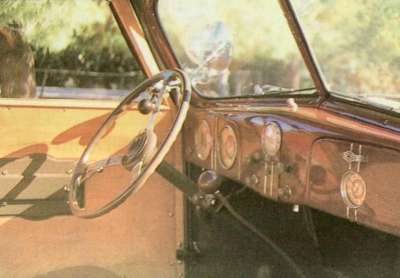

1937 Ford Model 74 station wagon interior comfort and testing upgrades
The 1937 Ford Model 74 station wagon didn’t just haul cargo. It brought some actual luxury to the back seat. Interior comfort features were a big part of the pitch. But the real story was happening in the labs. Ford built a dynamometer room for the first time. Bought an axle-testing machine. Even upgraded the wind tunnel they’d only built the year before. Added hot and cold climate controls. Serious engineering spend.
Production numbers got weird, too. Chevrolet output dropped about 11 percent. Ford actually got within 20,000 units of matching Chevy sales. Closest they’d been in a while. The real winners that year were the mid-priced brands. Buick jumped 26 percent. Pontiac surged 32 percent. Chrysler climbed 51 percent. Nash exploded with a 62 percent increase. Everyone wanted a middle ground.
Then summer hit. The economy tanked. A sharp recession started right as 1938 models were rolling out. Sales plummeted. Dealers were stuck. They had huge inventories of used cars from spring trades. No room for new stock. No cash flow.
1937 Ford DeLuxes sales slump and dealer inventory crisis
The 1937 Ford DeLuxes took the brunt of it. Sales were down. Hard. The problem wasn’t the car. It was the showroom floor. Dealerships were overcrowded with used trade-ins. Nobody could buy a new DeLuxe because the lot was full.
Help was coming. Just not yet.
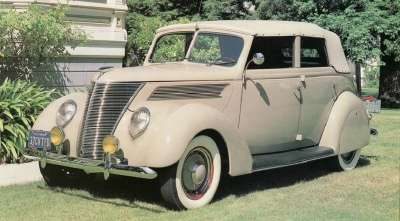
Used Car Week and the 1938 Ford Split
Jack Davis took over as general sales manager on December 22, 1937. He replaced William Cowling. Dealers liked the switch. Cowling was good at PR. Davis was a salesman’s salesman. He knew the lots were choked with used inventory. Not just Ford lots. Everywhere. So he went to Packard’s Alvan Macauley, president of the Automobile Manufacturer’s Association, with a plan.
The result was “Used Car Week” in early March.
“The result… was salutary. By agreement, the poorest cars were burned, the conflagrations of these clunks’ arousing the interest of many communities.”
Nevins and Hill recorded it well. Ford dealers sold over 57,000 used units. They cleared 22,804 from their stock. Burning the worst clunks drew crowds. It helped. But 1938 was still a bad year. Production cut by more than half. The economy didn’t care about bonfires.
Why Ford Split the 1938 Line into Standard and DeLuxe
No major mechanical changes in 1938. Same engines. Same guts. But the styling? That changed. Ford tried a two-track policy. Two distinct looks. One for budget buyers. One for those wanting a bit more. The goal was broader appeal.
The Standard series kept the 1937 sheetmetal. Mostly. The grille got tweaked. Horizontal upper bars swept into the hood side-vent area. The free-standing taillights from ’37 were gone. Replaced by neat teardrop shapes. Inside, you got a mahogany-look dashboard.
It was spartan. One windshield wiper. One taillight. Wait, the brochure says one taillight? No, likely one pair or a simplified setup, but the text emphasizes the lack of extras. Just a single sun visor. One armrest. Too plain. Ford noticed. In January, they added chrome bars to the grille. A quick fix for a dull face.
The DeLuxe models? “Entirely new in appearance.” The brochure didn’t hold back. It looked big. It was big. Closed sedans got more room. Luggage space expanded. The front end had a longer hood. Modern. Refreshing.
Which model should you pick? If you want the 1938 Ford DeLuxe styling advantages, you get that longer hood and interior space. If you’re on a tight budget, the Standard saves you money but gives you less. The 1938 Ford Standard vs DeLuxe difference comes down to grille chrome, hood length, and interior comfort. Not mechanics. Just looks.
And that’s the thing about ’38. It’s a style experiment. Did it work? Maybe. For a year.
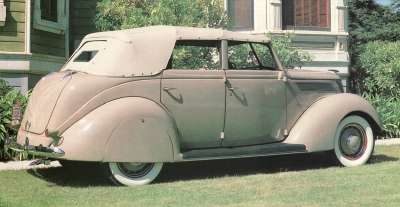

How the 1938 Ford Station Wagon Actually Changed
The station wagon got a serious overhaul for 1938. You can actually use the rear doors now. Standard sliding glass replaced the side curtains, a feature that cost $20 extra in 1937. No more flapping fabric in the rain.
The spare tire moved too. It used to hang on the tailgate. Now it sits inside, in a dedicated bin behind the driver’s seat. More space. Less clutter.
Ford also changed how they built the wood bodies. The Iron Mountain, Michigan plant started producing complete wood bodies and shipping them directly to assembly plants. Before this, the Upper Peninsula facility just cut and trimmed wood components. Those parts went to the Murray Body Company in Detroit for final assembly. Direct production made sense. It streamlined the process.
The wood paneling itself was new design. Fresh look.
The shift in manufacturing logistics at the Iron Mountain plant marked a significant change in how Ford produced its unique body styles, moving from component supply to complete body assembly.
The result was a wagon that felt more integrated. More practical. And yes, it looked better too.
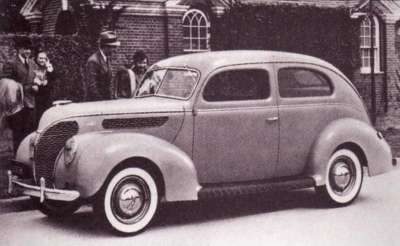

1938 Ford Tudor trim levels and accessory pricing
The 1938 Ford Tudor sedan saw a simplification in its lineup. Ford stopped offering the DeLuxe model entirely. No more high-spec trim option for this body style. Just the standard package.
That doesn’t mean you couldn’t dress it up. The factory accessory list was alive with cheap ways to add flash. Two items stand out as particularly odd for the era. Rear fender shields, basically skirts that covered the rear wheel arches, cost $9 for the pair. Then there were rustless-steel wheel hub and spoke covers. A full set of four ran $15. They turned dull, painted wheels into something that actually caught the light.
The rest of the catalog was a mix of practical and frivolous. A Kool Kushion for summer heat cost $3. A radiator cover? Just $1.25. If you worried about bumper dings, a center guard added $1.75 to the bill.
Lighting and handling got some love too. A road light set you back $5. Want a nicer grip? The DeLuxe steering wheel was $7.50. Mechanical upkeep items were available at the counter as well. An oil filter cost $3.25. An air cleaner added $3.75.
Some prices are almost funny today. A tire repair kit was twenty cents. That’s $.20.
The accessory market was where you personalized a mass-market car.
It wasn’t just about looks. Safety and maintenance items cluttered the list. But the wheel covers? Those were pure style.
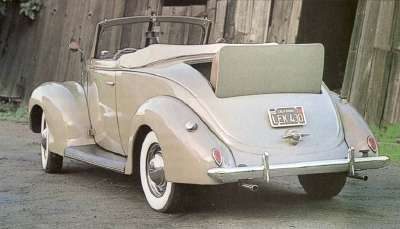

Production drops and the ghost of what could have been
The 1938 Ford lineup was leaner. Meaner? No, just smaller. Three body styles vanished from the Standard and DeLuxe ranges. The flatback Tudor and Fordor sedans got the axe. Even the DeLuxe Roadster, attractive but slow to move, disappeared. It was a pruning. A severe one. By 1939, the Club Coupe, Club Convertible, and Phaeton would follow into the dark. The Convertible Sedan joined them in 1940.
Edsel Ford wanted different. He pushed for hydraulic brakes. Independent front suspension. Hotchkiss Drive instead of that heavy, cumbersome torque tube. The competition already had it. Edsel saw the future. Henry Ford saw a threat.
Henry’s stubbornness kept the old ways alive. Anachronisms, sure. But the cars ran. They lasted. And they were fast. The 85-horsepower V-8 made these Fords the performance kings of the era. In May 1938, the five-millionth V-8 engine rolled off the line. In November, the 26-millionth Ford followed. Sales might have been better with Edsel’s upgrades. Maybe. But the machines were solid. Serviceable. Built to outlive the arguments in the executive suite.
How much did 1937 and 1938 Ford models cost?
The 1937 launch was loud. The impact was shallow. It didn’t save the giant. But today, these are the ones you hunt. The prices back then were steep for working men but accessible for the middle class.
1937 Model 74
The base model. Lightest. Cheapest.
- Coupe, 5W, 2P : 2,275 lbs. $529. Production: 43,866
- Tudor sedan, 5P : 2,405 lbs. $579. Production: 148,467
- Tudor T/B sedan, 5P : 2,415 lbs. $604. Production: 51,322
- Fordor sedan, 5P : 2,435 lbs. $639. Production: 18,541
- Fordor T/B sedan, 5P : 2,445 lbs. $664. Production: 13,976
- 4d wagon, side curtains : 2,691 lbs. $744. Production: 193
- 4d wagon, glass windows : 2,776 lbs. $764. Production: 193
Total Model 74 : 276,365 units.
1937 Model 78 Standard
A step up. Heavier. More steel.
- Coupe, 5W 2P : 2,496 lbs. $586. Production: 46,481
- Tudor sedan, 5P : 2,616 lbs. $611. Production: 147,794
- Tudor T/B sedan, 5P : 2,648 lbs. $638. Production: 78,895
- Fordor sedan, 5P : 2,649 lbs. $671. Production: 30,521
- Fordor T/B sedan, 5P : 2,666 lbs. $696. Production: 31,555
Total Model 78 Standard : 335,246 units.
1937 Model 78 DeLuxe
The premium tier. Where the money went.
- Roadster, 2/4P : 2,576 lbs. $694. Production: 1,250
- Phaeton, 5P : 2,691 lbs. $749. Production: 3,723
- Coupe, 5W, 2P : 2,506 lbs. $659. Production: 26,738
- Club Coupe, 5W, 5P : 2,616 lbs. $719. Production: 16,992
- Cabriolet, 2/4P : 2,616 lbs. $719. Production: 10,148
- Club Cabriolet, 4P : 2,636 lbs. $759. Production: 8,001
- Tudor sedan, 5P : 2,656 lbs. $674. Production: 33,683
- Tudor T/B sedan, 5P : 2,679 lbs. $699. Production: 73,690
- Fordor sedan, 5P : 2,671 lbs. $734. Production: 22,885
- Fordor T/B sedan, 5P : 2,696 lbs. $759. Production: 98,687
- Convertible Sedan, 5P : 2,861 lbs. $859. Production: 4,378
- 4d wagon, side curtains : 2,906 lbs. $754. Production: 9,111
- 4d wagon, glass windows : 2,991 lbs. $775. Production: 9,111
- 4d sedan, 7P : Price/Weight N/A. Production: 521
Total Model 78 DeLuxe : 309,807 units.
Total 1937 Ford Production : 921,418.
Why did 1938 Ford production numbers plummet?
1938 was a different beast. The model numbers shifted. Model 82A and Model 81A. The volume dropped. Why? The market was tightening. The Depression wasn’t over. Ford was cutting SKUs.
1938 Model 82A
The entry-level. Bare bones.


