The 1973 Pontiac Grand Prix arrived heavily. This is the first model of this generation to share much of the design and styling DNA with the wider GM A-body mid-range lineup. For die-hard fans who value the Grand Prix’s unique reputation, the move feels like a betrayal. The unique character that separated it from the pack was diluted.
Sharing platform
This is not a subtle change. A strategic decision by General Motors forced Pontiac to play nice with its siblings. The Grand Prix rides on the same wheelbase and shares many structural components with models such as the Chevrolet Monte Carlo and Buick LeSabre. The result is a car that more like one option in a crowded showroom than a stand-alone performance coupe.
Although GP’s identity was diluted, this move was not fatal to its legacy.
Why it’s not as important as you think
Despite its general structure, the Grand Prix retains plenty of distinctive features. Design cues are still strikingly radical. The interior and badges show that this is more than just a commuter cruiser. It was still a Grand Prix.
Technical compromises mean that fewer parts need to be procured and production is more efficient. For companies like General Motors in the early 1970s, this was a win. However, for drivers looking for something special, the 1973 model was a bit of a disappointment. This is a step back in terms of uniqueness. It’s still an attractive car though. Even if the framework is borrowed, the spirit of the Grand Prix remains.
The 1973 Pontiac Grand Prix arrived not with a bang, but with a delay. This all-new model was not launched as planned in 1972 due to the infamous General Motors strike in late 1970. It hit showrooms in 1973 and was introduced in Detroit, which was suddenly scared off by foreign competition and stifled by new domestic regulations.
Conventional wisdom says that the 70s were a dark era for American automakers. Confidence evaporated. But the truth is messier. Detroit didn’t just fail. It pivoted. Engineers stopped chasing 0-60 times when emissions standards and safety restrictions made raw horsepower illegal. They chased luxury.
A mid-sized two-door “personal” car became a lifeline. They were plush enough to distract from the drop in performance. They are stylish enough to mask the platform homogenization.
This strategy birthed legends. The Oldsmobile Cutlass with the formal-roofed Supreme became America’s best-selling nameplate. Ford’s 1977 redesign saved the Thunderbird and the Mercury Cougar XR-7. Chrysler stuck stubbornly to full-size metal and finally blinked and released the Cordoba in 1975. It sold like hotcakes.
Grand Prix is perfect for this survival mode. But in retrospect, that success wasn’t so inevitable. This car started its life compromised.
Platform Dilution and G-Body
The 1973 GP marked the end of Pontiac’s mid-size independence. Chevrolet, Oldsmobile and Buick was now shared across. This is a big change. Previously, the GP was a bold statement. Now that’s a variation on the theme.
The wheelbase has been shortened to 116 inches. This is 2 inches shorter than the 1972 model. Fits Monte Carlo and all intermediate four-doors.
Why is this matter to a gearhead? Because the wheelbase determines ride quality and interior space. Two inches smaller means a more compact cabin. This also means that the car merging into a sea of corporate cousins.
Even worse is the structural overlap. The new “G-body” platform for personal coupes is very similar to the redesigned A-body for mainline intermediates. Confusion reigned.
Buick Century Luxus and Regal and Olds Cutlass Supreme were crossbreeds. They grafted the sleek G-body roofline to a 112-inch A-frame. At the same time, the new Pontiac Grand Am entered the fray. Targeting the same performance-minded buyers, it stole thunder from the GP.
This overlapping marketing strategy has plagued GM for years. It diluted brand identity. It split customer attention. And it contributed to the slow decline of sales that would follow.
Styling the Safety Compromise
Despite the technical compromises, the 1973 Grand Prix looked sharp. It has a new “colonnade” roof style. This means a fixed rear opera windows. No more T-tops disappearing in the trunk.
State safety regulations require better rollover protection. The pillar structure offers a stylish open hardtop feel and at the same time increases the structural rigidity of the pillared coupe. This is a visual trick. Looks sporty. It’s actually safer.
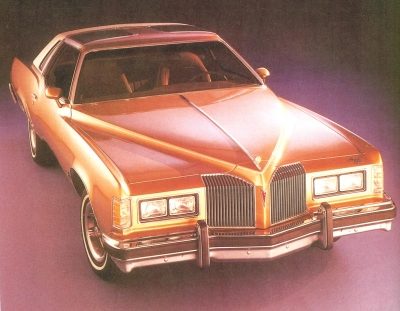
Up front, the styling paid homage to the past. The large vertical grillee is recalled earlier generations. The Dual headlamps are placed in a squared bezels. It felt familiar.
The front bumper is also designed with safety in mind. It sticks out in front of the grille. It is suspended in an energy-absorbing material designed to bounce back from small impacts. The direction indicators are hidden in the front edge of the front fender.
It is a car that tries to meet all needs. Sporty and safe. Luxurious and affordable. Personal but business.
The result was a vehicle that sustained Pontiac through turbulent times. It’s not the cleanest expression of the Grand Prix nameplate. Bold moves are withheld. But for 1973 buyers, it gave them what they wanted: a personal luxury coupe that didn’t look like a device.
Homogenization continues. Grand Am cannibalizes GP sales. Platforms are increasingly compatible. But in recent years, the Grand Prix has held true. It turns out that when you can’t give people horsepower, you give them vinyl ceilings and opera windows. It worked.
currently.
Style changes and suspension adjustments
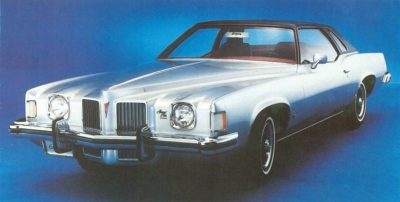
The 1973 Pontiac Grand Prix’s chassis was lengthened by two inches, giving it a 116-inch wheelbase from the unique 118-inch chassis used from 1969 to 1972. This change significantly changed the dimensions of the car. Gone are the exaggerated headlines of the previous generation. Instead, a more traditional “long hood/short deck” design was adopted, reflecting the standardized styling of other GM G bodies.
The hood retains its typical “ironing board” shape and tapers towards the grille. At the rear, the Pontiac deck took a evolutionary step. The slotted taillights are no longer embedded in the bumper. Instead, the design integrates the visible rear bumper as smoothly as possible, maintaining visual continuity with the previous generation without any obvious difference.
SJ trim and weight gain
Pontiac split its 1973 lineup into two versions: the base model and the luxurious SJ. The Model J badge previously used on the base model has been removed. SJ is more than just a cosmetic update. A large engine and “radial tuning suspension” are standard equipment. The setup includes special coil springs, stiffer dampers and a thicker front stabilizer bar for improved handling. Inside, both trims feature a custom-wrapped steering wheel and dash with African Crossfire Mahogany accents.
The overall length of the 1973 GP increased by 3 inches to an overall length of 216.6 inches. This extra length comes almost entirely from the federally mandated bumpers. However, weight is a different matter. The base GP is up just 125-pound from last year. SJ is different. Fully loaded, the SJ weighs 4,400 pounds, an increase of more than 500 pounds. That kind of mass adds up.
Engine specifications and transmission options
Powertrain options for the 1973 Grand Prix were mainly carried over from 1972. The base engine remained the 400 cubic inch Pontiac V-8. Equipped with a Rochester Quadrajet four-barrel carburetor, it produced 230 net horsepower at 4,400 rpm and 325 lb-ft of torque at 3,200 rpm. The compression ratio is 8.0:1.
The SJ model had an even bigger toy, a four-barrel, 455-cubic-inch V-8. The engine produces 250 horsepower at 4,000 rpm and 370 pound-feet of torque at 2,800 rpm. It also uses a compression ratio of 8.0:1. Buyers have no options regarding transmission. The Turbo 400 automatic transmission was the only option. In March 1971, manual transmissions were removed from the Grand Prix line.
First 455 Super Duty
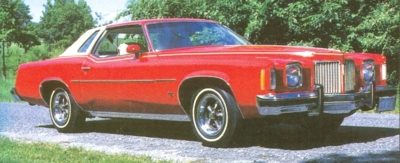
Everyone thinks the 455 Super Duty V-8 is the only place to find that monster. Wrong. It was originally designed for use in the 1974 Pontiac Grand Prix. Listed in dealer list. Engineers already have it on their list. However, this option was never commercialized.
Pontiac reserved the Super Duty exclusively for the 1973 and 1974 Firebird Formula and Trans Am. I missed the Grand Prix. GTO is out. The Grand Am was missed.
Instead, buyers got a heavier car with a less powerful engine.
it doesn’t matter. The 1973 Grand Prix was a great success.
The production figures speak for themselves. In 1972, 91,961 units were moved off site. Admirable? certainly. By 1973, the number had almost doubled. 153,899 Offline Grand Prizes. Of these, 20,749 were premium SJ models. The market wanted a G-body coupe. I want this style. I wanted the Pontiac name.
Advantages of medium-sized companies and Monte Carlo comparison
Pontiac wasn’t the only market in 1973. It’s about a midsize model. Two-door models are the norm.
Look at my brothers and sisters. Chevrolet Monte Carlo sales were 290,693 units. This is an amazing amount. Oldsmobile’s Cutlass Supreme followed with 219,857 orders. Buick sold 163,269 luxury sedans and Regal coupes.
The Grand Prix was run. But the oil crisis changed everything.
How the OPEC embargo curbed the 1974 sales boom
In 1974, the OPEC oil embargo dealt a major blow.
Natural gas prices have risen. The fuel shortage became a reality. Consumers are panicking. They abandoned the mid-size car market and shifted to smaller, more fuel-efficient light vehicles. It was a hit both at home and abroad.
The 1974 Pontiac Grand Prix faced tremendous opposition.
Production fell sharply to 99,817 units. It fell by 35 percent. It’s devastating.
but.
To date, it is GP’s third best-selling model. If not 150,000 units, then 100,000 units is a significant amount. The need has not disappeared. It just shrinks.
What happens next? The ban is still in effect. The economy has stopped. Pontiac adjusts. But by 1975, the story took a dark turn.
“Buyers are flocking to smaller, more fuel-efficient subcompact cars made in the U.S. and abroad.”
The change in consumer behavior was immediate. You no longer need a big V8 engine for your daily commute. Gone are the days of gas-guzzling grand tourers.
1974 Grand Prix: Solid design and stubborn specifications
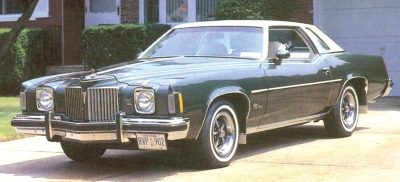
The 1974 Grand Prix cost $4,936. This was the basic entry point for the 1974 Grand Prix**, now quietly named the Model J. But don’t get too comfortable. This number does not include any optional extras that Pontiac wanted to install on the chassis.
The visual changes are subtle and almost deceptive.
There are subtle tweaks to the grille, but the real story is in the bumpers. The front is thicker. It was replaced by a new solid bumpers topped by a large, upright guards that made the car look heavier than the original. The headlights are taller and have more rectangular bezels. This is not a revolution. This is an evolution toward bulk.
Look at the rear. The taillights have been replaced with vertical units. Lines are engraved on the sides to separate the lumps. Yes, the base car finally got the “J” badge back. Simple. clean.
Behind the scenes, the math is even worse.
The power of the standard 400-cubic-inch V-8 was reduced to 225 horsepower. That’s 5 horsepower less than last year. The more you pay, the less power you get. At the same time, the 455 cubic-inch engine was flat at 250 horsepower. Only the SJ trim is standard. If you want a base car, you can opt for the weaker V-8 engine.
“The 1974 Grand Prix had few cosmetic changes and slightly less power, but a higher price.”
This year is the year of consolidation. Pontiac wasn’t trying to reinvent the wheel. Despite the market pressures, they trying to keep the wheel rolling. The SJ is still a performance option, but it still felt like it was coasting. The basic model J is there.
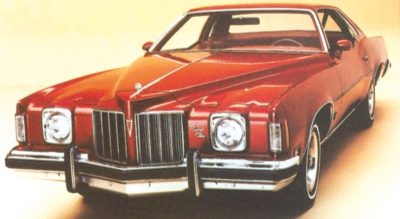
The styling of the 1975 Pontiac Grand Prix remained largely unchanged. Pontiac stuck with its 1974 design, making only cosmetic changes to keep the coupe fresh. The front grille shed some horizontal slats. The rear light lenses are engraved with delicate vertical touches. Inside, the real mahogany decoration is gone. It was replaced by plastic veneer that mimicked wood grain.
The internal hierarchy has also changed. The model selection is divided into distinct trims. The base J Coupe remains the entry point. SJ has always focused on sports performance. A new luxurious LJ trim has also been added. Velor upholstery and two-tone painting are standard equipment.
Horsepower is reduced due to exhaust gas regulations
The real story behind the 1975 Grand Prix is not about aesthetics. This is a federal regulation. Requirements for unleaded fuel will become mandatory and enter the market. Catalytic converters are standard equipment in all models. Pontiac responded with GM’s high energy ignition system. This new ignition technology promised three times the firing power to the spark plugs.
Engineers increased the plug gap to 0.060 inches. The goal is more complete combustion. Improved combustion means cleaner exhaust gas. This also means less horsepower. Compression ratios dropped slightly. The 400-cubic-inch and 455-cubic-inch V-8 engines have a ratio of 7.6:1. Decreased from 8.0:1.
1975 Engine Selection
Power values tell a depressing story. The base four-barrel 400 cubic-inch V-8 was reduced to 185 horsepower. This is 40-horse loss than last year. Enthusiasts have other options. A two-barrel 400 was available for all models. It’s federally certified for just 170 horsepower.
Performance enthusiasts looking for muscle are out of luck. The top-of-the-line 455-cubic-inch V-8 engine with a four-barrel carburetor produced just 200 horsepower. It is still standard on SJ models. Rumors have swirled for decades about these ratings. Some believe that the actual power loss is exaggerated. The truth is, performance wasn’t a priority in 1975.
Decline in sales and the road to 1976
The production figures reflect the industry’s struggle. Annual Grand Prix sales of this model were 86,582 units. The standard J coupe dominated the mix. It accounted for 64,581 of those sales. The SJ and LJ trims took up the slack.
This year has been a difficult year for the automotive industry. Emission control and fuel economy requirements put pressure on high-performance brands. The Grand Prix survived. It just adjusted.
1976 Pontiac Grand Prix: Major Changes
By 1976, Pontiac felt the need for an overhaul. This year marks the 50th anniversary of the birth of the brand. The company made significant improvements to the 1973 vintage Grand Prix. The styling changes broke with tradition. They were drastic.
The familiar round double headlights are gone. They are replaced by four rectangular units. The front fascia looked completely different. The new “waterfall” grille folded over the top of the header panel. This was a clever design execution. This marked a dramatic departure from the Duesenberg grille that had defined the look since 1969. The Grand Prix is constantly evolving. The luxury coupe was becoming something else entirely.
What is Pontiac doing to celebrate this anniversary? The answers were coming in 1976. The design team is clearly restless. The old ways were fading. The new grille hints at the direction the brand will take in the coming years. But now let’s focus on survival. And style.
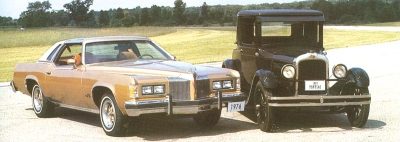
Pontiac’s 1976 Grand Prix was more than just a facelift. This is a strategic pivot. As the brand approaches its 50th anniversary, the company must fill the void left by the missing Grand Am. What is the solution? entry-level model for the “Value Leader”. They dropped the price by $500. Some of the standard equipment has also been discontinued. This is no longer a luxury. It’s about quantity.
The basic model has a full-width 60/40 bench. There are also fold-down center armrest. Power comes from a 160 horsepower, 350 cubic inch V-8 engine. It uses a 2-barrel carburetor. Californians got a four-barrel version. This engine is mated to a Turbo 350 automatic transmission. Both components are borrowed from the Le Mans series. At the time, this was the smallest engine offered in a Grand Prix.
50th Anniversary Gold Edition
If the basic model is too simple, there’s LJ. A special limited edition was also released in 1976. Pontiac produced a total of 4,807 Golden Anniversary special editions. They were all painted gold. Comes with a removable sunroof. The front part has a 50th anniversary decoration. The trunk lid is also unique. The same goes for stripes.
These cars are rare. It was rare when it was new. Today they are even rarer. You rarely see them at car shows. This rarity makes it a strong candidate for future collections. One of the few surviving examples, it is often pictured alongside a 1926 Pontiac coupe to emphasize its lineage.
Engine selection and world tour
The 350 V-8 wasn’t the only option. It can be upgraded to a 400 four-barrel with 185 horsepower. This became the standard engine of the SJ model. Need more muscle? All models are equipped with a 200 horsepower, 455 cubic inch four-barrel engine.
But the strangest story involves an engine that hasn’t started yet. Pontiac built the 1976 Grand Prix using an unreleased 301-cubic-inch V-8. They also built a 1976 Sunbird companion with the future four-cylinder “Iron Duke” engine. Why? Promotion with National Car Rental. These two cars traveled around the world. The goal is to show that National’s rental cars are reliable. Especially their Pontiac.
Production numbers that shocked the industry
The market reacted strongly. Pontiac has recalibrated its standard and optional equipment to meet the real needs of buyers. result? A new production record was set.
Total production was 228,091 units. This is a significant recovery in a year when sales of large vehicles generally slowed in other regions. The each accounted for more assemblies of the Base and SJ series exceeded that of the 1975 Grand Prix series. Compare with your competitors. The Chevrolet Monte Carlo is still on top with 353,272 units sold. The Grand Prix is just shy of that. However, it cannot be denied that GP production increased by 163 percent. This is a significant addition any way you look at it.
1977 Pontiac Grand Prix
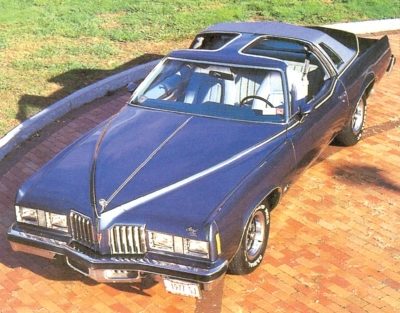
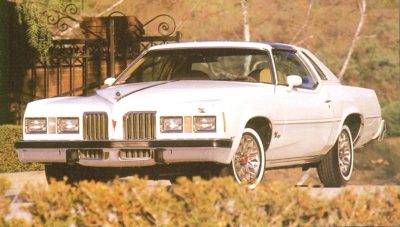
The party ended quickly. 1977 was the last model year of the Grand Prix on the second generation G chassis. Updates are minimal. A little facelift. The grill has changed. Gone is the thin vertical beam from 1976, replaced by five thick bars on each side. A more restrained “waterfall” effect.
The rear lights have also been slightly updated. This T-top debuted as a commemorative edition in 1976 and became a regular option. You could get it at any Grand Prix. The wheels have also been changed. Beginning in 1971, the optional “honeycomb” wheels were discontinued. These have been replaced with new “”snowflake” aluminum design.
The G-body will also be developed soon. But 1977 was only one year of improvement before something significant changed.
1977 Pontiac Grand Prix Engine Selection
The T-tops from the 1976 50th anniversary package were added to the 1977 regular options list.
Emission standards were tightening relentlessly. California and federal regulations forced Pontiac to create the most confusing list of engines in Grand Prix history. You didn’t just pick an engine. Make your choice depending on where your car is delivered. There was a distinct selection in 49 states, we also offer California and high-altitude lineup. Under the hood you could find a, Chevrolet or Oldsmobile V-8 engine. What a mess.
The base engine for 1977 was Pontiac’s new 301 cubic inch (4.9 L) V-8. This is not a completely new design from scratch. The basic dimensions of this block shared basic dimensions with the experimental 1969 303 Trans Am race engine. However, this production unit wasn’t nearly as beefy. The deck is 1 inch shorter than larger siblings. Connecting rods measured 6.05 inches, versus 6.625 inches for its bigger brothers 6.625 inches. The bore and stroke are 4 x 3 inches.
Pontiac recycled parts. Pistons and connecting rods were shared with the new 151-cubic-inch “Iron Duke” four-cylinder. The 301 retained the same 3-inch main journal diameters as the 350 and 400 V-8. Lightweight castings for the block, cylinder head and intake manifold to reduce things light. The crankshaft only had counterweights at each end of the crankshaft. Weight reduction was the goal weight.
These weight loss efforts worked. The larger Pontiac engines weigh between 640 and 675 pounds. The new V8 engine weighs 452 pounds. That’s about the same weight as Buick’s 231-cubic-inch V-6 engine. However, there are limitations to the Parts interchange. There are enough differences to break commonality.
Output was modest. The 301 produces 135 horsepower at 3,800 rpm and 240 lb-ft of torque at 2,000 rpm. Its horsepower rating seems mediocre compared to current four-cylinders. However, its power level matched other 5.0-liter V-8 engines of the time. And it’s light.
350 and 403 switcheroo
Next up the option ladder was the 5.7-liter V8 engine. Buyers can get a 350-cubic-inch Pontiac, Olds or Chevrolet engine. It depended on the plant and delivery zone. Why the confusion? The Pontiac 350 failed stricter the stricter California and high-altitude emission standards.
Pontiac substituted the Oldsmobile-designed 350 in these areas. Olds engines ran cleaner. Demand has skyrocketed. Oldsmobile didn’t have enough for its own Cutlasses. The Chevrolet 350 filled the gap. When you buy a Grand Prix, you get whatever GM had available.
The top GP engine option in 1977 was the 6.6-liter V-8. This is standard equipment on SJ models. Again, location is important. You can also buy a 180-horsepower Pontiac 400 or a cleaner-burning 185-horsepower Oldsmobile 403. There was also a shortage of 403s. The 455 was discontinued at the end of 1976.
Production disruption and legal backlash
The 1977 Pontiac Grand Prix production numbers tell a depressing story. The engine shortage is directly due to the need to meet various emission standards. Some buyers did not receive the engines they ordered.
Outraged car owners and consumer advocates filed a class action lawsuit against General Motors. The media quickly picked up on the story. General Motors faced a wave of bad publicity. This case served as a warning to the industry.
Who will win? stockist. They recovered the car in question. But there’s a problem. They impose mileage charges that can cost consumers up to $2,000. Then they resell used cars with low mileage at a high price. Customers are lost. The retailer made a profit. Government regulations have unintended consequences that spill over the showroom floor.
End of an era: Why 1977 was the pinnacle of Grand Prix
The calculation is easy. The base price of the 1977 Pontiac Grand Prix LJ is just under $5,500. If you order a Pontiac with all the available options, your bill could climb to over $9,000. This is the pinnacle of American luxury performance pricing. But it’s not just money inflating.
In 1977, sales not only increased, but reached a ceiling that would never be surpassed. Total production for the year was 288,430 units. This is no accident. This was the last gasp of the “big Grand Prix”. Buyers know it. The streets know it. This is a true mid-size muscle coupe that Pontiac would stamp the nameplate, with a lot of potential under the hood.
1978 Reality check
By 1978, the party was over. Pontiac slashed the body. The new platform is smaller and lighter, and is equipped with a new-generation V-6 and small-displacement V-8. The marketing team sold it on efficiency. They promised better space utilization. They touted improved gas mileage at a time when fuel is not cheap.
But instinct is a powerful thing.
Buyers can smell a compromise. The new G-body is technically superior. They were durable. Build quality is average at best, but reliable. They weren’t bad cars. It’s just boring.
See the lineup. The new Grand Prix is like Monte Carlo. The Monte Carlo is similar to the Buick Regal. The Regal is similar to the Oldsmobile Cutlass. Individuality disappears overnight.
The market reacted immediately. In 1978, sales fell by almost 60,000 units. That downward slide didn’t just continue; it accelerated into a freefall. Gone is the unique blend of luxury and performance that defined the nameplate. Pontiac wouldn’t find that magic again for another ten years before Pontiac found its magic again.
The Data: Production and prices in 1973-1977
Emission standards have been tightened over the years, but the public kept buying. Below are the numbers played out from the 2nd generation G-body Grand Prix.
1973 Pontiac Grand Prix
Base weight: 4,025 lbs (wheelbase: 116 inches)
| Model | Weight | Price | Production |
|---|---|---|---|
| Coupe | 4,025 lbs | $4,583 | 133,150 |
| SJ Coupe | 4,400 lbs | $4,962 | 20,749 |
| Total | 153,899 |
1974 Pontiac Grand Prix
Base weight: 4,096 lbs (wheelbase: 116 inches)
| Model | Weight | Price | Production |
|---|---|---|---|
| J Coupe | 4,096 lbs | $4,936 | 85,976 |
| SJ Coupe | 4,300 lbs | $5,321 | 13,841 |
| Total | 99,817 |
*Note: Production here has decreased significantly, likely due to ongoing emissions regulations and market changes. *
1975 Pontiac Grand Prix
Base weight: 4,032 lbs (wheelbase: 116 inches)
| Model | Weight | Price | Production |
|---|---|---|---|
| J Coupe | 4,032 lbs | $5,296 | 64,581 |
| LJ Coupe | — | $5,995 | 14,855 |
| SJ Coupe | — | $5,573 | 7,146 |
| Total | 86,582 |
*Note: SJ trim sales decreased significantly, but LJ equipment (luxury) sales increased. *
1976 Pontiac Grand Prix
Base weight: 4,048 lbs (wheelbase: 116 inches)
| Model | Weight | Price | Production |
|---|---|---|---|
| Coupe | 4,048 lbs | $4,798 | 110,814 |
| SJ Coupe | 4,052 lbs | $5,223 | 88,232 |
| LJ Coupe | — | — | — |
| Total | 228,091 |
*Note: A massive rebound. The base coupe was again the best seller. *
1977 Pontiac Grand Prix
Base weight: 3,804 lbs (wheelbase: 116 inches)
| Model | Weight | Price | Production |
|---|---|---|---|
| Coupe | 3,804 lbs | $5,120 | 168,247 |
| LJ Coupe | 3,815 lbs | $5,483 | 66,741 |
| SJ Coupe | 3. |