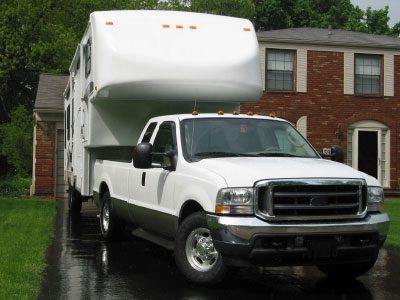
We all know that drill. horsepower. torque. zero-to-sixty times. Fuel consumption. These numbers are the currency of car culture. Look for it in brochures, ask about it at car shows and research it before you buy. But there’s another statistic that new buyers often overlook. Or worse, they misunderstand. This can cause transmission damage and dangerous driving conditions.
One particular indicator stands out for its complexity and significance. This is the Gross Combination Weight Rating (GCWR).
If you plan to tow something with your car, this number is non-negotiable. Define the absolute upper limit of safety. Most people know the towing capacity of their car. Very few people know about GCWR. Even fewer understand its importance.
What is GCWR? How is it calculated?
Let’s clear up the confusion. The GCWR of the vehicle is the limit defined by the manufacturer. This represents the maximum permissible weight of a loaded trailer attached to a loaded tractor “Plus”. The total will never exceed this amount.
This is similar to the Gross Combination Weight Rating (GVWR). The difference is very important. GVWR applies to one vehicle. This includes the weight of the curb weight, fuel, passengers and cargo. However, GCWR combines two different entities. Covers the entire tractor and trailer.
How did the manufacturer come up with this number? According to Ford Motor Company, several components have been added to the calculation.
– vehicle’s listed curb weight;
– Allowable payload
– Weight of driver and passenger
– Trailer weight
These are not actual measurements for specific rig. This is the maximum limit. Hard line in the sand. Cross it, you are operating outside of your design parameters.
Why overload is dangerous
The main reason for setting GCWR is safety. Period.
Overloading a tow vehicle is dangerous. Overloading the combination is destructive. You’re not just dealing with inertia. You are dealing with a mechanical failure point.
Consider the braking system. A heavy load can cause the brakes to overheat. They fade. They fail. You lose the ability to slow down or stop.
Then there are the tires. They have a load index. Exceed it, there is a risk of blowout. If a blowout on the highway with a trailer, recipe for a spin-out.
The engine and transmission take a beating. The strain can cause overheating. Mechanical failure follows. Suspension parts can be bent or broken. You lose control.
The list of possible failures is long. The risks are real. Never exceed the vehicle’s GCWR.
Where can I find GCWR?
So where can you find this information? It may not be in the user manual.
The sticker is usually located inside the door frame. Look at the latch near the driver’s side. This label contains important information.
Or search online. Most manufacturers publish this information on their official websites. This is part of the technical data.
If you own an Acura or Audi, the numbers below show the GCWR limits for a specific year. Use it as a benchmark.
Acura GCWR Reference Data
Depending on the make and year of your car or truck, you may find your gross combination weight rating (GCWR) in the table below.
2006
MDX: 8,121 lbs
RL: 5,162 lbs
RSX: 4,384 lbs
– TL: 4,730 lbs.
– TSX: No information available
2007
MDX: 10,053 lbs
RL: 5,164 lbs.
– RDX: 6,394 lbs.
– TL: 4,773 lbs.
– TSX: 4,407 lbs
2008
MDX: 10,053 lbs
RL: 5,164 lbs.
RSX: £6,394
– TL: 4,773 lbs.
– TSX: 4,407 lbs
2009
MDX: 10,053 lbs
RL: 5,233 lbs
RSX: 5,574 lbs.
– TSX: 4,550 lbs
For detailed specifications on these models, see our Acura GVWR, Acura GAWR, Acura Cargo Carrying Capacity, Acura Curb Weight, Acura Payload and Acura Towing Capacity resources.
Audi GCWR reference data
2006
– A3: No information
– A4: No information
– A6: No information
– A8: No information
– S4: No information available
– TT: No information
2007
– A3: No information
– A4: No information
– A6: No information
– A8: No information
– Q7: 10,665 lbs.
– RS4: No data available
– S4: No information available
– S6: No data available
– S8: No data available
2008
– A3: No information
– A4: No information
– A5: No information
– A6: No information
– A8: No information
– Q7: 10,665 lbs.
– R8: No information available
– RS4: No data available
– S4: No information available
– S5: No information available
– S6: No data available
– S8: No data available
– TT: No information
2009
– A3: No information
– A4: No information
– A5: No information
– A8: No information
– Q7: 10,665 lbs.
– R8: No information available
– S4: No information available
– S5: No information available
– S8: No data available
– TT: No information
See Audi GVWR, Audi GAWR, Audi Cargo Carrying Capacity, Audi vehicle weight, Audi payload, Audi towing capacity for more information.
BMW GCWR specifications by model year
There is often very little information about older BMW cars in public databases. I often see lines where there should be numbers. This reflects the limited official documentation of passenger cars in the early and mid-2000s. The focus is usually on the durable features of SUVs and trucks.
The GCWR for the 2006 X3 was 7673 lbs. The X5 tops the list at 10,802 lbs. Sedan models such as the 325, 525 and M3 do not have values listed. This may mean that they weren’t rated for towing or data is missing. The same situation happened again in 2007. The X5 is slightly heavier at 11,132 pounds. The X3’s weight remains stable at 7,662 pounds. Alpina B7 is shown but GCWR is not listed.
In 2008, it was joined by the X6. It weighs 11,044 pounds. The X5 still weighs 11,132 pounds. M3 and M5 reappear, but without data. By 2009, the X5 had dropped slightly to 11,066 lbs. The X6’s weight remains at 11,044 lbs. The X3 weighs 7,662 pounds. Most coupes and sedans don’t have numbers yet. This difference makes it difficult to compare the towing capacity of different product lines.
Breakdown of Buick weight ratings
Buick’s midsize numbers are more solid. The weights of LaCrosse and Lucerne were the same in 2006-2009. Both weigh 4,645 pounds. This low number indicates that it is not suitable for towing heavy loads. The Lucerne has a maximum maxed out at 4914 lbs in some configurations, but the standard ratings are the same.
The Rainier was a short-lived SUV. In 2006 and 2007, it weighed 10,500 pounds. It disappeared after 2007. Rendezvous weighed 7746 lbs that year.
The Enclave was launched in 2008 with a GCWR of 9,500 pounds. The amount remained unchanged in 2009. This makes it a viable option for large trailers. Lucerne and La Crosse remain unchanged. Their rating remains unchanged. Such stability is rare in the industry. Most brands change their specifications every year. Buick has kept these numbers unchanged for four years.
Cadillac Capacity Chart
Cadillac is the luxury car division of General Motors with the highest numbers. The Escalade series is dominates. The standard 2006 Escalade weighs 12,902 pounds. Since 2007, it climbed to 14,000 lbs. This assessment also applies to the ESV and EXT versions. The 2006 EXT started out with a lower of 13,464 pounds, but later topped the 14,000-pound mark.
For the 2009 model year, the Escalade Hybrid’s dropped to 6,314 pounds. This is a significant reduction. Compared to V8 models, the towing potential is considerably limited.
The CTS-V and STS-V are performance anomalies. CTS-V weights started at 5,000 pounds in 2006 and 2007. In 2008 and 2009, the base CTS increased to 5,011 pounds, but the V rating was not clearly classified in the summary section in later years. The STS-V was launched in 2006 and weighed 5383 lbs. It rose to 5,544 pounds by 2007 and remained the same in 2009. The base weight of the STS is about 5,000 to 5,123 pounds. The SRX ranges from 5,314 lbs to 6,314 lbs. It peaked in 2007. No data on XLR and XLR-V. These grand tourers are not built for transport.
Chevrolet Trucks & SUVs GCWR
Chevrolet offers the most comprehensive truck information. The Silverado series is the benchmark. The 2500 HD and 3500 HD models consistently reach 16,000 lbs. This capacity remained stable between 2006 and 2009. The 2006 1500 HD weighs 13,793 lbs.
Avalanche 1500 variation. Started in 2006 from 12,863 lbs. In 2007 and 2008 it increased by 13,000 lbs, but in 2009 it fell by 11,000 lbs. why did it fall Could be due to emissions or chassis tuning. The maximum weight for the 2500 version was 16,878 pounds in 2006.
SUVs show a similar trend. The Suburban 2500 peaked at 14,000 lbs in 2007. In 2008 it rose to 16,000 lbs and stayed there in 2009. The Tahoe 1500 settled at 10000 lbs in later years. The Tahoe Hybrid increases to 12,000 pounds in 2008 and 2009. The Traverse, introduced in 2009, has a 9500 lbs rating.
Crossovers like the Equinox weigh in at a flat 7,252 pounds. Express vans weigh between 9,500 pounds and 12,000 pounds, depending on year and equipment. The 2009 Express 1500 and 3500 both weigh 12,000 pounds. This makes it more competitive with other brands of full-size vans.
Chrysler towing limits
Chrysler’s lineup is small, but it has some heavy hitters. The PT Cruiser has changed a lot. In 2006, he weighed 8132 lbs. By 2007, his weight had dropped to 4297 lbs. In 2008 it was back to 7105 lbs. Then it dropped again in 2009 to 4297 lbs. This difference is dangerous for buyers. One year you may think you can tow your boat, but the next year you can’t.
Town & Country minivans are stable. In 2006 and 2007, it weighed 6,600 pounds. In 2008, this weight increased to 7000 lbs and remained at the same level in 2009. The Aspen SUV is a significant addition. In 2006 and 2009 it was 11,000 lbs. The highest price was in 2008, 13,966 lbs. The reached for the 2009 Aspen Hybrid is 11,700 lbs. This hybrid model actually offers better towing capacity than the gas-only Aspen in a few years.
The 300C sedan weighed in at 6,216 pounds in 2006 and has held steady at 6,196 pounds ever since. The base 300 is smaller at around 4862 lbs. The Pacifica minivan has a towing capacity of 4,297 pounds. In 2007 it rose to 7105 lbs, but in 2008 and 2009 it returned to 4297 lbs. These variations show that chassis sharing and small body changes affect the ratings.
Dodge Truck GCWR Statistics
Dodge shares the Ram and Sprinter platforms with Chrysler. But their ratings tell a different story. Ram 3500 is one of the best. In 2006, he weighed 17,000 lbs. In 2009 it rose to £19,000. This is a significant increase. This puts the Ram 3500 in direct competition with the heaviest trucks on the market. The Ram 2500 weighs a solid 15,000 pounds. For 2009, the Ram 1500’s curb weight increases from 8,000 pounds to 8,500 pounds.
Sprinter vans are unique. The weight of the 3500 van model increased from 13,550 pounds in 2006 to 15,250 pounds in 2008 and 2009. The 2500 van model still weighs 13,550 pounds. Wagon versions weigh even less, hovering between 10,626 and 13,550 pounds. These numbers are important for business users. The difference of £1700 to the 3500 model is significant.
From 2006 to 2009, Durango’s weight remained at 8,600 kilograms. The 2009 Durango Hybrid weighs 11,700 lbs. This is more expensive than the petrol version. The weight of the Grand Caravan dropped from 8,600 pounds in 2006 to 7,000 pounds in 2008 and 2009. The Charger sedan weighs about 5,877 pounds. The Challenger will debut in 2020
FORD GCWR
The tops of Ford’s range still dominate the towing charts. If we look back to the 2006 Super Duty era, we see that the E-350 Super Duty weighed in at a whopping 13,000 pounds. F-series trucks are more aggressive. The F-250 and F-350 both max out at 15,000 pounds. In the mid-2000s, for heavy haulers, this was a serious task. A small car like the Focus has a GCWR of just 3,771 pounds. GT and Mustang have no ratings listed. This is probably because it was not designed for such abuse.
By 2007, Ford changed the numbers slightly. The weight of the F-250 and F-350 jumps to 17,000 lbs. The new Edge and Expedition models join the conversation. The Expedition EL weighs 15,078 pounds. This shows that the length increases the load capacity if the suspension can handle it. The Mustang weighs 4,611 pounds and is proven capable of towing small trailers if you really need to.
The 2008 and 2009 model years showed that Ford is stabilizing their heavy-duty numbers. When the F-450 debuted in 2008, the GCWR weighed a whopping 27,000 pounds. This is intended primarily for commercial use. By 2009, the F-150’s weight increased from 11,700 pounds to 14,950 pounds. This is a huge improvement for half ton trucks. The Ranger’s weight returned to 5,820 pounds in 2007 and then leveled off at 6,000 pounds. Don’t expect the mid-sized Ranger to be able to tow anything heavy.
GMC GCWR
GMC is playing a similar game to Ford assuming a shared platform. The 2006 Sierra 2500 and 3500 were rated at 15,792 pounds. The Yukon XL is heavy enough to tow 13,000 pounds. The smaller Canyon has a weight limit of 5,179 pounds. This is a small SUV after all.
In 2007, the Sierra 2500 bumped to 15,858 pounds. The Sierra 3500 dropped slightly to 15,342 pounds, but returned to 16,000 pounds in 2008. When the Acadia debuted, it weighed 9,500 pounds, which is good for a midsize crossover. The Yukon Hybrid was introduced in 2008 and has a GCWR of 12,000 pounds. Hybrid efficiency doesn’t seem to reduce traction here. By 2009, the weight of the Yukon XL had dropped to 11,000 pounds. This is a strange regression unless you change the platform or purpose.
The Sierra 2500 Hybrid listed a dash in 2009. The torque curve may not be suitable for towing heavy loads, or the information may simply be missing. The Canyon weighs 5,887 pounds. Today, consistency is key for GMC.
Honda GCWR
Honda keeps it simple. The CR-V did not have a 2006 or 2007 GCWR listed. You probably don’t want the CR-V trying to tow a boat. The 2007 Civic weighs an impressive 6,060 pounds. That’s more than you’d expect from a subcompact. The Accord Hybrid and Civic Hybrid are lower, around 3,700 pounds. Weight affects performance.
The Ridgeline is a real worker. In 2006, it weighed in at 9,653 pounds and increased to 10,085 pounds in 2007. A monocoque pickup truck that can haul over 10,000 pounds? It’s engineering power. The maximum weight for 2007 and 2008 pilots is 9,700 pounds. In 2009 it was 8,466 pounds. Perhaps the frame was strengthened for safety, but at the expense of towing capacity.
The Insight was light. In 2006 it was 2,250 pounds. You can’t tow a lawnmower with that car without compromising the transmission. The Odyssey’s weight remains stable at around 8,200 pounds. Family haulers rarely exceed that mark.
HUMMER GCWR
Hummers are designed for torque, not necessarily efficiency. The 2006 H2 has a towing capacity of 13,050 lbs. By 2008, it weighed 14,000 pounds. From 2006 to 2009, the H3’s weight remained at 8,000 lbs. It’s a small SUV with big tires.
The 2009 H3T pickup weighs 9,461 lbs. Slightly better than the SUV version. The H1 Alpha was a beast weighing in at 17,300 pounds in 2006. These vehicles are designed to drive along the edge of the pavement. Towing is secondary, but possible. The numbers don’t lie. They are heavy, slow and thirsty.
Hyundai GCWR
Hyundai still has a foothold in the US market. The 2006 Santa Fe rated at 6,399 pounds. The Sonata is a light 4,403 pounds. The Tucson is the mirror image of the Sonata. Small crossovers and sedans have don’t tow well.
The 2007 Entourage minivan weighs 5,550 pounds. Not impressive. The Santa Fe’s weight drops to 5,527 pounds. Veracruz is not rated. It can be too heavy and soft to offer serious towing. By 2008, the Elantra’s weight had risen to 5,550 pounds. The Accent weighs 4,779 pounds. These numbers suggest that brands are aware of their limitations. They don’t compete with Ford or GMC yet. They make reliable commuter cars.
The 2009 Genesis is not rated. This is too new. It’s too big. The risks of incomplete towing specifications are very high.
Infiniti GCWR
Luxury SUVs and sedans. The QX56 is the king of this list. It started at 14,510 pounds in 2006 and rose to 15,558 pounds in 2007. For an SUV based on the Nissan Armada, this equates to nearly 16k pounds. The FX45’s curb weight reached 14,520 pounds in 2007 and stayed there until 2008. A muscular and sporty crossover.
The G35 sedan saw a significant 2007 jump in 2007, hitting 9,155 pounds. It then dropped to 9,647 pounds in 2008. The G37 continues that trend at 13,266 pounds. Luxury brands are starting to realize that their V8 sedans can pull some traction. The M35 weighed 12,982 pounds in 2007. The M45 was launched on the Dash in 2007 and disappeared in 2008. They probably stopped selling it.
The 2009 FX50 costs £9,109. Smaller than the FX45. As the power decreases, the traction capacity also decreases. It makes sense.
ISUZU GCWR
Isuzu is a niche market. From 2006 to 2008, the Ascender always weighed 10,000 pounds. It is an SUV based on the Chevrolet TrailBlazer with high towing capacity. The 2006 i-350 pickup weighs 9,000 lbs. By 2008, the i-370 was valued at £9,500. Small truck, big ambition.
The i-280 and i-290 have a weight limit of 5,500 pounds. A small displacement. Less grip. The data shows that Isuzu is trying to maintain its dominant position in a market dominated by Toyota and Honda. It offers torque but no volume.
Jaguar GCWR
A luxury car from England. No towing capacity. The S-Type, X-Type, XJ8, XJR, XK and XK8 models all have stripes. zero. there is nothing. These cars are built for comfort and style. Traction destroys suspension geometry and driving dynamics. There are no ratings for the 2009 XF either. This is new. Unconfirmed. Not suitable for trailers.
Jaguars don’t care about GCWR. They care about 0-60 times. If you need to tow your boat, choose another brand.
Jeep GCWR
Jeep focuses on off-road driving rather than on-road traction. The Commander weighs approximately 8,200 to 8,670 pounds seated. The Grand Cherokee’s weight settles at 8,000 pounds and then drops to 7,900 pounds. The Liberty’s original weight was 8,500 pounds, but was later reduced to 6,135 pounds. This is a great loss. Maybe they redesigned the frame.
Wranglers are light. 5.3
Gross Combination Weight Rating (GCWR) is more than just a number on a sticker. This sets a hard upper limit on how much a vehicle can tow without burning an axle or melting the transmission. We are looking at data from 2006–2009. That’s when SUVs start to grow and hybrids start to enter the market. However, hybrid cars tend to have a lower GCWR due to the weight of the battery.
Kia GCWR
At that time, Kia did not have a large selection. The choices are limited.
2006
Only two models recorded GCWR. The 2006 Kia Optima weighs 5292 lbs. The Sportage sat at 4880 lbs. Information is not available for other models – Amanti, Rio, Sedona, Sorento, Spectra.
2007
The Optima’s weight remains stable at 5,292 pounds. The Sportage held firm at 4880 lbs. New models include the Sedona at 8015 lbs and the Sorento at 9299 lbs.
2008
Optima and Sportage numbers remain unchanged. The Sorento remained at 9299 lbs. Sedona is off the list.
2009
The Borrego has a GCWR of 9,398 pounds. Spectra and Spectra 5 have no data.
For those following Kia’s towing capacity, the Sorento and Borrego are the heavyweights here. The Sportage is definitely a light towing vehicle.
Land Rover GCWR
Land Rover competes in different series. These numbers are high.
2006
The Range Rover led at 13324 lbs. The Range Rover Sport weighs approximately 13,318 lbs. The LR3 lagged behind at 13165 lbs.
2007
The weight of the Range Rover Sport increases to 13,334 lbs. The LR3 drops slightly to 13,276 lbs. The Range Rover stayed at 13324 lbs.
2008
Only the Range Rover Sport was listed at 13334 lbs. Information is not available for LR2, LR3 and Range Rover.
2009
The LR2 appeared with a low 7905 lbs. The LR3 jumps to 13,662 lbs. The Range Rover weighs 13,564 pounds. The Range Rover Sport weighs 13,334 lbs.
If you want to know which Land Rover models have the highest GCWR, the 2009 LR3 weighs 13,662 lbs. The LR2 is clearly not suitable for heavy towing.
Lexus GCWR
Lexus combines a luxury sedan and a durable SUV. The difference in GCWR is very noticeable.
2006
The LS 430 weighs 6140 lbs. The RX 330 was 7510 lbs. The RX 400h (Hybrid) weighs 8,015 lbs. The GX 470 has a maximum weight of 11,521 lbs. The LX 470 topped the list at 12240 lbs.
2007
The RX 350 replaces the 330 and weighs 7,520 pounds. The RX 400h still weighs 8,015 pounds. The GX 470 and LX 470 hold steady at 11,521 pounds and 12,240 pounds, respectively.
2008
The weight of the RX 350 has dropped to 6020 lbs. The RX 400h drops to 6340 lbs. The LX 570 replaces the 470 at 14,645 pounds. The GX 470 still weighs 11,521 pounds.
2009
The LX 570 still weighs 14,645 pounds. The weight of the RX 350 remains at 6020 lbs. The GX 470 still weighs 11,521 pounds.
Lexus towing capacity is decidedly non-existent or low in sedans like the ES and IS, but the GX and LX are designed to get the job done. The 2008 and newer LX 570 is a serious truck.
Lincoln GCWR
Lincoln was in transition. The Mark LT is a pickup truck. The Navigator is a full-size SUV.
2006
The Mark LT weighs 14,500 lbs. The Navigator was 11900 lbs. The Town Car was 6460 lbs.
2007
The MKX weighs 6370 lbs. The Mark LT stayed at 14500 lbs. The navigator was increased to 15,000 lbs. The Town Car stayed at 6460 lbs.
2008
The weight of the MKX jumps to 7350 lbs. The Mark LT still weighs 14,500 pounds. The Navigator has a weight capacity of 15,000 pounds. The Town Car moved to 6502 lbs.
2009
The MKS entry weighs 5277 lbs. MKX weight remains at 7350 lbs. The Navigator’s weight remains at 15,000 lbs. The Town Car stayed at 6502 lbs.
When it comes to Lincoln towing capacity, the Navigator and Mark LT are the only strong contenders. The MKZ and MKS are luxury cruisers, not tow vehicles.
Mazda GCWR
Mazda has several truck-based platforms. The B-Series trucks were rebadged Rangers.
2006
The B2300 weighs 4744 lbs. The B3000 weighs 6,072 pounds. The B4000 weighs 6973 lbs. The MPV minivan weighs 5,904 lbs. The Tribute was 4842 lbs.
2007
The B2300 goes up to 4,800 lbs. The B3000 drops slightly to 6000 lbs. The B4000 goes up to 7000 lbs. The new CX-7 rated 5860 lbs. The CX-9 weighs 6,826 pounds.
2008
The weight of the B2300 remains at 4800 lbs. The B4000 still weighs 7,000 pounds. The CX-7’s weight remains at 5,860 lbs. The CX-9’s weight remains at 6,826 lbs. The Tribute was 4893 lbs. The Tribute Hybrid weighs 4,747 lbs.
2009
The weight of the B2300 has dropped to 4749 lbs. The weight of the B4000 has dropped to 6952 lbs. The CX-7’s weight remains at 5,860 lbs. The weight of the CX-9 has dropped to 6484 lbs.
Mazda’s towing capacity is at its peak with the B4000 and CX-9. hybrid models consistently show lower ratings due to battery mass.
Mercedes-Benz GCWR
Mercedes has a complicated naming convention. The G-class and GL are heavy-duty models.
2006
The ML350 weighs 6,773 pounds. The ML500 weighs 6893 lbs. No other models are listed.
2007
The G500 hit 12695 lbs. The GL320 weighs 12,946 pounds. The GL450 weighs 12,399 pounds. The ML350 weighs 12,056 pounds. The ML320 weighs 12,167 pounds. The ML500 weighs 12,145 pounds. The ML63 AMG weighs 12,443 lbs.
2008
The G500 weighs 12,661 pounds. The G55 weighs 12,783 pounds. The GL320 weighs 12,963 lbs. The GL450 weighs 12,930 pounds. The GL550 weighs 13,084 lbs. The ML320 weighs 12,167 pounds. The ML350 weighs 12,055 pounds. The ML550 weighs 12,145 pounds. The ML63 AMG weighs 12,443 lbs.
2009
The GL450’s weight remains at 12,930 lbs. GL5
Nissan GCWR
Nissan didn’t bother to listing GCWR for the sportier ends. 2006-2009 350Z has a dash. 2009 GT-R is also empty. You probably aren’t towing a trailer with those.
But what about trucks? That’s what it’s made for. The 2006 Titan weighs 11,465 lbs. By 2009, the figure had risen to 11,688 lbs. The Frontier fluctuates. In 2006 there were 10,676 and in 2007 11,133. In 2008 it returned to 10,676. Then it grew again in 2009.
Armada gets a massive bump. It went from 11,818 pounds in 2006 to 12,800 pounds in 2007. It then lands hard at 15,100 pounds in 2008 and 2009. That’s a very strong towing capacity.
Mid-size SUVs are light. Pathfinder holds steady at 10,523 for two years. In 2008, it rose slightly to 10,596. The Murano dropped from 8,100 in 2007 to 7,505 in 2009. The Xterra also sheds weight. 9,658 lbs in 2006 and 2007; It dropped to 9,300 in 2008 and 2009.
Crossovers fill this gap. The Rogue was introduced in 2008 and weighed 4,430 pounds. It remained so until 2009. Quest The minivan slowly pulled up. 7,662 in 2006, 7,941 in 2007 and 7,943 in 2008 and 2009.
The number of sedans is small. Altima hovers around 4,200. Starts at 4,151 in 2006. It has Stays at 4,205 for two years. In 2009, it rose slightly and was 4,217. The Maxima is similar. 4,623 vs. 4,741 vs. 4,706.
Versa does not list GCWR. May not be suitable for towing.
Pontiac GCWR
Pontiac went into decline. The numbers reflect this.
G8 is the heavyweight here. In 2008 and 2009, it weighs 6,035 pounds. That’s a reasonable weight for a midsize sedan.
The 2006 Montana SV6 weighs 8500 lbs. Then disappears. The Torment is the next largest SUV. In 2006, 7,310. In 2007, 7,407. In 2008 and 2009, Back to 7,310.
Grand Prix is consistent. Around 4,600 lbs. In 2006, 4,634. 4,627 in 2007, 2008 and 2009.
G6 Decreases slightly over time. In 2006 and 2007, 4,530. In 2008 and 2009, 4,455.
G5 reduces weight. In 2007 and 2008, 4,141. In 2009, Drops to 3,902.
The Vibe is stable. In 2006 and 2007, 4,351. In 2008, Slight bump to 4,506 in 2009.
Solstice and GTO have dashes. No towing.
Porsche GCWR
Porsche keeps it simple. And it’s heavy.
Cayenne is the only game in town for towing. In 2006 and 2008 12,628 lbs. In 2009 it increase to 12,650 lbs.
Sports cars are not towed. 911 (2008-2009), Boxster (2008-2009), Cayman (2008-2009) includes dashes. I don’t tow a boat with a 911 Carrera.
Saab GCWR
Saab is a niche market. But their heavyweights have specs.
9-7X is a truck. From 2006 to 2009, its weight remained stable at 10,500 pounds. That’s a solid number for a mid-size SUV.
9-5 Sedan weighs 7,120 pounds for 4 years.
9-3 mountain climbing. The number increased from 5,430 in 2006 and 5,380 in 2007 and 2008 to 5,680 in 2009.
The 9-2X was introduced in 2006 and weighs 5,220 kilograms.
Saturn GCWR
Saturn’s end-of-life numbers are confusing. But the big SUV has a story to tell.
Outlook High prices at first. In 2007 it was £9,500. In 2008 it fell to £6,872. In 2009 it was £6,852. The drop zone is wide. Maybe it’s a platform sharing issue or did you just change the test?
Relay The minivan is stable enough. £8,500 in 2006; In 2007, there were 7,918 people there.
VUE gets heavier. £4,857 in 2006 and 2007; In 2008, the number rose to 5,475. The hybrid version of the ’08 VUE weighs 5,439 pounds. Pricing for 2009 remains unchanged at $5,475 for the gasoline model and $5,439 for the hybrid model.
Aura The sedan is flat. £4,678 in 2007, 2008 and 2009. No GCWR hybrid version listed.
Ioni decreased slightly. 3,946 people in 2006 and 3,902 people in 2007.
Sky and Astra have a line. No towing.
Scion GCWR
Scion does not have a trailer.
tC, xA, xB and xD contain lines and represent each year from 2006 to 2009.
These cars are designed for cornering. It is not a product. It’s not a trailer.
Smart GCWR
2008 fortwo has no GCWR listed.
This is a small car. Don’t try.
Subaru GCWR
Subaru takes its four-wheel drive seriously.
The B9 Tribeca and subsequent 2006 and 2007 Tribeca can weigh 7,805 lbs. In 2008 it dropped to 6,290 and remained there in 2009.
Outback Climbing. 6,160 people in 2006. 6,180 people in 2007. 6,200 in 2008. In 2009, there were 6,207 people.
Legacy is stable. In 2006, there were 6,050 people there. 6,120 in 2007, 2008 and 2009.
The Forester was discontinued in 2009, but before that sales were 5,640 units in 2006 and 5,690 units in 2007 and 2008.
The Baja was only introduced in 2006 and weighs 6,035 pounds.
The Impreza model is light. Outback Sport 5,208 units in 2006 and 2007. ’08 and ’09 lines. In 2006 and 2007, there were 5,195 trucks.
Suzuki GCWR
Suzuki is streamlining its collection.
XL7 is the largest. £6,788 in 2006; It rose to 7,536 in 2007 and 2008. disappear
Volkswagen GCWR Spec (2006-2009)
VW GCWR information is very scarce for most passenger groups. If you are trying to tow a 2006-2009 Volkswagen and it is not a Touareg, the manufacturer information may be missing. The table below reflects what was actually published. Almost all small and midsize sedans and hatchbacks are unrated, including the Golf, Jetta, Beetle, Passat, Rabbit, Eos and R32. Not zero. Public records just say it doesn’t exist.
“If the manual doesn’t say so, I assume you can’t tow anything heavier than a small kayak on a roof rack.”
2006 Volkswagen Models
Only Touareg is listed in the gross weight category.
* Touareg: £12,952
* **Golf/GTI/Jetta/Beetle (Coupe/Cabriolet)/Passat/Phaeton/Rabbit: ** No information
2007 Volkswagen models
Touareg experienced a small shock.
* Touareg: £13,034
* **Eos/GTI/Jetta/Beetle (Coupe/Cabriolet)/Passat (Sedan/Wagon)/Rabbit: ** No information
2008 VW models
It’s still mostly empty.
* **Eos/GLI/GTI/Jetta/Beetle (Coupe/Cabriolet)/Passat (Sedan/Wagon)/R32/Rabbit/Touareg 2: ** No information
2009 Volkswagen Models
Now we finally have data on small operators, albeit with severe limitations.
* Meat Tank: 6,771 lbs.
* Tiguan: 5,748 lbs.
* Touareg 2: £12,952
* **Eos/GLI/GTI/Jetta (Sedan/Wagon)/Beetle (Coupe/Cabriolet)/Passat (Sedan/Wagon)/Rabbit: ** No information
Volvo GCWR data (2006-2009)
Volvo has a better record. Total weight classifications have shown a clear hierarchy over the years. SUVs and large wagons have a larger payload, while compact cars are intended for daily commuting.
Volvo models 2006
* C70: 7,222 lbs.
* S40: £5,375.
* S60: £6,843
* S80: £7,184.
* V50: 5,476 lbs.
* V70: 6,746 lbs.
* XC70: 7,125 lbs.
* XC90: 8,694 lbs.
Volvo models 2007
In general, I made a few adjustments.
* C70: £5,942.
* S40: £5,384
* S60: £6,951.
* S80: £6,943
* V50: £5,494.
* V70: 6,746 lbs.
* XC70: 7,125 lbs.
* XC90: 8,570 lbs.
Volvo models 2008
* C30: 5,105 lbs.
* C70: £5,777.
* S40: £5,370.
**S60