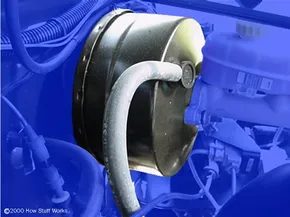
Pop the hood. Look to the driver’s side, tucked near the firewall. There it is. A black, round canister. That’s your brake booster. It’s the unsung hero that makes stopping effortless.
You don’t miss it until it fails. Then, the pedal feels like lifting a boulder.
History explains why this part exists. Decades ago, cars ran on drum brakes. Those older systems had inherent mechanical advantage. They offered their own assist. You didn’t need extra help. You could press down and stop.
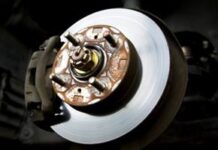
Today is different. Disc brakes rule the front wheels. They stop better. They handle heat better. But they lack that natural leverage. Without power assistance, driving a modern car would be an athletic event. You’d walk away with tired legs and sore calves.
The booster bridges that gap. It multiplies your foot pressure. It turns a gentle press into a hard stop.
The brake booster is the round, black cannister located at the back of the engine compartment on the driver’s side of the car.
Why does this matter now? Because safety standards are higher. Stopping distances are shorter. But the physics of disc brakes haven’t changed. They still need help.
Consider the alternative. No vacuum assist. No electric motor. Just human muscle against metal pistons. You’d need to press with hundreds of pounds of force. That’s not driving. That’s weightlifting.
The brake booster solves this problem. It’s simple. It’s effective. It’s necessary.
Your car doesn’t care if you notice it. It just works. Until it doesn’t. Then you learn exactly what it does.
Inside the Black Canister
You press the pedal. The car slows down. But who actually does the heavy lifting? It isn’t just your leg muscles. It’s the brake booster. Or, as the industry prefers to call it, the vacuum booster.
This black canister sitting in your engine bay is doing the dirty work. It takes the relatively weak force of your foot and amplifies it. A lot. Without it, stopping a modern vehicle would require legs of steel and a lot of sweating. We’re talking about hundreds of pounds of pressure generated by something you can’t even see or feel directly.
That something is vacuum.
How Vacuum Makes You Stronger
The engine creates vacuum as a byproduct of the combustion process. When the pistons move down on the intake stroke, they suck air into the cylinders. This creates a low-pressure area in the intake manifold. The brake booster taps into this system.
It’s a simple concept.
- A vacuum source (usually the intake manifold) connects to one side of the booster.
- The other side is vented to the atmosphere.
- A diaphragm sits in the middle.
When you aren’t pressing the brake pedal, the vacuum is applied to both sides of the diaphragm. The pressure is equal. No force is generated. The system is neutral.
Press the pedal.
A valve opens. Atmospheric air floods one side of the diaphragm. The other side remains under vacuum. Now you have a pressure differential. The higher pressure pushes the diaphragm. This movement is transferred to the master cylinder pushrod.
That pushrod hits the master cylinder. The master cylinder builds hydraulic pressure. That pressure travels through the lines to the calipers or wheel cylinders. The pads clamp down on the rotors. The drum shoes press against the drums.
The car stops.
All of this happens in milliseconds. And it relies entirely on that hidden vacuum.
Why You Need It
Think about driving a car with no power assist. An old car from the 1950s often had weak or non-existent boosters. Stopping from highway speeds required brute force. You’d push with everything you had. Your legs would shake.
Modern cars? You tap the pedal. The computer (and the vacuum) does the rest. The booster multiplies your input by a factor of roughly 4:1 to 5:1. Some high-performance setups go higher. That’s why a gentle press translates to a hard stop.
But here’s the catch. It depends on the engine.
If the engine stalls, you lose vacuum. The pedal gets hard. You still have brakes, but you have to stomp the pedal to generate enough hydraulic pressure manually. It’s possible to stop. It’s just not easy. And it’s not for the faint of heart.
The Diaphragm and Valves
Inside the canister, things are tight. You’ve got a large rubber diaphragm divided into two chambers. One chamber is connected to the intake manifold via a hose. The other is the power chamber.
There’s also a return spring. This spring pushes the diaphragm back to its resting position when you lift your foot off the pedal. It also ensures the valve closes properly.
The valve itself is the brain of the operation. It’s a simple spool or piston valve.
The Anatomy of Assist
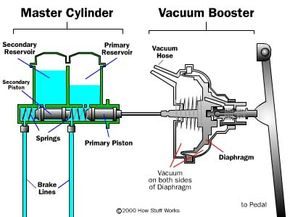
It’s just a metal canister. Look deceivingly simple. Inside, though, is a vacuum booster working overtime. A diaphragm splits the chamber. A central rod punches right through the middle. Connect the pedal linkage on one end. Hook the master cylinder piston on the other.
The valve logic is brutal but effective. You push the pedal. The valve opens. Vacuum pulls on one side of the diaphragm. Atmospheric pressure pushes on the other. You get muscle without the sweat.
But the system isn’t just about applying force. It’s about maintaining it. Or losing it.
The Check Valve’s Job
Enter the check valve. Small brass or plastic component. Screwed into the hose that runs to the intake manifold. Its job is binary. One way only.
When the engine runs. Vacuum flows in. The valve holds it there. Keeping the brake assist charged. You step off the gas. The vacuum stays trapped. You get one or two hard stops even if the engine dies.
If the valve fails? Squeeze. Nothing. Or a spongy pedal that sinks to the floor. That’s why you inspect it during routine maintenance. A hissing sound under the hood usually means it’s blown. Or the hose is cracked.
Why It Matters
You don’t think about these parts until they break. Then you’re standing on the curb. Roadside. Foot pressed down. Pedal firm. No help. No assist. Just mechanical linkage. And a lot of anxiety.
The vacuum booster multiplies your effort. The check valve preserves it. Together they make stopping easy. Separate them? You’re back to the dark ages. Literally. Before power brakes. Before easy commutes. Before confident highway driving.
So check the valve. Listen for the hiss. Ensure the canister is solid. Because when you need that assist. You won’t ask questions. You’ll just need it to work.
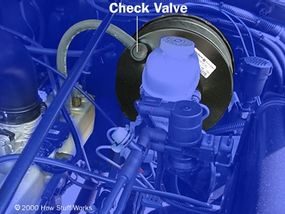
Look at that check valve. It’s a one-way gate for air. Its sole job is to let air out of the vacuum booster but keep it from coming back in. Why does this matter? Because if your engine dies or a vacuum hose cracks, you still need brakes. The check valve traps the vacuum inside so you can make several stops before the booster runs out of steam. Running out of gas on the highway is scary enough without losing hydraulic pressure too.
How the Booster Actually Works
The design is simple. Elegant, even. It needs a vacuum source to function. Gasoline engines provide this naturally. The intake manifold pulls air out of the combustion chambers, creating a partial vacuum in the plenum. Hook a hose up to the right spot and you can literally suck the air out of the container.
Diesel engines are different. They don’t throttle the intake in the same way, so they don’t produce that natural vacuum. Diesel vehicles need a separate vacuum pump just to keep the brakes assistive.
When you press the pedal, a rod pushes through the booster and into the master cylinder. The engine keeps both sides of the diaphragm under partial vacuum. Hit the pedal and the rod opens a valve. Air enters one side of the booster while the other side stays sealed off from the vacuum.
Pressure builds on that one side. The diaphragm moves. It pushes the rod harder. The master cylinder piston gets a shove. Suddenly, that light pedal feels like it has some muscle behind it.
Release the pedal. The valve closes the outside air. It reopens the vacuum path. Both sides of the diaphragm equalize. The system resets.
The vacuum booster amplifies pedal effort by using engine vacuum to move a diaphragm, which pushes the master cylinder piston.
This mechanism allows for several brake applications even if the engine stalls, relying on the stored vacuum preserved by the check valve. It’s a mechanical safety net wrapped in a simple air-pressure system.
Power Brake Diagram
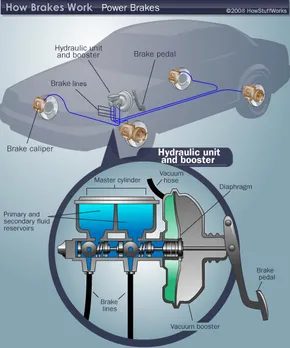
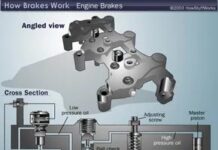
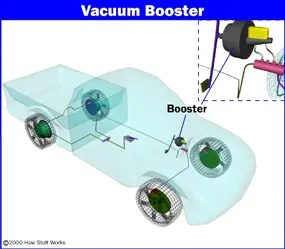
Put the components back together and you get a functional power brake system. The diagram at the start of this series shows the internal mechanics up close. It also maps out where these parts live under your hood or near the pedal.
See how the booster attaches to the master cylinder. Notice the vacuum line running to the engine. This setup creates the assist that makes stopping a two-ton machine feel light. Without it, you’d be wrestling the pedal for every inch of deceleration.
The location matters too. In most cars, the assembly sits on the firewall. You press the pedal. The booster multiplies that force. The master cylinder pushes fluid through the lines. Calipers clamp down. That is the whole story in a few steps.
If you want to dig deeper into the hydraulic side, check out the related links below.
Related HowStuffWorks Articles
- How Brakes Work
- How Master Cylinders and Combination Valves Work
- How Drum Brakes Work
- How Disc Brakes Work
- How Anti-lock Brakes Work
- What are the different types of brake fluid?
- Why do brake lines have so many bends and loops?
- What do the brake warning lights mean in my car?
- Could anti-lock brakes detect a flat?
- Rollover Accidents Explained
More Great Links
- Halting History: Brakes Then and Now
- Automotive 101: Brake System Overview
- Pictures: Power Brake Booster
- Brake System in Operation
- The Auto Channel Bulletin Boards and Chat Forum
- Professional Mechanics Online: Brakes
- Auto.com: Daily news and reviews