Your hands are on the wheel. The road is smooth. Yet the steering column is trembling.
It’s not just you. Every owner eventually faces the mystery of the shake. It doesn’t announce itself with a bang. It starts subtle. A slight buzz at highway speeds. A faint shudder in the pedal. You ignore it. Then one day, the vibration is undeniable. You can feel it in your teeth.
Ignoring it is a mistake. That rattle is a symptom. It could be as simple as a loose lug nut. It could mean your transmission is on the brink.
Early diagnosis isn’t just about comfort. It’s about avoiding a $2,000 repair bill later.
Here are the top reasons your vehicle is vibrating. We start at the bottom and work up to the heart of the machine.
10: Engine Problems
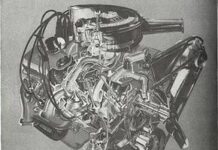
Vibration isn’t always coming from the road. Sometimes the problem starts under the hood.
A healthy engine runs with a consistent rhythm. It’s a controlled explosion. If that rhythm breaks, the whole car shakes.
There are two main ways this happens.
Misfires.
When a cylinder fails to fire properly, the engine runs unevenly. The power delivery becomes choppy. You’ll feel this most when you are stopped at a light or moving slowly. The steering wheel might pulse. The seat might throb. It feels like the car is trying to walk on a broken leg.
Common culprits include:
- Worn spark plugs
- Failing ignition coils
- Clogged fuel injectors
Bad Engine Mounts.
The engine isn’t bolted directly to the frame. Rubber mounts hold it in place. These mounts absorb the engine’s natural vibrations. They are designed to die.
When a mount cracks or collapses, the metal engine touches the metal chassis. The vibrations transfer directly into the cabin. This is why you might feel shaking at idle that disappears when you put the car in gear. The tension changes. The engine shifts.
“A failing engine mount can turn a smooth idle into a violent shake.”
If your engine is shaking, don’t just look at the tires. Pop the hood. Listen. Feel the idle.

Engine Air, Fuel, and Ignition Issues
Vibration from the engine bay usually points to a combustion problem. The engine isn’t getting the right mix of air, fuel, or spark. You can spot this by watching for specific behaviors.
- Jerking or shuddering when you press the gas
- A rhythmic shake that feels like driving over rumble strips, but only at certain speeds
- A vehicle that runs smoothly when cold but starts vibrating after a few miles
These signs often mean your spark plugs are shot. It’s time for new plugs. If they’re fine, check the wires. Are they plugged in the correct order? A misfire here causes uneven power delivery.
Don’t overlook basic maintenance. A clogged air filter restricts oxygen. A dirty fuel filter starves the engine of gas. Both are cheap fixes. Check your owner’s manual. Replace filters on schedule. It prevents the engine from starving while it’s moving.
9: Bad Motor Mounts
Engine mounts hold the block to the chassis. Under the hood, it looks like the engine is just wedged in there. It isn’t. It’s bolted to structural components via these mounts.
The design varies. Some cars use solid metal brackets. Others rely on heavy rubber. The goal is the same: structural integrity and vibration damping. The metal takes the weight. The rubber absorbs the shake.
Both wear out.
When mounts fail, the rubber cracks or the metal bends. The engine no longer sits firmly. It moves. You might feel this as a sudden jerk or a gradual increase in front-end vibration. It’s a common cause of engine-related shakes.
Modified cars often use high-performance mounts. They’re firmer. They absorb less vibration. This gives better feedback for track driving. For daily driving, some owners find the increased noise and shake annoying. If your car feels too harsh, the mounts might be the culprit.
But what if the shake stops the moment you lift your foot off the gas? If the car vibrates only when braking, stop looking at the engine.
8: Brake Trouble
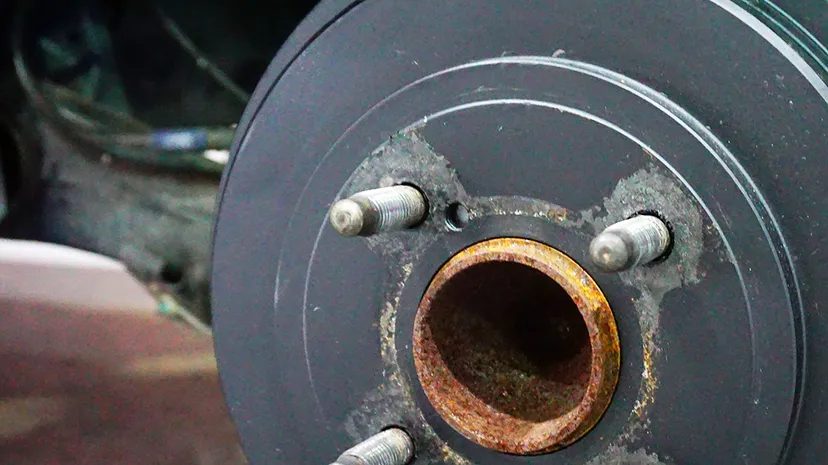
How warped brake rotors cause steering wheel shake
Does the steering wheel shudder when you tap the brakes? That specific vibration is a classic signature of warped brake rotors. It’s not just a nuisance; it’s a mechanical failure in progress.
The rotor is that large, silver disc attached to your wheel hub. In a disc brake system, it does the heavy lifting. When you press the pedal, calipers clamp down on brake pads, which pinch the rotor to create friction. Stop the car.
But heat is the enemy.
Hard stops generate massive amounts of thermal energy. If you ride the brakes down a long hill or stop too aggressively from high speeds, the rotor can overheat. This extreme heat causes the metal to expand unevenly. It doesn’t just get hot; it distorts. The once-perfectly-flat surface develops high and low spots. It’s slightly bent out of shape.
When those calipers try to clamp down on a deformed surface, they can’t make even contact. The pads grab, slip, grab, slip. Rapidly. Thousands of times per minute at highway speeds. That pulsating sensation you feel in your foot or your hands? That’s the caliper jumping over the uneven edges of the rotor.
“A warped rotor prevents calipers from getting an even grip, leading to vibration.”
It’s not always the rotor, though. Worn-out brake pads can mimic the same symptoms. If the friction material is gone, the metal backing plate grinds against the rotor. Uneven wear creates rough spots that cause shaking.
If you aren’t comfortable stripping down your wheel assembly and measuring rotor thickness with a micrometer, call a specialist. They can inspect your rotors and brake drums (if your rear brakes are drum-style) to determine if it’s a simple pad replacement or a rotor resurfacing job. Ignoring it leads to worse damage.
When axle problems mimic brake issues
But what if the shaking happens only at speed, with no brake pressure?
That points higher up the drivetrain. Specifically, your axles.
Front-wheel drive cars rely on constant velocity (CV) axles to transfer power from the transmission to the wheels. These shafts have joints at each end to accommodate steering and suspension movement. When the protective rubber boots on these joints tear, grease leaks out. Dirt gets in. The joints wear out.
A failing CV axle often causes vibration during acceleration. It’s a rhythmic shaking that correlates with vehicle speed. You might feel it in the floorboard or the seat. It’s distinct from brake vibration because it happens when you are giving it gas, not when you are stopping.
Rear-wheel drive and all-wheel-drive vehicles have different setups, but the principle remains the same. A bent driveshaft or a worn universal joint can introduce severe harmonic vibration. The car feels like it’s dancing on its own.
How to diagnose the source
How do you tell the difference? It’s often about context.
- Brake vibration: Gets worse when you apply pressure. Steering wheel shakes. Occurs at any speed when braking.
- Axle/Differential vibration: Occurs during acceleration or coasting. Steering wheel may remain steady while the body shakes.
If you have warped rotors, you

Cars are精密 machines. Beneath the bodywork, you have reciprocating pistons and rotating crankshafts that must stay within microscopic tolerances. If those specs drift, the ride suffers. And if you are feeling a shake in your seat, the culprit is often mechanical wear you can’t see from the driver’s seat.
Bent Axles and Driveshafts
A bent axle is the most common cause of vibration that scales with speed. It doesn’t take much to bend one. A hard curb strike, a pothole hit at highway speed, or a minor collision is enough. Once the metal distorts, the wheel wobbles. The shake starts subtle at low speeds and picks up intensity as you accelerate.
In rear-wheel-drive vehicles, the driveshaft is equally critical. It spins rapidly to transfer power from the engine to the rear differential. If that tube is bent or out of balance, the whole rear end shudders. It’s not just a nuisance; it’s a sign of serious mechanical stress.
The State of Your CV Joints
Constant velocity joints, or CV joints, are next on the hit list. These allow your drive axles to transmit power at an angle while the wheels turn and suspension moves up and down.
How do you know if they are toast? Look at the rubber boots. Those accordion-like covers keep grease in and grit out. If the boot is torn, dirt and road filth are grinding inside the joint. That’s damage you can’t undo.
“For front-wheel drive cars, toasted CV joints mean you’ll be buying new drive axles, too.”
If the boots are intact, clamps tight, and no grease is leaking, they are probably fine. But if you see tears, the joint is compromised. In FWD cars, you typically replace the entire axle assembly, not just the joint. It’s expensive, but necessary.
Loose Steering Components
Compare the steering of a new sports car to an old sedan. The new one feels firm. Responsive. You turn the wheel, the car turns. It feels accurate.
Older cars feel vague. That’s wear.
The steering system is a complex network of tie rods, ball joints, and linkages. These parts connect your steering wheel to the tires. Over time, they wear down. The movement becomes sloppy. You might not notice the play at first. It’s gradual. But that excess movement creates vibration.
The car still steers. The tires still touch the road. But the connection is loose. That looseness translates to shaking.
This is where the rubber meets the road for most DIYers. You can’t fix loose steering components in your driveway. It requires precision alignment and specialized tools. If you’ve ruled out tires, brakes, and drivetrain issues, take it to a pro. Check your steering components specifically.
Power Steering Problems
While power steering itself rarely causes shaking, problems in the system can contribute to the feel of the vehicle. Low fluid, air in the lines, or a failing pump can cause shuddering at low speeds or during turns. It’s less about high-speed vibration and more about control. But if your steering wheel is trembling when you’re just pulling out of a parking spot, the power steering system should be on your inspection list.

A shudder that appears exclusively during cornering is a specific symptom. It points directly to the power steering system. Don’t guess. Look under the hood. Inspect the hoses for visible cracks or leaks. Check the reservoir level. Low fluid causes air to enter the lines. That air creates the vibration you feel in the wheel.
If the fluid is full, the problem might be mechanical wear. Try replicating the noise without moving the car. Put the transmission in park. Turn the wheel left and right. If you feel the same shudder or hear the same whine, the issue is definitely in the steering rack or pump. YourMechanic notes that this stationary test isolates the steering components from suspension variables. It confirms the source isn’t your tires or brakes.
4: Unbalanced Wheels
Wait. If the vibration only happens at speed, not while turning, check your tires. An unbalanced wheel causes a shake that intensifies as you go faster. But there’s a nuance. A severely unbalanced wheel can also cause pulling or slight shuddering when you initiate a turn. The tire’s weight distribution fights the steering input.
How is this different from a power steering issue? Power steering shudders happen at low speeds or idle. Unbalanced wheels usually don’t bother you until you hit 50 mph or higher. If your steering wheel shakes only at highway speeds, get a balance check. If it shakes at 10 mph in the driveway, look at the steering pump.
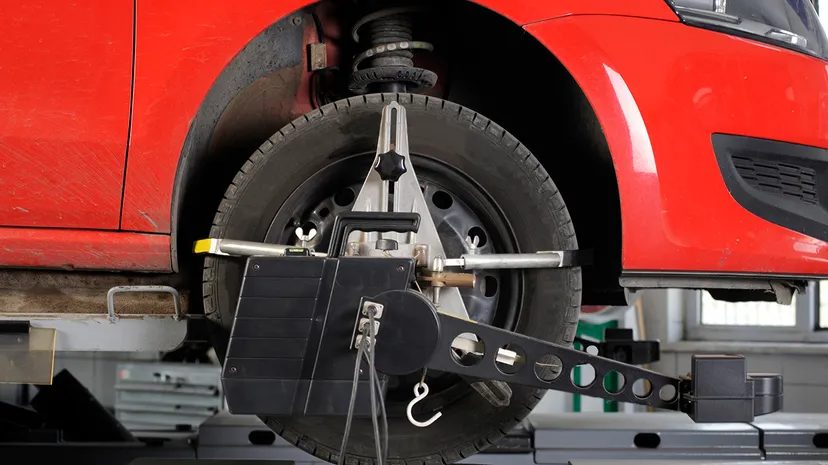
3: Bent or Damaged Wheels
Tires aren’t the only culprit when your steering wheel shakes. Sometimes the metal circle holding them up is the problem. Specifically, a bent rim.
Look closely at your wheels. Those small, lead-like squares stuck to the inner lip? That’s wheel weight. It’s there to counteract uneven mass. If you park safely and turn your steering wheel fully to one side, you can see them clearly. They’re often on both the inner and outer edges.
While you’re staring at the hub, check for debris. Mud, brake dust, or road grime can throw off the balance. Wipe it clean. A dirty wheel is an unbalanced wheel, even if the weights are perfectly placed.
Unbalanced wheels cause vibration. It’s a diagnosis most shops can make in under an hour. And it’s cheap. Usually less than the cost of a tank of gas. But if you ignore it? The bearings wear out. The suspension takes a beating. And the vibration gets worse.
How to Spot Bent Rims
You don’t need a physics degree to suspect a bent rim. Drive on a smooth, flat road. Take your feet off the wheel. If the car pulls to one side, something is wrong. If the steering wheel shudders at specific speeds—say, 55 or 65 mph—it’s likely rotational irregularity.
Bent rims happen. A pothole at speed. A curb strike while parallel parking. A nail that didn’t just puncture the tire but dented the alloy.
Which Wheels Are Most at Risk?
Front wheels take the brunt of the damage. They steer. They absorb the initial impact. But rear wheels aren’t immune. If you have a bent rear rim, the vibration might feel like it’s coming from the seat of your pants rather than your hands.
Low-profile tires hide damage better than tall sidewalls. That thin rubber has nowhere to flex. The impact goes straight into the metal.
Why This Matters
A bent rim doesn’t just shake. It creates a wobble. That wobble travels through the tie rods. It shakes the rack. It loosens everything in between.
If you see a visible bend, don’t drive on it. Not even for a few blocks. The seal between tire and rim can break. You’ll lose pressure. Suddenly.
Repair vs. Replace
Can a bent rim be fixed? Yes. But only if the damage is minor. A straightening machine can often coax the metal back into shape. It’s cheaper than new wheels. But it’s not permanent. Metal fatigues. The bend might come back.
If the rim is cracked, cracked is cracked. Replace it. No debate.
The Diagnostic Process
A shop will mount the wheel on a balancer. They’ll spin it. If it wobbles laterally—side to side—the rim is bent. If it wobbles radially—up and down—it’s out of round.
Both cause vibration. Both need attention.
Cost Check
Balancing: $20-$50 per wheel.
Rim straightening: $50-$100 per wheel.
New alloy wheel: $100-$500+.
It adds up fast. Especially if you have all-weather tires and hit

It starts with a simple fact: if an unbalanced wheel sends shudders through your steering wheel, a damaged one will too. And damage happens more often than we admit. Potholes are obvious enemies. Sloppy road repairs are just as dangerous. You hit a bump, it feels like a minor thump, and you forget about it. But that impact can knock your wheels out of round.
Then there is runout. This is the technical term for how much a wheel deviates from a perfect circle when it spins. Technicians use precision instruments to measure it. If the deviation exceeds half an inch, you have a problem. Usually, the fix is a new wheel. Sometimes it isn’t. But you need to know if your wheel is truly true before you start blaming other systems.
Wheels are a common culprit. They are not always the only culprit. We can narrow the search. But before we get to the next major section, we have to look at the tires themselves. Specifically, how their construction contributes to the shake.
Low Profile or Low Rolling Resistance Tires
Tires are often the root cause. The next logical step is to examine tire problems. One major factor is the rise of low rolling resistance tires. You might also see these called low-profile tires. They are becoming standard on hybrid cars and EVs.
Why? Because they reduce drag. Less resistance boosts EPA fuel economy ratings. This is a critical marketing point for manufacturers. But there is a trade-off. These tires are harder. They are stiff. They do not absorb road imperfections well. The ride is not pleasant.
The terminology is confusing. “Low profile” usually refers to the sidewall height. But it is sometimes used interchangeably with performance tires. In both cases, you are dealing with less material or harder compounds. The result is the same. Less ability to absorb bumps, pits, and texture.
If your car is equipped with these types of tires, they could be the source of your vibration. The road texture translates directly to your seat. However, do not jump to conclusions. It is best to eliminate other potential causes first. Check your wheel balance. Inspect for damage. Look at runout.
Only then do you rule out the tire composition as the primary offender.
Bad Tires
When we talk about bad tires, we are not just talking about wear. We are talking about structural integrity. A tire can be “bad” in ways that have nothing to do with tread depth.
Consider cupping. This is where the tread wears unevenly, creating scalloped dips. It feels like driving over a washboard road. It causes a rhythmic thumping that increases with speed. Cupping is often a symptom of bad suspension or alignment, but the tire itself is the vibrating surface.
Then there is ply separation. The layers of the tire begin to delaminate. You might see a bulge on the sidewall. This creates an irregular rotation. The car will shake, especially at highway speeds. It is dangerous. It requires immediate replacement.
Tread separation is even more severe. The outer tread detaches from the casing. This is catastrophic. It usually happens due to excessive heat or impact damage. If you hear a slapping noise before you feel the vibration, get off the road.
Not all vibration comes from a single tire. Sometimes it is an interaction between two tires. If you recently replaced only one tire, the difference in diameter or tread depth can cause drivetrain
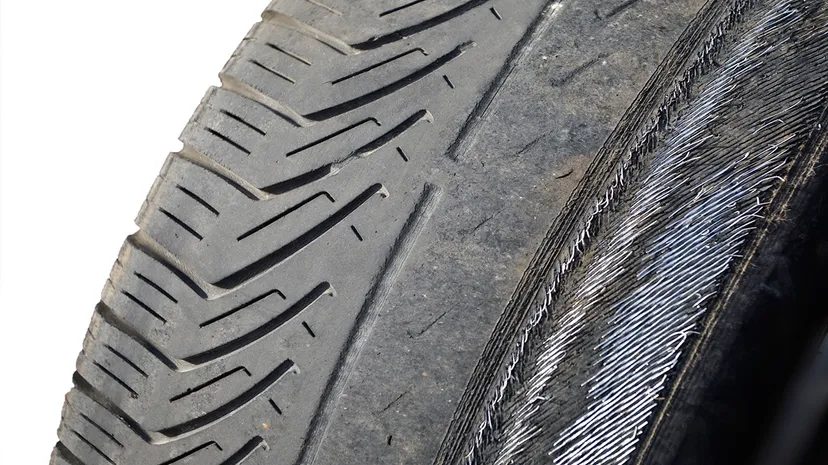
Dry, cracked, or completely bald rubber is a primary suspect when your vehicle starts shuddering. Tires are the only components touching the asphalt, and they wear out faster than almost anything else on the chassis. When they degrade, they transmit every bump and irregularity directly into the cabin.
The list of tire-related culprits is extensive. You aren’t just looking at simple wear. Here are the specific mechanical failures that cause that annoying vibration:
- Separated tread : The rubber layers are peeling away. You need new tires immediately.
- Uneven wear : The contact patch isn’t flat. This often just needs a proper rotation to balance the load.
- Out-of-round tires : The tire isn’t a perfect circle. It hops instead of rolling. Replacement is the only fix.
- Low pressure : Under-inflated sidewalls flex excessively. Just top off the air.
- Age : Old rubber loses structural integrity. Replace the set.
These issues account for a huge chunk of road shake, but they aren’t the only ones. If your car still vibrates after addressing the rubber, the problem lies elsewhere.
Vibrating Car FAQs
Why does my car shake while stationary?
Check the motor and transmission mounts. If these rubber or hydraulic cushions are cracked or broken, the engine’s idle vibration transfers directly to the frame instead of being absorbed.
What causes my car to shake while braking?
Warped rotors are the usual suspect. Normal wear and tear can cause the brake discs to become uneven. When the caliper clamps down, the pad hits high and low spots, sending a pulse through the pedal and steering column.
Why is my car shaking while making loud noises?
This points to the wheels. A bent rim or a tire with a severe defect will cause vertical shaking. You’ll feel it in the seat and the brake pedal, not just the steering wheel. The noise comes from the tire slapping the road or the rim scraping.
Why does my car shake when I hit the gas pedal?
This is often suspension or engine mount related. If the mounts are broken, the sudden torque of acceleration shakes the engine block. If the suspension bushings are worn, the chassis twists under load.
Why is my car shaking while I’re driving?
Look at the intake. A clogged engine air filter or failing spark plugs can cause misfires. The engine starves for oxygen and fuel, leading to rough idling and shuddering under load.