Most drivers assume the clutch is a feature reserved for stick-shift enthusiasts. You are wrong.
Even if you drive an automatic, your car has a clutch. And if you drive a manual, you likely have more than one.
It feels like a trick question. But it is mechanical fact. Clutches are everywhere in automotive engineering. They are also in your cordless drill. They are in your chain saw. They are even in some yo-yos.
We are skipping the power tools today. Let us focus on the metal and rubber under your hood. You need to know why this component exists. You need to know how a clutch car operates when the gears are engaged. And you need to see where else these mechanisms hide in modern engineering.
The clutch is not just a pedal you stomp on. It is a coupling device. It connects two rotating shafts. It allows them to spin at different speeds or disconnect completely. Without it, your engine and wheels would be locked together.
Try starting a car with an engine directly bolted to the wheels. The engine would stall instantly. The torque required to turn a stationary vehicle is too high for an idling engine. The clutch allows the engine to spin independently of the drivetrain. It lets you start moving smoothly.
But it does more than that. It protects the transmission.
When you shift gears, you need to momentarily disconnect power. The clutch handles this disconnection. It takes the stress off the gear teeth. It makes shifting possible without grinding metal against metal.
This is why a clutch car feels different in your hands. The driver controls the engagement point. It is a direct link between your foot and the powerband. Automatics do this too. They just do it for you.
An automatic transmission uses a torque converter. That is a fluid coupling. It acts like a clutch. But many automatics also have a lock-up clutch. This engages at highway speeds to reduce slippage. It improves fuel efficiency. So yes, your automatic has a clutch.
Some high-performance manual cars have two clutches. A dual-clutch transmission (DCT) uses two separate clutch packs. One handles odd gears. The other handles even gears. This allows for lightning-fast shifts. The next gear is already engaged. It is waiting in the wings.
This technology started in racing. Now it is in your daily driver.
Where else can you find a clutch?
Look at the tools in your garage. A cordless drill uses a clutch to prevent stripping screws. It disengages the motor when resistance is too high. This is a safety feature. It stops you from over-tightening.
A chain saw uses a centrifugal clutch. At low RPMs, the clutch is open. The blade does not spin. As you rev the engine, centrifugal force pushes the weights outward. The clutch engages. The blade spins. This prevents the saw from jerking when you pull the starter.
The principle is simple. Connect or disconnect power based on speed or input.
In cars, this principle manages engine torque. It smooths out the power delivery. It allows for gear changes. It protects the drivetrain.
Understanding how a clutch car works changes how you drive it. You feel the bite point. You anticipate the shift. You understand the
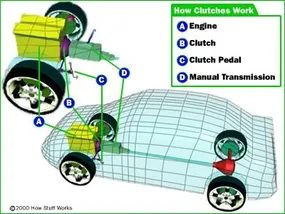
Clutches exist because two rotating shafts often need to interact without being permanently bound. In an automotive context, one shaft is driven by the engine, the other by the wheels. The clutch sits in the middle. It can lock them together so they spin at identical speeds, or decouple them so they spin independently.
Without this mechanism, stopping the car would stall the engine. You can’t just cut the power because the engine needs to keep idling. The clutch manages this by allowing controlled slippage. It smoothly engages a spinning engine with a stationary transmission. This is the fundamental reason a manual car doesn’t become a brick the moment you come to a red light.
Understanding Friction in Clutch Design
To grasp the mechanics, you have to look at friction. It’s a measure of resistance when sliding one surface over another. Even surfaces that look smooth have microscopic peaks and valleys. The rougher the terrain, the harder the slide.
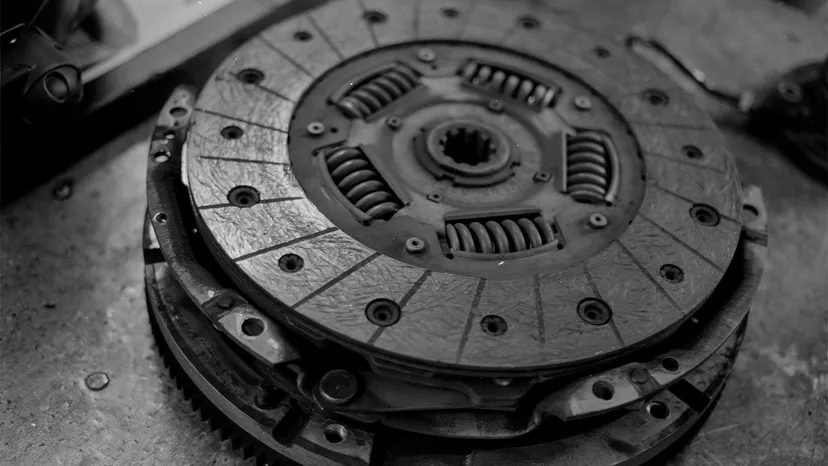
A friction clutch relies on this principle between two main components: the clutch plate and the flywheel. The flywheel is bolted to the engine. The clutch plate connects to the transmission input shaft. When they press together, friction takes over.
The Anatomy of Engagement
When you lift your foot off the clutch pedal in a manual transmission vehicle, the system is fully engaged. Strong springs push the pressure plate against the clutch disc. This disc is sandwiched against the flywheel. The engine and the transmission input shaft are now locked. They spin at the same speed.
The holding capacity depends on two things. First, the coefficient of friction between the clutch plate material and the flywheel surface. Second, the spring force applied by the pressure plate. It’s similar to how disc brakes work, except a spring replaces the driver’s leg pressing a block into the ground.
Disengaging the Powertrain
Pressing the pedal changes everything. A cable or hydraulic piston pushes the release fork. The fork moves the release bearing. This bearing presses into the center of the diaphragm spring.
Pushing the center of that spring outward causes the outer edges to lift. Pins on the spring pull the pressure plate away from the clutch disc. The connection breaks. The engine keeps spinning. The transmission is momentarily disconnected.
Inside the clutch disc itself are small torsion springs. They dampen the shock when engagement happens. This prevents jerky power delivery to the drivetrain. It’s a clever design. It isn’t without flaws. Wear is inevitable.
Clutch Lifespan and Failure Modes
In the 1950s through the 1970s, you could expect 50,000 to 70,000 miles from a clutch. Modern materials and engineering have pushed that limit. A well-maintained clutch can last over 80,000 miles. Neglect changes the equation. Some clutches begin failing at 35,000 miles.
Heavy-duty use accelerates wear. Trucks that are consistently overloaded or towing heavy loads stress the friction material beyond its design limits. They often require multiple clutch discs to handle the torque.
The most common failure is simple wear. The friction linings on the disc degrade over time. Think of them like brake pads. They wear down. When the material is gone, the clutch slips. It stops transmitting power from the engine to the wheels. Mechanics sometimes call this a “wet clutch” because the engine revs but the car doesn’t accelerate as it should.
Wear only happens when there is slippage. When the disc and flywheel are locked and spinning in sync, there is no wear. Friction is static. It only becomes dynamic, and therefore destructive, when the surfaces move at different speeds.
This means driving style matters. If you ride the clutch or slip it excessively, you are grinding away the lining faster. The hardware fails because of how it’s used, not just because of time.
A sticking clutch is just as annoying as a slipping one, though the symptoms feel different. Instead of the engine revving without moving the car, you are trying to shift and getting nothing but metal-on-metal grinding. Or worse, you can’t get into gear at all. The input shaft keeps spinning because the clutch isn’t releasing fully.
Several mechanical failures can cause this binding. A broken or stretched clutch cable is a common culprit. The cable needs precise tension to push and pull the mechanism correctly. If it’s slack or snapped, the signal from the pedal never reaches the transmission.
Hydraulic issues are also frequent. Leaky slave or master cylinders prevent the system from building the necessary pressure. Air bubbles in the hydraulic line do the same thing. They take up space where fluid should be, compressing instead of pushing the release fork.
Mechanical misalignment can also be to blame. Misadjusted linkage means your foot hits the pedal but the wrong amount of force is transmitted. Mismatched aftermarket components often cause similar friction issues. Not all universal parts play nice with specific OEM designs.
The Hard Clutch Problem
A “hard” clutch is another variation of sticking. All manual transmissions require some effort to depress the pedal completely. But if you are wrestling with the lever, something is wrong.
Binding can occur in the pedal linkage itself. Check the cross shaft and pivot ball for wear or corrosion. A blockage in the hydraulic system or worn seals can also create excessive resistance. The fluid isn’t moving freely, so you have to force it.
Listening for the Throw-Out Bearing
The clutch release bearing, or throw-out bearing, is another failure point. This component applies force to the fingers of the spinning pressure plate to disengage the clutch. When it fails, it usually announces itself with noise.
A rumbling sound when you engage the clutch often points to a worn throw-out bearing. It’s a specific auditory clue that separates bearing failure from other linkage issues.
The Four-Step Clutch Diagnostic Test
You can isolate the source of clutch noises with a simple diagnostic test. If you hear nothing during these steps, your problem likely isn’t the clutch.
- Start the engine. Set the parking brake. Put the car in neutral.
- Listen at idle. Do not push the clutch pedal. A growling noise here usually points to a transmission issue. If it’s silent, move to step three.
- While still in neutral, slowly press the clutch pedal. A chirping noise as you press indicates a failing clutch release bearing.
- Push the clutch all the way to the floor. A squealing noise at full depression suggests a bad pilot bearing or bushing. This bearing connects the transmission’s input shaft to the engine crankshaft.
If the noise disappears when you press the clutch pedal, the issue might be the contact point between the release fork and the pivot ball that supports it.
Types of Clutches
Most people think of the clutch pedal as a singular component, a foot-operated lever between first and second gear. That’s only the tip of the iceberg. Your garage is likely hiding several other types of clutches, each serving a distinct mechanical purpose without ever asking for a driver’s input. These systems are what keep modern machinery running smoothly, efficiently, and safely.
Automatic Transmission Clutch Packs
An automatic transmission doesn’t just shift gears; it manages a series of internal clutches. These aren’t the friction discs you’re used to feeling under your left foot. Instead, they are hydraulic packs embedded within the transmission case.
Their job is to engage and disengage specific sets of planetary gears. You know the drill: a central sun gear, orbiting planet gears, and a surrounding ring gear. By locking or releasing these components, the transmission changes ratios.
Hydraulic pressure is the muscle here. Pressurized fluid forces the clutch plates together. When that pressure drops, internal springs push the plates apart, disengaging the gear set. The connection itself relies on splines—those evenly spaced ridges lining the inside and outside of the clutch assembly. They lock into the gears and the housing, ensuring torque transfers without slipping.
“Each clutch in an automatic transmission is put into motion using pressurized hydraulic fluid.”
If you want to see the inner workings, How Automatic Transmissions Work breaks down the hydraulic circuits in detail. But for now, just know that every time your car shifts without a jerk, these hydraulic clutches are doing the heavy lifting.
The Electromagnetic Clutch in Your AC
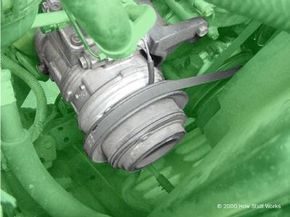
Ever wonder why your air conditioning compressor doesn’t drag down the engine when the cabin is already cool? It’s thanks to an electromagnetic clutch.
This component sits on the compressor shaft. When you flip the AC switch, current flows through a magnetic coil inside the clutch. That magnetic field engages the pulley with the compressor hub. The compressor spins, pumping refrigerant.
Turn off the AC, and the current stops. The magnetic field collapses. A spring separates the pulley from the hub. The engine keeps running. The compressor sits idle. No wasted fuel. No unnecessary wear. It’s a simple on-off switch for a critical cooling component.
Viscous Clutches and Limited-Slip Differentials
Heat and fluid dynamics come into play with the thermostatically controlled viscous clutch. You’ll find this in cars with engine-driven cooling fans.
Located at the fan hub, right in the airflow from the radiator, the clutch uses fluid to modulate fan speed. The fluid inside gets thicker as it heats up. When the engine is hot, the viscous fluid grips, forcing the fan to spin faster and match engine rotation. More airflow. Better cooling.
When the car is cold, the fluid remains thin. The fan spins slowly. This allows the engine to warm up to its optimal operating temperature quickly. A cold engine runs inefficiently. A fan that spins too fast in the morning wastes energy. The viscous clutch fixes both problems.
This same technology appears in limited-slip differentials and viscous couplings. These systems boost traction when it matters most.
During a turn, outer wheels spin faster than inner wheels. A standard open differential allows this, but it can make handling unpredictable on low-grip surfaces. A limited-slip differential uses a clutch pack to intervene. When one wheel spins faster than the others, the clutch engages, slowing that wheel down and transferring torque to the wheel with more grip.
Puddles. Ice patches. Mud. These are where traction dies. The clutch pack keeps you moving by matching wheel speeds when slip occurs.
Centrifugal Clutches in Small Engines
You might not see a centrifugal clutch in your daily driver, but you’ve likely used one. Gas-powered chain saws, weed eaters, and lawn mowers rely on them.
These clutches operate on centrifugal force. The input connects to the engine crankshaft. The output drives a chain, belt, or shaft.
At low RPMs, weighted arms inside the clutch hang loose. The clutch disengages. You can idle the engine without moving the chain or blade.
Raise the RPMs. Centrifugal force pushes the weighted arms outward. They press against the clutch housing. Engagement happens automatically. The output spins. The saw cuts. The string trimmer weeds.
Go-karts, mopeds, and mini-bikes use this same principle. Some yo-yos even have them. It’s a passive, reliable way to connect power only when needed.
Why Clutches Matter
Clutches aren’t just for starting a manual car from a standstill. They are fundamental to how machines manage power. Whether it’s hydraulic pressure in a transmission, magnetism in an AC compressor, viscosity in a cooling fan, or centrifugal force in a weed eater, clutches allow for controlled engagement and disengagement.
They protect engines. They improve efficiency. They keep you moving when traction is scarce.
Clutch FAQ
What is a clutch?
Clutches connect two rotating shafts. One shaft is usually driven by a motor or pulley. The other drives a device. The clutch locks them together to spin at the same speed or decouples them to spin at different speeds.
Why is a clutch used in a car?
The engine spins constantly. The wheels do not. To stop the car without stalling the engine, you must disconnect the wheels from the power source. A clutch allows smooth engagement between a spinning engine and a non-spinning transmission by controlling slippage.
How many miles does a clutch last?
With proper care and maintenance, a clutch typically lasts around 50,000 miles. Heavy city driving or aggressive shifting can shorten that life.
What is the function of a clutch?
It bridges two rotating shafts. By locking or decoupling them, the clutch controls whether they spin together or independently. This is essential for starting, stopping, and shifting in most mechanical systems.