Modern vehicles are reliable. That’s a fact. The era of interior rattles, fragile plastic knobs, and missing engine components is dead. But look back at the last hundred years. You find a goldmine of absolute disasters.
Early cars get a pass. Every vehicle from 1900 to 1920 was an experiment. Buyers were guinea pigs. They accepted the risk. The 1950s should have been different. Engineering had matured. Americans still wanted four wheels. Yet, one-third of this decade’s worst offenders ended up on this list. Another third comes from the 1980s. That decade was a disaster for American engineering.
We are moving toward Hyperloop and flying cars. It is easy to forget how terrible the ground-based alternatives used to be.
10: Dodge La Femme
The First Car Designed for Women
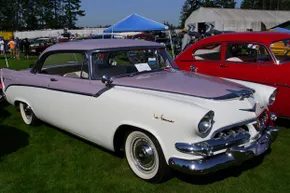
The 1955 Dodge La Femme was a marketing experiment that failed as a car. It was the first American automobile designed specifically for women. The idea was simple. Dodge wanted to capture a demographic ignored by Detroit. The result was a bizarre twist on the Dodge Meadowbrook coupe.
The exterior changed little. The paint job was the only real difference. Dodge offered pastel colors like “Palomino Tan” and “Desert Sand.” You could get a two-tone option. The roof was painted a contrasting shade. That was it. No new body panels. No different stance. Just pastel paint.
Inside was where the gimmicks lived. The front seats were upholstered in vinyl with a floral pattern. The back seat had a different fabric. It was a patchwork quilt of textures. The dashboard was white. The steering wheel had a white rim. It looked like a dollhouse.
Dodge included a vanity kit. It lived in the glove box. The kit contained lipstick, a compact, and a hand mirror. The car also had a special coat rack in the trunk. It held hangers. This was not a feature for utility. It was a feature for style.
The mechanicals were standard 1955 Dodge. You got a V8 engine. Options included automatic transmission or manual. Power steering was available. That was the baseline. Nothing was tuned for better handling. Nothing was tuned for performance. It drove like a Meadowbrook. It sounded like a Meadowbrook. It just looked like a Meadowbrook dressed up for a tea party.
Sales figures were abysmal. Only 1,232 units were produced in 1955. That is a tiny number for Dodge. The La Femme was not a success. It was a curiosity. It proved that dressing up a car does not make it better. It just makes it expensive.
The La Femme was not a new car. It was a Meadowbrook with a floral interior and a dream.
Why It Failed
The concept was flawed from the start. Women did not need a separate car. They needed better options in existing models. Dodge tried to solve a non-existent problem. They created a niche that did not exist.
The price was higher than a standard Meadowbrook. Buyers paid extra for the pastel paint and the vanity kit. They got the same engine. They got the same suspension. They got the same
The Jaguar XJ220: A Betrayal of Engineering Promise
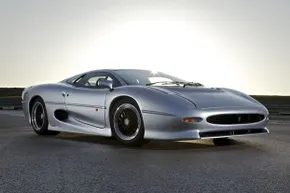
If the 1955 Dodge La Femme was a cynical cash grab wrapped in pink tapestry, the Jaguar XJ220 was a engineering betrayal. It arrived with the weight of decades of development and the promise of a supercar that would finally put British luxury on the global performance map. Instead, it delivered a car that felt like a compromised prototype masquerading as a production vehicle.
From Group B Rally to Supercar Dreams
The story begins not on a showroom floor, but in the mud and gravel of Group B rally racing. In the mid-1980s, Jaguar needed a halo car to defend its rallying heritage. The initial concept, simply called the “Jaguar C1,” was a lightweight, mid-engine racer. It looked aggressive, purposeful, and undeniably fast. Then the FIA banned Group B racing in 1986.
Jaguar’s engineers didn’t scrap the chassis. They repurposed it. The focus shifted from raw rally dominance to high-speed grand touring. The engine bay, once housing a rugged V6 tuned for torque, was now slated for a high-revving twin-turbo V6. The target was simple: beat the Ferrari F40 and the McLaren F1.
“We wanted a car that looked like it was born from wind tunnels and tested in hell.” — Tom Walkinshaw, founder of Jaguar Sport
The Twin-Turbo V6 That Never Quite Sang
The heart of the XJ220 was a 3.5-liter twin-turbocharged V6. On paper, it was impressive. It produced 542 horsepower in its original spec, though production models were detuned to around 335 to meet emissions and reliability concerns. The torque curve was flat and eager, pushing the lightweight aluminum and composite body to speeds that defied logic.
But the reality inside the cockpit was different. The cabin was tight. Brutally tight. Entry required a contortionist’s flexibility. Visibility was poor. And the sound? It wasn’t the thunderous roar of a V12 or the scream of a V10. It was a turbocharged whine, accompanied by the clatter of a gearbox that felt more like an F1 sequence than a road car shift.
The Carbon Fiber Body: Form Over Function?
The bodywork was a masterpiece of 1990s industrial design. Curved surfaces, pop-up headlights, and a low-slung profile made it look faster than it was. But the materials told a different story. The carbon fiber panels were beautiful to look at, but they didn’t offer the tactile warmth of leather or the solidity of steel. It felt sterile. Cold. Like a science experiment you weren’t invited to participate in.
The Market Missed the Boat
When the XJ220 finally hit dealerships in 1992, the landscape had changed. The McLaren F1 was already on the streets. The Porsche 911 GT2 was carving up corners with precision. The Ferrari F50 was a track weapon disguised as a road car. The XJ220 arrived two years late to a party where the conversation had moved on.
Pricing was another disaster. The initial list
The Jaguar XJ220 earned its spot on the list of automotive failures not because it was bad engineering, but because it was a lie wrapped in carbon fiber. It was the automotive equivalent of a promising indie film that gets a studio overhaul and loses its soul. A rogue team of Jaguar designers, working off the clock and bypassing corporate approval, built the prototype. When they unveiled it at the 1988 Paris Motor Show, the reaction was visceral.
The concept was a weapon. It featured a twin-turbocharged V-12 engine. It had all-wheel drive. It even had all-wheel steering, a rarity in the 1980s. The doors were scissor-style, lifting vertically like a Lamborghini Countach. The price tag? Half a million dollars. Despite the cost, buyers dropped nearly $100,000 just to reserve a spot in line. They were buying into a dream.
Then reality hit.
The Emissions Pivot That Ruined Everything
Four years passed. The Jaguar XJ220 didn’t materialize. Instead, it mutated.
Environmental regulations tightened around Europe. Emissions standards were becoming impossible for high-displacement V-12s to meet without massive, expensive technology that would blow the budget. Jaguar’s management, who had been sleeping during the concept phase, woke up and made a decision that would haunt the brand.
They deleted the V-12.
In its place, they installed a Pratt & Whitney JT12D jet engine-derived straight-six. It was a 3.5-liter unit, originally designed for fighter jets, stripped of its aviation components and mated to a manual transmission. It made sense on paper for efficiency, but it killed the character of the car.
A Disappointing Final Product
The production Jaguar XJ220 that finally rolled off the line in 1992 was a shadow of its concept.
- Engine: The twin-turbo V-12 was gone. In its place was a 3.5L straight-six producing 542 hp. It was quick, yes, but it lacked the thunder of the original plan.
- Drivetrain: All-wheel drive was axed. The car became rear-wheel drive, stripping away the exotic handling dynamics promised in the concept.
- Doors: The scissor doors? Gone. They opened conventionally, like a sedan or a coupe from any other manufacturer.
For the early adopters who had paid six figures to reserve these cars, the betrayal was absolute. They wanted a V-12 supercar. They got a refined, fast, but fundamentally ordinary rear-wheel-drive coupe.
The Lawsuit Backfire
The fallout was immediate. Many of the early buyers refused to take delivery. They had paid up for a fantasy, and what arrived was a compromise.
Jaguar’s response was to sue. The automaker filed lawsuits against the reservation holders for breach of contract. It was a classy move? Hardly. It was a defensive, legalistic power play that burned bridges and cemented the car’s legacy as a cautionary tale.
Today, the **Jaguar XJ2
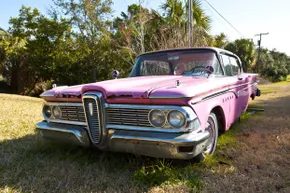
The Edsel isn’t just a bad car. It’s a cultural scar. Even the people who collect them can’t pretend it was good. The Edsel Owners Club admits the name is now shorthand for failure. Time Magazine went further. They joked about the vertical grille. Critics said it looked like a vagina. The New York Times called it a synonym for bold, bad ideas. The car launched in 1957. It failed immediately.
Why did it implode? Ford hyped it like a miracle. They promised it would end the Cold War. It would also get you the hot girl. The reality was worse. It was a poor-man’s Mercury. There were whispers about factory notes. Dealers received cars with missing parts. The instructions said they could fix it easily. They couldn’t. Ford poured millions into the project. The result was a spectacular disaster.
The Cadillac Cimarron
Fast forward nearly forty years. General Motors tried the same trick. They took a cheap car. They slapped a luxury badge on it. The result was the 1982 Cadillac Cimarron. It was a Chevy Cavalier in a tuxedo. The engine was a 2.0-liter four-cylinder. It had 90 horsepower. That’s it. You pressed the gas. The car barely moved. The handling was numb. The interior felt like plastic wrapped around cardboard.
Cadillac wanted to attract younger buyers. They wanted a small luxury car. But the Cimarron was an insult. It shared 80% of its parts with the Cavalier. The price tag was over $10,000. You could buy a fully loaded Cavalier for half that. The car was slow. It broke down often. The “luxury” was just chrome and a badge.
Sales were abysmal. The Cimarron became a punchline. Just like the Edsel. But this time, the joke lasted longer. GM learned nothing. They kept the name for five years. They kept the badge. They kept the shame.
The Edsel failed in three years. The Cimarron lasted five. Both failed for the same reason. Customers are smarter than you think. They know what a Cavalier is. They know what a Comet is. They don’t want a lie. They want a car.
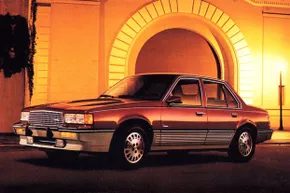
The Cadillac Cimarron remains a prime example of corporate hubris in the early ’80s. GM saw its luxury badge losing relevance. So, they took a Chevy Cavalier and slapped a Cadillac grille on it. The price tag doubled. The Cavalier was never a masterpiece. It just didn’t lie about being one. The Cimarron did. It wasn’t a transformation. It was a disguise. Like Weekend at Bernie’s. The car is Bernie. You just drag it around.
Did it compete with BMWs and Audis? No. It exposed the hollowness of the badge.
DeLorean DMC-12
Why the DeLorean DMC-12 Failed Despite Its Iconic Status
The DeLorean DMC-12 is often remembered for its Back to the Future fame. But in reality, it was a technical disaster waiting to happen. John DeLorean launched his own company in 1975. The goal was a affordable sports car. The result was a stainless steel body with gaping panel gaps. The interior was sparse. The engine was underpowered.
The car used the PRV (Peugeot-Renault-Volvo) V6 engine. It produced only 130 horsepower. This was barely enough to move the heavy stainless steel chassis. Acceleration was sluggish. Handling was numb. The Alfa Romeo-derived suspension couldn’t handle the weight distribution issues.
Key Specs of the DeLorean DMC-12
- Engine : 2.85L PRV V6
- Horsepower : 130 hp
- Torque : 147 lb-ft
- 0-60 mph : ~9.8 seconds (often slower in real-world conditions)
- Body Material : Brushed stainless steel
- Gull-wing doors : Standard feature
The DeLorean DMC-12 Production Issues
Production began in 1981. Quality control was non-existent. The stainless steel body panels did not fit together properly. Gaps were uneven. Rust appeared quickly despite the material. The interior trim was cheap. Switches broke easily. The AM/FM radio was often non-functional.
DeLorean’s management added distractions. He invested in a liquid crystal display for the instrument cluster. It rarely worked. He also spent heavily on advertising campaigns that failed to highlight the car’s flaws. The car was marketed as a future-forward vehicle. It felt like a prototype that never left the drawing board.
Market Reception and Final Failure
Consumers were confused. The DeLorean DMC-12 looked cool. It drove poorly. The price was $25,000. That was expensive for a car with a weak engine. Competitors like the Porsche 924 and BMW 635CSi offered better performance. The DeLorean offered status. But the status came with constant repair bills.
DeLorean DMC-12 Value Today
Today, the **DeLorean DMC-
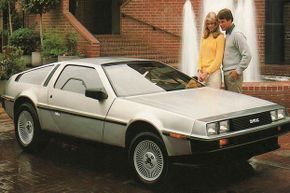
The Gullwing Trap and the Cocaine Sting
John Z. DeLorean wasn’t just some fly-by-night operator. He’d built the Pontiac GTO. He knew how to make a muscle car. So when he launched the DMC-12, the industry listened. Then it laughed.
The car rolled off the line in Northern Ireland. Not Detroit. Not Stuttgart. Belfast. During the Troubles. The workers had never built a car before. They were learning on the job. The result? A stainless steel body that looked like it belonged in a museum but handled like a shopping cart.
The doors were the real joke. Gullwing doors that jammed. If the battery died, you were stuck. Inside. With the windows up. And the doors locked. It wasn’t a feature. It was a trap.
Then came the legal hammer. DeLorean didn’t just fail as a businessman. He got caught in a federal sting. Money laundering. Cocaine. The whole Eighties nightmare. The genius behind the GTO ended up in cuffs. The DMC-12 was dead by 1983.
Resurrection came from an unlikely place. Hollywood. Back to the Future turned the car into a time machine. Nerds loved it. They grew up. They bought them. Twenty-five years later, the market corrected. Prices dropped. The “oh” factor set in. The car wasn’t a myth anymore. It was just a broken, expensive paperweight with good PR.
5: Kaiser-Frazer Henry J
A Company Born from Defeat
If DeLorean was a fallen giant, Kaiser-Frazer was a ghost that refused to die. The name itself was a marriage of convenience. Joseph Kaiser. Edgar Frazer. Two men who had lost everything in the post-war chaos, trying to build a new empire from scratch.
They didn’t have factories. They didn’t have dealers. They had a name and a desperate need to be relevant. The Henry J was their answer. Named after the CEO, Henry J. It was small. It was cheap. It was ugly.
The Ugly Duckling That Flew
The Henry J arrived in 1950. It looked like it had been designed by a committee that hated aesthetics. The roofline was high. The windows were small. The styling was boxy. But it was affordable. And it ran.
Kaiser-Frazer tried to compete with the Big Three. GM. Ford. Chrysler. They couldn’t. Not really. They lacked the scale. The distribution network. The parts availability.
Why It Failed
The Henry J was a symptom of a bigger problem. Kaiser-Frazer was a boutique operation trying to play in a major league. They had quality control issues. The paint peeled. The engines rattled. The dealers were inexperienced.
By 1955, the company was gone. The Henry J was a footnote. A curiosity. A reminder that you can’t just buy your way into the American automotive industry. You need infrastructure. You need trust. You need to survive the first five years.
Kaiser-Frazer didn’t. The Henry J remains a symbol of ambition over execution. A car that was too early, too small, and too poorly supported. It wasn’t a time machine.
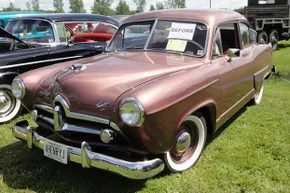
You don’t need a history degree to know the Henry J was a mistake. It is a car that even bored ten-year-olds in the 1950s could identify as a total flop. Men with white hair still remember it with sputtering disgust. There are actual stories about guys getting kicked out of fraternities just for driving one to a mixer. It was cheap when it launched in 1950 and it looked cheap. The dashboard was painted metal. There was no glove box. A minor fender bender would do wonders for your dental bills because the interior offered zero protection.
You couldn’t really crash hard enough to matter anyway. The engine options were tiny. You got 68 horsepower or 80 horsepower if you were feeling frisky. That isn’t fast. It was too slow to outrun its own ugly design. The car was killed after just three years. It was that bad.
4: Mustang II
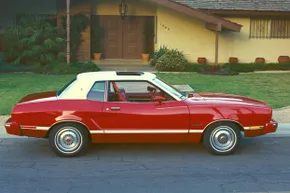
Then there is the 1974 Mustang II. It is often cited as the lowest point in Ford’s pony car history. The original Mustang had defined a generation. The second generation tried to survive an oil crisis by shrinking down to subcompact size. It lost its identity.
Ford had to pivot hard. The market shifted. Gas prices spiked. Buyers didn’t want muscle cars anymore. They wanted efficiency. The Mustang II was built on the Pinto platform. This was a bad move. The Pinto was already plagued by fuel tank fires. Putting a Mustang badge on a Pinto didn’t hide the engineering debt.
The styling was conservative. It looked like a scaled-down version of the original. Some called it a “Mini-Mustang.” The name didn’t help. It felt like a compromise.
Under the hood, the base engine was a 2.3-liter four-cylinder. It produced about 88 horsepower. That was sluggish. You could upgrade to a 2.8-liter V6 for more torque and a slightly sportier feel. There was even a Cobra II package. It added spoilers and better suspension. But it didn’t change the fundamental truth. The car was small. It was underpowered. It was heavy.
Sales numbers were decent at first. People needed affordable transportation. But the enthusiasm was gone. The car lacked soul. It was a corporate answer to a cultural shift. Ford realized the mistake quickly. The next year brought the Fox body platform. That would be the real Mustang revival. The Mustang II was just a placeholder. A stopgap. A regret in steel and vinyl.
If the Mustang II was a forced marriage between muscle car ego and Pinto-era panic, the Trabant was a divorce settlement paid in polystyrene and despair. It sits at the top of almost every “worst car ever” list for a reason that goes beyond just bad engineering. It’s about the sheer audacity of building a two-stroke engine into a body made of Duroplast, a material you can literally punch through with a fingernail.
The Two-Stroke Nightmare
Most cars use four-stroke engines. They suck, squeeze, pop, and exhale. Clean(er). The Trabant used a two-stroke setup derived from pre-war DKW designs. It didn’t just burn oil; it smoked it. Literally. When you drove one, you weren’t just polluting the air around you; you were painting it blue with unburned castor oil.
“The Trabant didn’t just emit smoke. It emitted a signature.”
This wasn’t a minor quirk. It was a health hazard disguised as a Volkswagen. The exhaust was so toxic that drivers in East Germany often reported coughing up black phlegm after just a few miles. The engine—displacing either a tiny 600cc or a slightly less pathetic 700cc—produced roughly 26 horsepower. That’s not “economy car” fast. That’s “don’t try to overtake a bicycle” fast.
Duroplast and the Recycling Lie
Here is where the story gets weird. The body panels weren’t steel. They weren’t aluminum. They were made from Duroplast, a composite of cotton waste, wood shavings, and phenolic resin. Ford tried to use it for experimental parts in the US in the late 1970s. It failed because it absorbed moisture and rotted from the inside out.
In the GDR (East Germany), there was no option to recycle. The Trabant was designed to be a disposable commodity. The average lifespan was five years. After that? You crushed it. You couldn’t weld a patch into a Duroplast door. You couldn’t bend a fender. You just replaced the whole thing. Which was a problem because production was so slow that buyers waited up to ten years for their car.
Waiting for the Wait
The supply chain issues in East Germany were legendary. The Trabant wasn’t just a car; it was a financial instrument. Families would save for a decade, not to buy groceries, but to queue for the right to purchase a steel-framed, polystyrene-hulled vehicle.
The waiting list varied. In some regions, you got a number. In others, you got a lottery. But the result was the same: a generation of East Germans who viewed their Trabant not as a joy, but as a bureaucratic trophy. Did it drive well? No. Did it handle like a boat? Absolutely. The suspension was essentially a series of rubber bands and hope.
The 1989 Collapse
When the Berlin Wall fell in 1989, the Trabant’s days were numbered. It wasn’t just that West Germans found it embarrassing. It was that the entire economic model of the GDR collapsed overnight. Suddenly, you couldn

Then there’s the American contribution to the hall of shame. You can argue about the Trabant all you want, but if you’re looking for a car that actively betrayed its owners while promising them a slice of the American Dream, you need to look at the Chevy Vega.
It wasn’t just bad. It was aggressively unreliable.
Introduced in 1970, the Vega was GM’s attempt to kill the import threat from Volkswagen and early Japanese rivals. It was small, light, and cheap. In theory, this should have worked. In practice, it was a rolling liability.
The Two-Valve Head of Disaster
The heart of the Vega was its inline-four engine. Specifically, the 1.4-liter or 1.6-liter variants. They were simple. Light. And prone to catastrophic failure.
The aluminum head warped. Not gently. It cracked. It split. It turned into a paperweight.
Why? Heat. The cooling system was inadequate for the thermal loads the engine generated. The water pump design was flawed. The cylinder head gasket failed, often blowing out while you were driving down the highway. If you weren’t paying attention, steam would erupt from the hood before the car died completely.
“The Vega was a car that failed its owners in almost every measurable way.”
Owners found themselves stranded more often than they found themselves arriving. The Chevy Vega became a punchline before it even reached its first model year anniversary.
Rust and Rot
If the engine didn’t kill you, the body did.
GM rushed the design to market. Corrosion protection was an afterthought. The steel panels rusted through within three to five years. Door bottoms. Wheel arches. Floor pans. The car would literally fall apart under your feet.
This wasn’t a rare defect. It was the norm. A used Vega in good condition was a myth. A running one was a lottery ticket. A driveable one was a miracle.
The Sales Strategy That Backfired
GM knew the Vega was flawed. They also knew they couldn’t fix it in time for launch. So they gambled. They pushed the car to dealerships and consumers anyway.
The result?
- Resale values collapsed immediately.
- Warranty claims overwhelmed GM service centers.
- Brand loyalty evaporated among early adopters.
The Chevy Vega damaged GM’s reputation for decades. It became the cautionary tale of rushed product development. It proved that you can’t engineer your way out of a bad concept with quick fixes and heavy marketing.
Why It Matters
Today, the Vega is a collector’s curiosity. But only because it’s historically significant. It’s not sought after for its driving dynamics. It’s not prized for its design. It’s collected because it’s a relic of a time when American automakers underestimated the competition and overestimated their own engineering capabilities.
The Trabant smoked. The Vega cooked. Both were failures. Both are remembered.
One for ideology. One for incompetence.
Which is worse?
The Trabant had a waiting list. The Vega had a recall list.
Both ended up in the scrapyard.
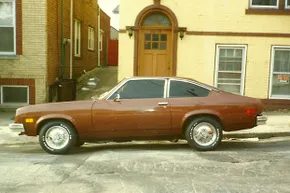
The Vega wasn’t just bad. It was a disaster waiting to happen. John DeLorean inherited the mess when he took the wheel at Chevrolet in 1969. The car was designed by a faceless corporate team at GM. It ranked right up there with legislation passed by the U.S. Congress in terms of engineering brilliance. The sheet metal was paper-thin. The rust-proof coating was barely there. Fenders rotted out after one winter on salty Northeast roads. Yes, even Arizona could rust a Vega. The engine ran so hot it warped the head gasket. A head gasket is supposed to keep coolant and oil separate. When it fails, the engine dies. Then there was the labor dispute. Workers sabotaged the production line. The result? American buyers turned to Japanese imports. They wanted fuel efficiency. They wanted reliability. They got it from Toyota and Honda.
1: Yugo GV
The Fiat 127 Legacy and American Failure
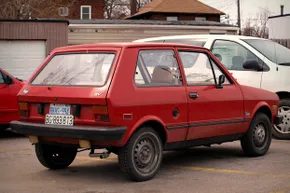
The Yugo GV didn’t appear out of nowhere. It came from Zastava, a small Yugoslav manufacturer. They had built the Fiat 127 for decades. The 127 was a simple, utilitarian hatchback. It was cheap to build. It was easy to fix. Fiat licensed the design to Zastava in 1971. The Yugo kept the basic platform. It kept the rear-engine layout. It kept the primitive suspension. But the Yugo GV added one major change. It was the only car of its kind sold directly by a foreign government in the United States. The goal was simple. Export cars to earn hard currency. The result was a vehicle that failed in every metric that mattered to American drivers.
Design and Build Quality Issues
The Yugo GV looked like a Fiat 127 with a different badge. The styling was dated. The curves were soft. The panels were loose. Fit and finish were poor. Gaps between doors and fenders were uneven. Paint was thin. It peeled after a few years. The interior was basic. Vinyl seats were cheap. Plastics were hard and brittle. The dashboard offered minimal protection. Safety standards were nonexistent by 1990s U.S. norms. The car had no airbags. It had no anti-lock brakes. It had no crumple zones designed for modern crash dynamics.
Engine Performance and Reliability
The Yugo GV used a 1.1-liter, four-cylinder, air-cooled engine. It produced about 45 horsepower. That number is low by any standard. The engine was mounted in the rear. It drove the rear wheels. This layout was common in older Fords and Volvos. It was obsolete for a mass-market commuter car in the late 1980s. The cooling system relied on a fan belt. Belts snapped. Radiators leaked. The carburetor needed frequent tuning. Fuel economy was decent. Around 28 mpg city. 34 mpg highway. But the engine lacked torque. Passing on highways was dangerous. Overtaking trucks required careful planning. The engine was also prone to overheating. This mirrors the Vega’s thermal issues. Hot engines distort components. They cause premature wear. They lead to catastrophic failure.
Choosing which of Malcolm Bricklin’s automotive ventures was the absolute worst feels like a losing game. The SV1? A Canadian-built gull-winged coupe that literally trapped its passengers inside. That’s bad. Then there was the Yugo GV.
Bricklin didn’t build the Yugo. He didn’t design it either. But in 1985, he started importing them from Yugoslavia. The goal? To make driving so miserable that Americans would just prefer walking.
It worked. Sort of.
The American public rejected the Yugo in every way imaginable. From the engine to the electrical system to the build quality, nothing worked. The only thing people got behind was the entire car. They pushed it to the side of the road after it inevitably died. Again. And again.
The Yugo GV: A Tin Can on Wheels
The Yugo GV was a product of its time and place. Built in Kragujevac, Yugoslavia, it was a stripped-down Fiat 127. Fiat had licensed the design to Zastava, the state-owned automaker. But Zastava’s version was even more basic.
Bricklin saw an opportunity. Cheap cars were in demand. He undercut every other import. The Yugo became the cheapest new car in America. For a while.
But cheap came at a cost. The Yugo was light. Too light. It felt like a cardboard box. The engine barely started. The electrical system failed constantly. The build quality was non-existent.
Why Did Americans Hate It?
The Yugo wasn’t just unreliable. It was dangerous. The brakes were weak. The suspension was brittle. The interior smelled like wet dog and regret.
People didn’t just dislike the Yugo. They feared it. It was a tin can with a motor. You could push it faster than it could go.
Bricklin’s marketing tried to spin it. “It’s cheap!” they said. “It’s simple!” they claimed. But simplicity isn’t the same as reliability. And cheap doesn’t mean durable.
The Pushing Phenomenon
The most iconic image of the Yugo era wasn’t it speeding down the highway. It was people pushing it.
Dead on arrival. Or dead on the first turn. The Yugo had a habit of dying. Completely. No warning. Just silence.
Drivers would open the door. Step out. And push. To the side of the road. To the nearest garage. To the nearest junkyard.
It became a cultural joke. A national shame. And Bricklin’s signature.
Bricklin’s Legacy: A Cautionary Tale
Bricklin had already failed with the SV1. The SV1 was beautiful. But it was flawed. The doors jammed. The brakes failed. The fiberglass cracked.
The Yugo was worse. It wasn’t just flawed. It was an insult.
Bricklin tried to redeem himself. He couldn’t. The Yugo became a symbol of everything wrong with American car culture in the 1980s. Cheap. Unreliable. Dangerous.
He didn’t invent the Yugo. But he brought it to America. And America remembered.
“The Yugo wasn’t just a car. It was a