The 1971-1976 Pontiacs were full-size cars that was affected by pressures from inside and outside the auto industry.
As the 1960s drew to a close, Pontiac was at the end of an era of great success. The “Wide Track Division” had struggled to reach third place in national sales for most of the decade, but due to many difficult changes, “business as usual” no longer worked.
Pontiac’s image as a powerhouse of performance was well-earned, but by the early 1970s, the reputation was no longer a sales panacea. The equation is broken. A wave of new government emissions regulations and pressure from consumer safety groups and insurance companies to raise prices for high-performance cars are dampening demand.
Look at the numbers. In 1970, GTO sales were less than half of the 1966 model. Firebird sales have also dropped significantly.
General Manager F. James McDonald saw the writing on the wall. Sales fell from their peak in 1968, and competition from sister divisions increased. His solution? Decontented models.
Le Mans-based cars such as the T-37 and GT-37 featured taxi-style interiors and low prices. It was a desperate measure that did not strengthen the brand image. Pontiac also didn’t have a competitive small car. The 1971 Ventura II was based on the Chevrolet Nova platform, but was introduced too late to find a niche in the growing small car market.
Despite the move to cheaper and smaller cars, Pontiac’s sales at the beginning of the decade were still heavily dependent on traditional full-size cars.
1971 Platform Shift
The 1970 model was just a facelift of the 1969 model. The real story begins in 1971 with a new big car series.
This generation was based on the new B-body platform from Chevrolet, Oldsmobile and Buick. Pontiac developed a unique chassis for the new body. The design of the perimeter frame remains the same, but the appearance has been changed significantly.
The front suspension is also completely new. It shares the same DNA as the second-generation Firebird, which was released the previous February. Redesigned attachment points and improved geometry improve cornering, ride and handling.
The rear suspension has received the same treatment. The station wagon remained with its leaf springs. Other models will switch to the new four-link model with coil springs.
Three wheelbases available:
* Catalina: 123.5 inches
* Higher-end models: 126 inches
Station wagons: 127 inches
1971 Pontiac Styling
The 1971 full-size Pontiac embraced the “fuselage” styling trend. Chrysler started this look in 1969 with a four full-sized lines. The goal is for occupants in isolated comfort and comfort.
The Pontiac versions were different. It didn’t use as high a beltline. It avoided the “rolling fortress” aesthetic. The result is a smoother, more integrated look that stands out from the competition.
This change marks a turning point. The aggressive, powerful attitude of the late 1960s has given way to a more restrained style. Something more compliant.
But comfort comes at a price. Handling improvements are minimal. Performance benefits are reduced.
1972 Pontiac must face the consequences. The market is changing. Customers change. Cars must adapt or die.
Which way did they choose?
The answer is in the details. Small changes to the grille. The lines have softened. The ride is now quieter.
This is not the end of an performance era. Not yet. But this is the beginning of the end.
1971 Pontiac Redesign: Bold Lines and Confusing Strategy
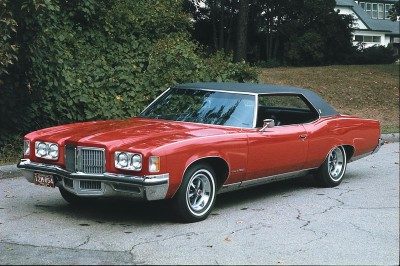
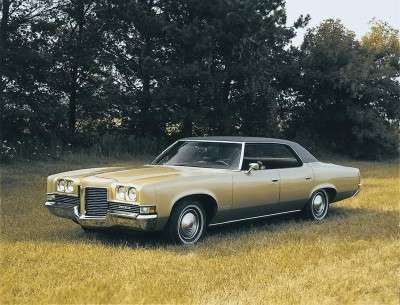
Pontiac’s front end wasn’t just redesigned for 1971; The nose has been redesigned to show an impressive beak-like appearance. The huge split grille is the star of the show. Vertical sections in the middle connected to low horizontal bars that runs towards the edge of the car below the quad headlights. Most of the lattice cavity is filled with thin horizontal bars, but vertical bars have been added in the middle and top for added texturing. The front bumper is recessed towards the center, which gives the grille an extended depth. Above that, the hood features a raised “ironing board” shape with a center rib that echoed the grille’s design.
The fenders are strictly vertical on the front edge. This accentuated the massive look of the front. As they flow back, the fenders and doors adopted a fuselage shape. This created large, elongated wheel wells at both the front and rear. The blade profile of the front fender is similar at the rear end, but leans slightly forward. The deck included two rows of louvers. These act as vents for the new connection system found on some GM vehicles. The trunk lid extends to the bumper. This helped with trunk loading. The section that extends to the bumper is narrow and filled with huge horizontal tail light lenses.
Cockpit Dash and Unique Wagons
Interiors received a complete overhaul. A distinctive feature is the new “cockpit” dashboard design. It curves in front of the driver like the control panel of a jet fighter. This look mirrors the Personal Luxury Grand Prix hardtop coupe. The Catalina was the only series offering all body styles. Buyers can choose a two-door hardtop, convertible, four-door sedan, four-door hardtop, or Safari station wagons for six or nine passengers.
All 1971 full-size Pontiac station wagons were equipped with GM’s new “clamshell” tailgate. The power-operated rear window retracted into the roof. The manual tailgate (with optional power) retracted into the floor. It was an innovative system. It was also complex and expensive to repair.
Pontiac Model Confusion
Competition within the corporation forced Pontiac planners to scramble. The new model was needed to compete with outside competitors such as Dodge and Mercury. They also have to fight competition from other GM units. The goal was to close the gap with Pontiac’s line-up. The strategy failed. This confuses buyers. It diluted Pontiac’s famous brands, especially the Bonneville, which had been produced for years.
Brougham version
Catalina’s product range continues to expand with the addition of the Brougham model. These models include a two-door and four-door hardtop and a four-door sedan. Upgrades include luxury interior. The Brougham text can be seen on the C-pillar. Luxurious wheel covers complete the look. Broughams start at more than $200 more than a comparable base Catalina.
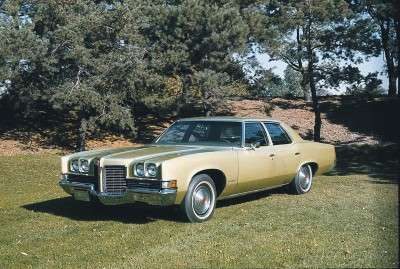
The 1971 Pontiac full-size product line experienced major restructuring, especially in the top-end product hierarchy. The Bonneville, once the undisputed flagship, was in decline. Pontiac introduced the new Grand Ville, which effectively unseated the Bonneville Brougham at the top while maintaining its 126-inch wheelbase. The Executive series vanished entirely.
Bonneville and the new Grand Ville Philosophy
The Bonneville was available as a 4-door sedan and as a 2-door or 4-door hardtop. It’s easy to tell from the outside. Look for a wide, full-length lower body trim with louvers behind the front wheel wells.
Grand Ville represented a change in strategy. Instead of tweaking the Bonneville, Pontiac decided to “out-Bonneville it.” The goal is to create new interest point for the division. This car was the closest Pontiac ever got to a revival of the venerable C-body, last seen in the 1940-1941 Custom Torpedo.
Technically, the Grand Ville used the same “B” body as the Catalina and Bonneville. However, the formal hardtop roofline was borrowed from the new C-body Cadillacs, Buick Electra and Oldsmobile Ninety-Eights. This hybrid approach allows Pontiac to deliver a quality vehicle without the unmanageable costs associated with an all-new platform.
Grand Safari Wagon
Changes were also made to the level wagons. There are no Bonneville or Grand Ville station wagons. Instead, Pontiac offered the Grand Safari. This model has the Bonneville base powertrains, but also includes the Grand Ville trim. Pontiac’s internal numbering placed the 1971-72 and 1975-76 Grand Safaris in the Bonneville group, while the 1973-74 was grouped in the Grand Ville. Simulated woodgrain trim is optional on all wagon styles.
1971 Pontiac V-8 Engine Revisions
In 1971, Powertrains faced major revisions. Like all GM divisions, Pontiac lowered its compression ratio to comply with the Clean Air Act of 1970 and to support the emerging market for low-lead and unleaded fuel. The 350-, 400-, and 455-cubic-inch V-8s remained, but output dropped. New cars have a higher curb weight, which affects performance even more.
Standard and optional engines
The Catalina’s base engine was a two-barrel 350 cid.
* Specs: Bore 3.88 inches, Stroke 3.75 inches, Compression Ratio 8.0:1.
* Power: 250 hp at 4,400 rpm. 350 lb-ft of torque at 2400 rpm.
The Catalina Safari and Brougham come standard with two-barrel 400 cid, but this is also an option on other Catalinas.
* Specs: Bore 4.12 inches, Stroke 3.75 inches, Compression Ratio 8.2:1.
* Power: 265 hp at 4,400 rpm. 400 lb-ft of torque at 2400 rpm.
* Optional: 4-barrel version adds 35 horsepower.
The Bonneville received a 455 cid V-8 as standard equipment.
* Data: Bore 4.15″, stroke 4.21″, main journal diameters 3.25″, compression ratio 8.2:1.
* Power: 280 hp at 4,400 rpm. 455 lb-ft of torque at 2000 rpm.
* Note: The engine is smooth and flexible, perfect for a big Pontiac. This is a extra-cost option for Catalinas.
The Grand Ville comes with a four-barrel 455 and is optional on all other full-size models.
* Power: 325 hp at 4,400 rpm; 455 lb-ft of torque at 3200 rpm.
Rare manual transmission
1971 marked the early end of the manual transmission in full-size Pontiac cars. Despite the reputation of the Turbo Hydra-Matic automatic transmission, some buyers ordered a synchromesh three-speed manual, which was technically standard until March.
Factory records reveal the scarcity.
* 144 Catalina Coupe and Sedan
* 30 Catalina wagons
6 Broughams
4 Bonneville
*2 Grand Villes
These oddities were assembled before the manual transmission window closed in March 1971. The Turbo Hydra-Matic then became standard, a change that coincided with an increase in the base price.
Production Numbers
Total B-body Pontiac production in 1971 was 261,282 units. This is lower than the 1970 numbers, in part because early model year strike that slowed GM production. Despite the decline, the full-size model is still Pontiac’s most popular model.
Pontiac’s full-size models underwent only minor changes in 1972. This included revised front end, larger turn signals with integrated fender caps, and the “classic” grille that lost its horizontal extensionss.
1972 Pontiac
Only minor changes were made to the 1972 Pontiac full-size model. The revised frontal design has larger turn signals that are integrated into the fender caps. The “classic” grille lost its horizontal extensions, and both pairs of headlights were grouped into a shared bright bezels, rather than being mounted independently of each other as in 1971.
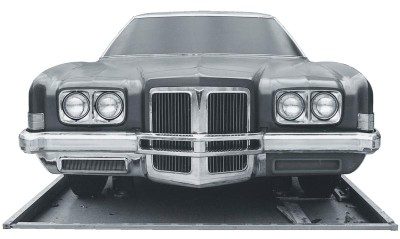
Pontiac sales increased dramatically in 1972, showing significant growth over the previous year. The visual updates are subtle but noticeable. The Bonneville and Grand Ville replaced the previous grille pattern with more subtle horizontal slats and a prominent vertical bars. The Bonneville’s rocker trim lost its louvered design and now has a sharper side profile.
The bumper is heavier and its appearance is more robust. Black anti-scratch strips have been added to the front and rear bumpers. This is not just about aesthetics. This is a pre-emptive strike against future tightening of federal bumper regulations.
Inside, the ventilation system saw a modification. The decklid and tailgate louvers have been discontinued. Paint colors and interior design were slightly updated, but the overall design remained largely faithful to the 1971 model.
But the real story happens under the hood. Or rather, the way the story is told.
SAE Net Rating changes
In 1972, General Motors adopted the Society of Automotive Engineers (SAE) net method for measuring horsepower. This is a big change. Previous values often included power losses from accessories such as alternators and water pumps. The new SAE net method measures the output of the transmission tailshaft with all accessories installed, including the air cleaner and exhaust system.
result? The numbers seem small. These are more realistic and reflect what the engine is actually sending to the wheels. Do these cars perform differently? No. Actual power or acceleration did not drop significantly between the 1971 and 1972 models. The change is purely in how the output is calculated.
The 350 cubic-inch V8, previously rated at 250hp, now produces 160hp at 4,400rpm. With the dual exhaust, this figure rises to 175 horsepower.
The 400 engine showed a similar decline on paper. The twin-barrel version went from 265 bhp to 175 bhp at 4000 rpm. Dual exhaust pipes increase the power to 200 horsepower. The 300 horsepower four-barrel 400 produced 200 horsepower at 4,000 rpm. Duals pushed it to 250 bhp.
The same goes for large engines. The 455 two-barrel’s horsepower dropped from 280 horsepower to 185 horsepower at 4000 rpm (200 with duals). The four-barrel 455 topped the B-car lineup, producing 220 horsepower at 3,600 rpm. With two exhaust pipes, the power reaches 250 horsepower.
These numbers look weak compared to 1971, but they are simply calculated differently.
Safety Recalls and Production Surges
Safety is also something worth noting. The steering systems on full-size GM vehicles were recalled in 1971 and 1972. The National Highway Transportation Safety Administration (NHTSA) has identified the risks. Small stones and debris can become trapped in the steering shaft coupling. Steering control may be lost.
Protections have been added to affected vehicles to alleviate this problem. For the 1973 model year, a redesigned coupling was developed to solve this problem.
Despite the regulatory headwind, production grew significantly. Total production in 1972 increased by 31% to over 342,000 units. Catalina is the workhorse. 228,262 units were produced. This single model met almost every requirement for full-size Pontiacs from 1971 onwards.
Bonneville and Grand Ville also showed growth. Buyers responded to the modern look and perceived value, even though the horsepower numbers on the badge seemed low.
The 1973 model year would bring more changes due to tighter federal emissions and safety regulations. But by 1972, Pontiac was holding its ground, adapting to the new measurement standards, and selling more cars than ever before. Even if the paperwork says otherwise, the muscle is still there. What if the government started measuring things differently? The numbers changed, but the metal remained the same.
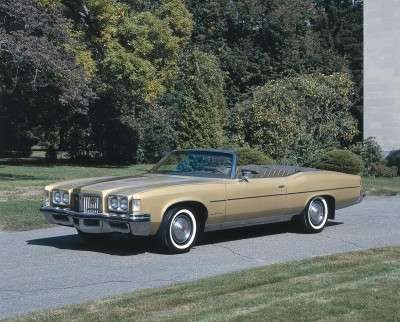
Pontiac drops the fat. To simplify its increasingly bloated lineup, the company canceled the Catalina convertible and scrapped the entire Catalina Brougham lineup. The remaining non-wagon B-body models, including the larger Pontiac, adopted a uniform 124-inch wheelbase. The wagon retains its 127-inch length, allowing the rest of the sedan lineup to compete from a more compact, unified platform.
The front gets a brute force defined facelift. A huge energy-absorbing bumper protrudes from the new full-width grille. Catalina maintains the traditional horizontal grill bar pattern. The other series switched to an “eggcrate” design, giving the front end a more aggressive grid-like look.
Upgrades Under the Skin
Rear fender skirts now came standard on Grand Ville hardtops and convertibles. Small details distinguish Grand Ville from rest of the pack. The Grand Ville taillights have been redesigned to create a unique light combination that differs from the Catalina and Bonneville series.
But the real story is under the hood. Emissions standards are getting stricter and Pontiac has to adapt. All V-8 engines feature next-generation emissions control equipment. This includes an exhaust gas recirculation system. The goal is simple. It injects a small amount of exhaust gas into the cylinder. This lowers combustion temperatures and reduces the production of harmful nitrogen oxides.
Peak 1973 and Transformation 1974
1973 was a high water mark. Pontiac sold 919,872 units. This was 281,000 from the previous year than the previous year. The full-size segment has contributed significantly to this number, with Catalina, Bonneville and Grand Ville production approaching 375,000 units.
Most of the engines were returned to service in 1973, but performance declined. 455 two-barrel are missing. The twin-pot 400-cid engine became the Bonneville’s standard powerplant. The 1973 Bonneville Hardtop Coupe also came with the optional “Radial Tuned Suspension” package. This is not just a just about radial tires. This package includes stiffer springs and shocks for improved handling on a heavy full-size chassis.
Then came 1974. Federal rollover accident standards required further changes. The Catalina and Bonneville two-door hardtops got a new “colonnade” roof. This model adds a B-colonnade and larger rear-quarter windows. A small roll-down windows remains behind the door, which preserves the pillarless aesthetic for those who appreciate silhouettes.
Market crash
The optimism did not last. In October of that year, just weeks after the 1974 model went on sale, war broke out in the Middle East. Oil-producing Arab countries have imposed oil embargoes. Fuel supplies have been tight in recent months. American interest in large family cars with V-8 engines quickly waned. The national economy built on cheap energy is declining.
The next few years will be difficult for Detroit. The 1973 sales record was never repeated. The industry was in the middle of a dark winter, and the B-body Pontiac was facing the reality it was designed to face.
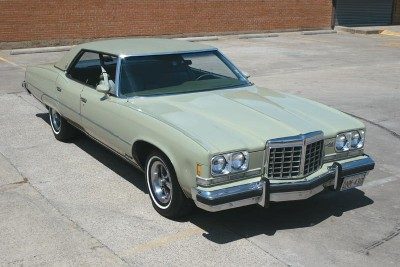
1974: The year the vibe shifted
The front end has been redesigned, replacing the previous look with one that leans heavily into Mercedes-Benz territory. The radiator is moved back to the center, and the combined parking light and turn signal strip is inserted into the gap between the bumper and the headlight bezel. The rear didn’t escape scrutiny either. The new bumper is designed to withstand impacts and pushed the license plate holder up into the fascia and closes the former trunk opening.
Under the hood, the lineup got sparse. The 350cid engine disappeared from the full-size lineup. This left the 400 twin-barrel engine as the base power source for the Catalina and Bonneville. If you need more power, the Grand Ville comes standard with a 455 four-barrel, and dual exhaust options are also available. You can still order the big 455 or the four-barrel 400 from Catalina and Bonneville, but the selection is shrinking fast.
The market has changed. Buyers suddenly wanted fuel economy, and Pontiac’s full-size lineup didn’t have many six-cylinder options to meet that need. Production decreased significantly. Pontiac’s total production fell to around 560,000 units. Full-size models have suffered the most. Compared to the previous year, the number of apartments decreased by almost 200,000 apartments, and finally just 175,766 built. Things won’t get better right away.
1975: Catalysts and Consequences
The 1975 model was introduced with a major technical hurdle: emissions. Most Pontiac cars are now equipped with catalytic converters to reduce emissions. These devices are more than just accessories. It is necessary to take special measures. Unleaded fuel must be used. Leaded gasoline can damage internal parts of the converter and turn necessary regulatory upgrades into expensive repairs.
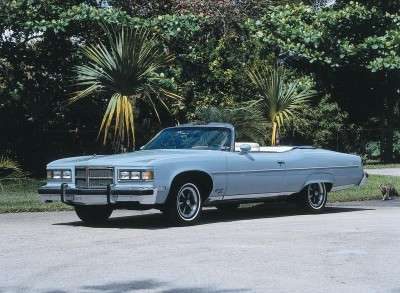
The final touches to a full-size convertible
1975 marked the end of the road for Pontiac full-size convertibles. It wouldn’t be back for 10 years. In the US, the market for droptops is shrinking rapidly. Maintaining body style no longer makes financial sense.
Pontiac also cut weight from the lineup. The Bonneville sedan is gone. The same applies to the Catalina 4-door hardtop. However, Radial Tuned Suspension was now standard on all full-size models.
The roof line was also changed to reflect changing tastes. The Bonneville Coupe and Grand Ville Brougham Coupe had large fixed quarter windows. The B-pillar extends all the way to the door glass. The four-door hardtop adds a small opera window over the rear pillar. Catalina sedans are equipped with fixed-position vent window that increase the glass area of the rear door.
General Motors promotes the use of square quad headlights on its luxury cars. Bonneville and Grand Ville got it. Also common are a revised grille and taillights that wrap around the edges of the fenders. Catalinas have a new six-element grille. All models except the wagon have a slightly longer wheelbase of 123.4 inches.
Exhaust gas regulations are getting stricter. This confuses the powertrain options. The 400-cubic-inch engine with a two-throat carburetor remained the base unit on non-wagon Catalinas and Bonnevilles. This applies to all models except those sold in California.
The 400 four-barrel became standard on California-bound Catalinas and Bonnevilles. It also came with every “49 State” station wagon and every Grand Ville. The big 455-cid V-8 was standard on all California wagons. Optional on other full size models. The overall compression ratio drops to 7.6:1.
1976 Pontiac: Anniversary
1976 was Pontiac’s golden jubilee year. This year was also the last of the oversized B-frame and 455-cid V8. The significantly reduced 1977 model were already waiting in the wings. Pontiac shuffled its lineup again before the end to boost sales.
Visually, not much has changed. The 1975 update still feels fresh today. There is no point in making radical changes. The biggest change was dropping the Grand Ville name. Marketing planners may have realized that Bonneville’s brand equity was being wasted on an unproven nameplate.
They transferred the Bonneville Brougham name to a top-level B-body. The overall design of the grill has been slightly changed. Catalina buyers can opt for Custom package. These include rectangular headlights, additional exterior trim and interior upgrades. The powertrain options are the same as last year.
Pontiac’s total production exceeded 200,000 units. The US economy is improving. Consumers are recovering from worries about fuel prices. Orders for full-size Pontiacs have returned. In 1975, sales fell to 126,555 units, but in 1976, sales increased to 137,216 units.
However, this was not enough to stop B-body from breaking through. The Grand Prix personal coupe series took a comfortable lead. Full-size Pontiac cars from 1971 to 1976 were stylish and luxurious. But they weren’t the right cars for their time.
They are larger, heavier, more complex and more expensive to manufacture. Fuel efficiency and low running costs are important. During this time, GM introduced its biggest, most expensive and thirstiest machines. The company does not have a strong presence in the compact and subcompact segment.
The development of GM’s corporate structure has been slow. Changes to the product line require the consent of all departments. This makes it difficult to decide when to launch a new product. Market share lost to foreign competitors. This trend has never fully reversed.
1971-1976 Pontiac models, prices, production
The 1971-1976 Pontiac ended the era of full-size gas-guzzlers. They have the style of that era. Stricter federal fuel standards and rising gasoline prices have made them obsolete. Below are the specifications for the 1971-1976 Pontiac models.
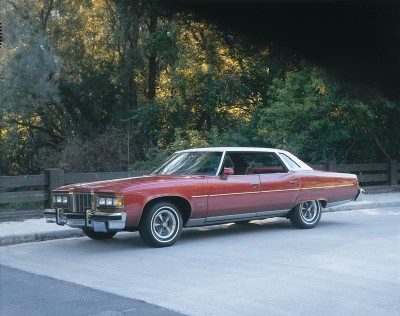
The weight of water and the end of an era
The 1975 Pontiac received significant updates, but its momentum had stalled. By then, American heavy cars were lost in their enormity. It’s no longer a matter of style. This is all about physics. Physics wins.
Let’s look at the numbers. More precisely, the years until the final gasp. The numbers tell about inflation, expansion and the slow decline in the production of top models.
1971: Triangular Summit
In 1971, Pontiac’s full-size lineup consisted of three pillars: the Catalina, Bonneville, and Grand Ville. They sat on slightly different wheelbases, which determines the interior space and ultimately the market position.
1971 Pontiac Catalina was the best seller. It came in on a 123.5-inch wheelbase for sedans, while the wagon has a longer wheelbase of 127.0 inches. Although this is the entry-level model, even the base coupe weighs in at 4,107 pounds. price tag? $3,939.
Production was healthy. Sales of 4-door sedans were 59,355 units. The Coupe closely follows with 46,257 units. The Safari Wagon is available in two-door (2S) and four-door (3S) versions, with total sales of approximately 19,600 units. The Brougham trim, a luxury upgrade, added another 23,893 units. Total Catalina production in 1971 was 173,489 units.
Catalina is the backbone. It’s heavy, expensive, and all over the place.
Atop the ladder sits a 1971 Pontiac Bonneville. The wheelbase is 126.0 inches, longer than the base Catalina sedan. Prices start at $4,210 for the four-door sedan and $4,643 for the two-door Grand Safari wagon. As expected, Production was lower. Hardtop sedans topped the list with 16,393 units sold. Sales of wagon models took up the slack, and a total of 9,585 units were transported. Total Bonneville production: 41,269 units.
Then there’s the 1971 Pontiac Grand Ville. This was the halo. The hardtop coupe weighs 4,223 pounds and retails for $4,497. The hardtop sedan is heavier at 4,303 pounds and costs $4,566. A convertible coupe is also available for $4,706. Production here is narrow, but concentrated. 30,524 units of this hardtop sedan were sold. The coupe took 14,017. When you add 1,789 convertibles and 194 chassis units, you get 46,524 Grand Villes.
Pontiac’s total production in 1971 was 261,282 units. That’s a healthy number. But take a closer look. The luxurious Grand Ville pales in comparison to the mass-market Catalina.
1972: Inflation Hits the Sticker
This trend continued until 1972, when prices rose. Weight gain. The market has changed.
The 1972 Pontiac Catalina has a wheelbase of 123.5 inches for the sedan and 127.0 inches for the wagon. But did the price of the base hardtop sedan drop to just $3,874? No, look at the weight. His weight increased to 4,179 pounds. The 4-door sedan, prices start at $3,713. Production grew rapidly. Only 83,004 four-door sedans were sold. Sales of coupes rose to 60,233 units. There are a total of 27,302 Safari wagons. Total Catalina production increased to 228,262 units.
1972 Pontiac Bonneville followed. The hardtop sedan costs $4,293. Prices for the Grand Safari Wagon start at $4,581. Coupe sales were 10,568 units. The wagon models moved a total of 14,215 units. Bonneville total production: 50,293 units.
1972 Pontiac Grand Ville increased sedan production significantly. Coupe sales were 41,346 units. The coupe is priced at $19,852. convertible? 2,213. Plus 320 chassis. Grand Ville’s total production jumped to 63,731 units.
Pontiac’s total production in 1972 was 342,286 units. A record year. But is this sustainable? The car becomes heavier. The 1972 Grand Ville Coupe weighs 4,378 lbs. That’s over 2 tons.
1973: The Shift
By 1973, the wheelbase had changed. The overall length of the Catalina and Bonneville sedans increases to 124.0 inches. The wagons stayed at 127.0 inches.
1973 Pontiac Catalina lost the Brougham trim from the data set. Has it disappeared? Or was it merged? The data shows hardtop sedans, coupes, and 4-door sedans. Four-door sedans are still king, with 100,592 units sold. The coupe did well, with 74,394 units sold. The wagons, now heavier (the Safari 2S weighed 4,791 pounds), with a total of 30,416 moved. Total Catalina production: 237,065 units.
1973 Pontiac Bonneville dropped its wagon offerings from this specific breakdown? No, wait. Bonneville numbers here refer to coupes, coupes and sedans only. Total production was 46,898 units. Sales of hardtop sedans led with 17,202 units.
1973 Pontiac Grand Ville reclaimed the wagon segment. The Grand Safari 2S Wagon weighs 4,823 pounds and costs $4,674. The 3S wagon is heavier at 4,925 pounds and $4,821. Production was robust. The hardtop sedan moved 44,092 units. The coupe took 23,963. The convertible was popular, and 4,447 units were sold. Wagons combined for 17,670 units. Add 240 chassis. Total production of Grand Ville: 90,412 units.
Total Pontiac production in 1973: 374,375 units. Highest total ever. But look at the mix. Grand Ville is becoming a significant player, overtaking the Bonneville. Catalina is still the sales leader, but the luxury market is consolidating.
1974: Squeeze
The wheels are tightened. Regulatory pressure is increasing. Fuel efficiency standards are also coming soon. The cars were getting heavier, but the market was getting pickier.
The 1974 Pontiac Catalina retained the sedan’s 124.0-inch wheelbase. The weight of the safari wagon has increased significantly. The 2S wagon weighs 4,973 pounds. The 3S truck weighs 5037 lbs. Prices have risen significantly. The 2S wagon is priced at $4,692. The 3S wagon costs $4,834. Prices for the hardtop sedan jump to $4,347. The four-door sedan costs $4,190.
Production has collapsed. 46,025 units of this four-door sedan were sold. Coupe sales fell to 40,657 units. The vans were expensive and heavy, and they only held 12,148 in total. Catalina’s total production dropped drastically to 110,599 units. That’s less than half of the 1973 level.
The 1974 Pontiac Bonneville experienced a similar failure. The hardtop sedan costs $4,639 and weighs 4,444 pounds. Only 6,151 units were sold. The coupe fared slightly better, with 7,639 units sold. 6,770 units of this four-door sedan were sold. Total Bonneville production: 20,560 units. That’s a fraction of what it was last year.
1974 Pontiac Grand Ville Information ends with 2S wagon. The 2S wagon weighs 5,011 pounds and costs $5,099. Although the code does not contain complete operational information about Grand Ville, the trends are clear. Horse-drawn carriages are expensive. The sedan is heavy. The market evaporates.
End of line
In 1975, a change took place. A new look. New features. But the data from 1971-1974 tell the truth. The big Pontiac was losing its appeal.
Previously dominant Catalina is down from 237,000.
1974: The Last Gasp of the Big Pontiacs
The big, full-size Pontiac lineup wasn’t a whimper. It was a thud. By 1974, the Grand Ville was basically just a name on a badge with Brougham trim, and the real heavy lifting was done by the Bonneville and the mass-market Catalina. The Grand Ville itself was a dying breed. Only 44,607 units rolled off the line that year. Compare that to the previous year’s 11,631 hardtop coupes and 21,714 sedans, and you can see the brand is struggling to find its footing. Convertibles are gone. The wagon was shrinking. Is the chassis only sold to custom coachbuilders? Only 113 pieces available.
Pontiac’s total production in 1974 was 175,766 units. It felt like a victory lap. It wasn’t. It was just the last gasp of an era before the company decided to downsize everything to meet new safety and fuel standards.
1975: The Catalina Takes Over
By 1975, the hierarchy had changed. The 1975 Pontiac Catalina** became the volume seller, the bread and butter. It didn’t care about luxury. it cared about moving people. The wheelbase is still 123.4 inches for the sedan and 127.0 inches for the wagon, but weight has been reduced. Once a family driver, the Safari four-door wagon weighs in at 4,933 pounds for the 2S and 5,000 pounds for the 3S. However, prices have risen. Prices for the same 2S wagon start at $5,149.
Look at the production numbers. 21,644 Catalina hardtop coupés were produced. A 4-door sedan? 40,398. The total number of employees on the Catalina line was 70,998. It was the workhorse. Meanwhile, the 1975 Pontiac Bonneville maintained its premium status with 27,815 units sold. The Grand Ville Brougham is now fully integrated into the Bonneville product line, with a total of 27,742 units produced. The distinction between “Bonneville” and “Grand Ville” is blurring. The Brougham trim is just the top finish on the same platform.
Pontiac’s total production in 1975 was 126,555 units. The market is cooling down. The oil crisis continues to have a negative impact on machinery, making all kinds of steel essential.
1976: The Final Full-Size Stand
1976 was the last hurrah for the traditional full-size Pontiac body style. The 1976 Pontiac Catalina continued to dominate sales with 72,745 units. The Safari Wagon remained the mainstay: 4,735 2S models were sold and 5,513 3S models. 15,262 units of this hardtop coupé were produced. car? 47,235. That’s a huge number for a car that will soon become extinct.
1976 Pontiac Bonneville Production increased to 33,769 units. The Grand Safari Wagon continued its popularity, with 3,462 units sold for the 2S model and 6,176 units for the 3S model. Production of this hardtop sedan was 14,942 units. The coupe added 9,189. The 1976 Pontiac Bonneville Brougham was a separate beast, producing 30,702 units. The coupe alone accounted for 10,466 of those. Sales of sedans with hard roofs increased by another 20,236 units.
Pontiac’s total production in 1976 was 137,216 units. This is a solid number. But this year is the last year of this generation. The following year, everything changed. The wheelbase has been shortened. The styling softened. The American giant must learn to walk again.
The Specs That Defined the Era
This number tells us that companies have resisted the change for as long as possible. In 1974, the Grand Ville wagon weighed over 5,100 pounds. The hardtop coupe sat at 4,432. By 1976, the weight of the Catalina sedan had dropped to 4,276 pounds. Even though the car is hundreds of kilos lighter, it still feels big. The price tag tells a different story. Inflation eats away. In 1975, a basic Catalina sedan cost about $4,600. By 1976, the same car was selling for $4,767. The price of the Bonneville hardtop jumped from $5,153 in 1975 to $5,312 in 1976. But the price of the Brougham continued to rise. Coupe prices started at $5,729 in 1975 and went up to $5,734 in 1976. Hardtop sedan prices rose from $5,896 to $5,734.