We live in a time when buying a new car is not so much about buying from a machine, but rather about ordering from a technical catalog. It has built-in Wi-Fi, a perfume dispenser, a massage chair, a self-driving assistant and a game console. However, with the spread of high technology, the importance of such a common feature as a cup holder has grown exponentially.
Are they really necessary? Or is it just a symptom of the automotive excess of modern cars?
If you look at the numbers, you’ll see that the answer leans towards obsession. Some vehicles have up to 19 cup holders. It’s not just about convenience anymore. This is a statistical anomaly. In 2007, a PricewaterhouseCoopers report stated that the number of cup holders is the most important purchasing factor for consumers. Now, as America’s commutes get longer and traffic gets more congested, drivers are spending more time in their seats than ever before. But do you have nearly 20 slots to put your drink on your four-hour commute?
Let’s rewind. In the early days of cars, especially small cars with manual transmissions, there was simply no room. The shift lever requires constant two-handed attention with both hands, and there is no room for drinks. The first automotive cup holder was patented in 1953, but was more of an aftermarket add-on than a built-in feature. The drive-in craze of the 1950s favored the idea of parked drinking or driving slowly, but the real change came later.
The 1984 Plymouth Voyager minivan changed everything. It was the first vehicle to feature an integrated center console designed to hold two standard 12oz cups. That’s the spark. From then on, the trend was upward. Automakers began prioritizing beverage storage over other conveniences, creating a competitive market where adding fluid is a key selling point.
The Cupholder Champions
Today, the vehicles with the most aggressive cupholder strategies are typically midsize or large SUVs with three rows of seats. The platform can accommodate 7-8 passengers and has plenty of surface area for attaching plastic rings. However, there are exceptions.
Take the Toyota Tacoma. This is a pickup truck that can hold up to 5 people, but comes with 13 cup holders. This corresponds to almost three drinks per passenger. Another compact pickup, the Nissan Titan XD, matches this passenger capacity but has 14 cup holders. In the Nissan Pathfinder, some of these slots are cleverly hidden in the folding armrest to maximize hidden storage space.
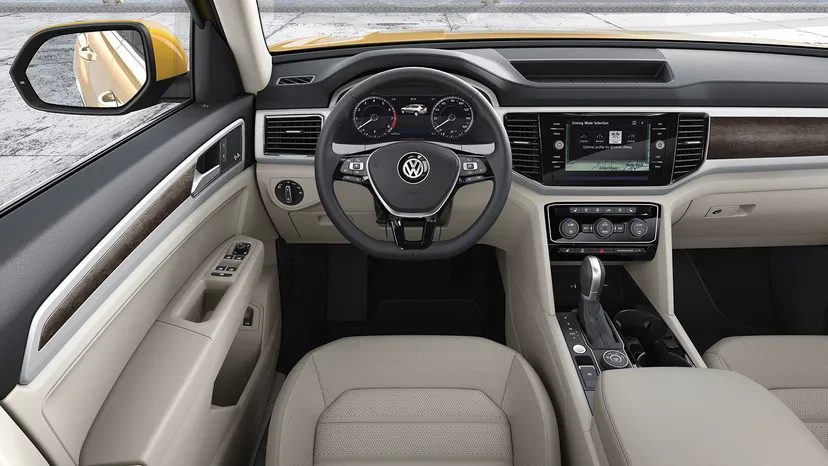
Then there is the Volkswagen Atlas. This mid-sized SUV is equipped with 17 cup holders, 6 of which are reserved for the front passengers. 6 pieces for 2 people? This seems like a bit of a stretch, especially when you consider the irony. German automakers have historically avoided cup holders, believing they distract from the “serious business” of driving. But Volkswagen’s US team listened to American families and included them into the Atlas’ design. It remains to be seen whether this will affect future VW models.
The competition heats up with the 2020 Hyundai Palisade has 16 cup holders, making the competition even tougher. It also has seven USB ports for charging devices. There are enough cup holders, but a charging option would be really welcome. But the current heavyweight champion is the Subaru Ascent.
Record
When the Subaru Ascent launched in 2018, it wasn’t just Subaru’s biggest car. It holds the record for the most cupholders in a production car. The count? 19.
Jalopnik writer Kristen Lee devoted an entire article to finding all 19 spots. Without her investigative reporting, it would be nearly impossible to track them down. Considering the average passenger has just under 2.5 cup holders, that’s a pretty impressive number. The Ascent should have hit a neat 20, but part of its HVAC system had to pass through the left rear armrest, costing it the spot of the hypothetical 20th holder.
What does this mean? Car manufacturers are well aware of the need to stay hydrated on the road. For some people, 2.5 cup holders per person is ridiculous. For others, it’s a way to use the interior space wisely. This trend shows no signs of slowing down.
Which one is the best?
The superiority of the Subaru Ascent inspires a sarcastic yet snarky but practical ranking from Jalopnik’s Stef Schrader. Schrader believes the two folding cup holders in the center console are the best option if you’re in the seven-seat version. Their location and versatility make it better than fixed locations scattered elsewhere.
What advice does she have for the remaining 17 holders? Use them to store old cups. At some point, the bladder can no longer hold all the liquid.
It’s an interesting way to think about car design. We build cars that drive themselves and stream movies to help you figure out where to put your coffee. The Subaru Ascent proves that if you have space, you might as well fill it. The rest of the industry is catching up.