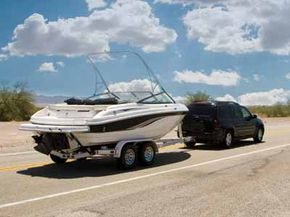
有些人吃亏了。 他们住在水边。 对于其他人? 有高速公路。 你拖着拖车。 您要行驶数英里的沥青。 这并不迷人。 这并不容易。
拖船与拖独木舟不同。 这与牵引 U 型拖车不同。 它需要精确度。 专家让它看起来毫不费力。 不过你认识新秀。 那些拖车在后视镜中像钟摆一样摆动的。 你给他们空间。 你改变车道。 你呼吸轻松。
有技巧。 您学会在考虑负载的情况下制动。 你掌握了转弯。 您弄清楚如何在不失去理智的情况下进行备份。 折刀是噩梦般的场景。 但真正的工作发生在发动机启动之前。 在钥匙转动之前。
您的卡车必须能够操纵船。 数字必须匹配。 船需要准备好。 拖车需要检查。 有效负载的放置至关重要。 一个错误放置的冷却器可能会将稳定的行驶变成三车道的危险。
我们正在寻找问题点。 重要的是支票。 准备工作可以让您继续前进,而不是陷入困境。
Boat trailer safety inspection
The base is a tow vehicle. It’s not just about horsepower. It’s about ability. You need to know your Gross Vehicle Weight Rating (GVWR). You need to know the Gross Combined Weight Rating (GCWR). These are not suggestions. They are strict restrictions.
Check the tow hitch. Is it rated for the weight? Are the connections secure? A loose hitch are a recipe for disaster. Check the electrical connections. Brakes. Lights. Turn signals. If the car behind you doesn’t know you’re slowing down, you’re already in trouble.
Look at the tires. Both on the truck and the trailer. Pressure is important. Tread depth is important. Old tires can blow out under the stress of towing. Replace if worn. Don’t play with rubber.
Brakes are not negotiable. Most boats over a certain weight require trailer brakes. Have you installed a brake controller? Is it working properly? Test in a safe open area. Feel the reaction. Adjust the gain. It should stop smoothly. Not jerk. No slipping.
Weight distribution is another layer. If the weight of the tongue is too light, the trailer will sway. If it is too heavy, the truck’s steering will be numb. Allow 10-15 percent of the trailer’s total weight to on the tongue. Use a scale if necessary. Guessing is for amateurs.
The mirrors need to be extended. You need to see around the boat. If you can’t see the road behind you, it’s like flying blind. Adjust before moving.
Fuel is often overlooked. Towing can reduce mileage significantly. Plan your stop. Don’t run on fumes. A dead engine on a hill with a trailer is a different kind of problem.
The most important safety measures are taken into account before inserting the key into the ignition.
The preparation applies to more than just the vehicle. It’s a mindset. Moving heavy and large objects. The reactions are different. It pushes back. Respect this power. Check the connections. Lock the coupler. Secure
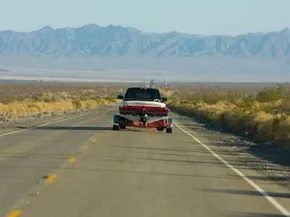
Before you toss back the tackle box and plunk the kids into the seats, you need to check your tow vehicle. It’s not just about enough horsepower; It is a complete mechanical test. If you skip this step, you put your security and hardware at risk.
Start with the numbers. In particular maximum towing capacity and the limit recommended by the manufacturer. These figures are not guesses. They are mentioned in the owner’s manual or can be obtained directly from the manufacturer. Knowing the hard limit tells you what the vehicle can do. Knowing the recommended limit will help you know what it should do without wearing out.
Then look at the boat. Determine the dry weight from the hull’s data plate. In a sense, this figure is a lie. This does not include gallons of fuel, coolers, rods or water in the well. Add several hundred pounds to this dry weight to account for the actual load. If the rated power of your towing vehicle does not significantly exceed this total weight, you do not have a towing vehicle. You have a responsibility.
When towing, the mechanical load shifts significantly. The engine works harder to maintain speed. The cooling system fights against overheating. The brakes have a longer braking distance. The suspension and tires are exposed to uneven stress. All driveline and chassis components are exposed to increased stress. If the part is worn or only slightly worn, the gap will increase quickly when you enter the highway or descend a mountain pass.
The trailer hitch is a weak point in almost every setup. Have it checked by a professional. They check for cracks, corrosion and proper grading. More importantly, they can advise on assistive devices. You may need a weight distribution hitch to distribute the load to all axles. You may need a sway device to prevent the trailer from swaying in crosswinds. These are not optional accessories. They are safety-critical components that determine stability. You need to know the limit of the towbar and make sure it fits the weight of the loaded trailer.
If the invoice works and the equipment is in order, continue with the inspection. Use a checklist. It prevents small things from getting lost in the chaos of loading.
When it comes to towing equipment, focus on the essentials.
– Brakes: Beware of thin brake pads or warped brake discs. If they struggle under normal conditions, they fail under load.
– Tyres: Check tire pressure and tread depth. Older tires with invisible cracks are a ticking clock.
– Wheel Bearings: Listen for humming or grinding. A blocked warehouse on the highway is a catastrophic failure.
– Mirror: Expand if necessary. You need a clear, unobstructed view of the rear corners of the trailer. When towing wide loads, blind spots can be deadly.
Once the towing vehicle is secured, the next step is to turn to the boat trailer itself.
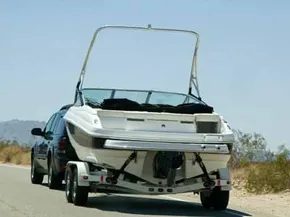
Electrical systems are the first line of defense when the vehicle check is done. Have a guy stand behind the trailer. Check each signal. Brake lights. Blinkers. Running lights. Even the brakes themselves. Don’t ignore the connector between the tow vehicle and the trailer where the wires run. Corrosion creeps in here. Wires rub. If installed incorrectly, short circuits may occur.
Multiple axles make it flat tires harder to spot. A firm tap on the tire iron tells you if they are inflated. A quick touch with your hand after a short ride will reveal if one is running hot. Since a flat can catch fire, manual pressure testing is the only real solution. Use a gauge. Check each tire. Do this before every trip.
Lug nuts and bolts on the hitch and trailer nuts and bolts loosen over time. Rust attacks them if they get wet too often. Tighten them. Wheel bearings are also a headache. They heat up while driving. Immerse them in cold water and the air inside will shrink. It absorbs water. Rust follows. Spring-loaded, pressurized bearing caps offer a solution. But when they running hot, they need fresh grease. A tune-up is not negotiable.
Many trailers have their own brakes. They reflect the movement of the tow vehicle. Surge brakes are popular. They work automatically. When the towing vehicle slows down, they trigger them. The electric brakes are also solid. They are connected via a wiring harness and detect brake pedal pressure. For the heaviest loads – larger than rowboat – these are essential. Check the functionality before you go.
Safety chains are important. Fasten them crosswise between the trailer and the towing vehicle. They hold the trailer in place if the trailer hitch breaks. You cannot complete the journey with them alone. However, you can stop and assess the damage. Breakaway switches are also important. Often required by law based on trailer weight. They work like an emergency treadmill clip. When the vehicle and trailer separate, the switch triggers the trailer brakes.
When towing the boat, the mainframe must support the hull evenly. The boat must fit snugly in the cradle. The Hull rollers and pads must be intact. Scratched fiberglass is expensive. Check the straps and ties. Adjust them. Fasten them properly. The boat must be fully secured. No loose gear.
Inspections of the truck and boat have been completed. Luggage piles up on the driveway. Do not chuck everything in willy-nilly. This is a mistake. You still have work to do. Pack the boat so that the weight is evenly distributed.
Boat Towing Weight Distribution
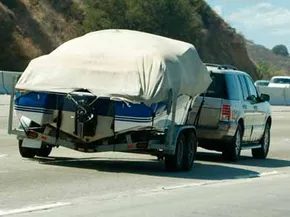
Securing the Load: Weight Distribution and Stability
Once you’ve inspected the hull and the trailer, the real work begins. You are looking at the physical act of loading. There are two non-negotiable rules for this phase. Keep the center of gravity low. Balance the weight both front-to-back and side-to-side.
Boats are harder to load than cars. Why? Because you don’t have the freedom to move heavy items around. The engine is fixed. The motor is fixed. You’re stuck with where the mass sits. This rigidity is exactly why you need even support from the trailer bunks or rollers. It distributes the hull’s weight safely. It keeps the engine from pulling the trailer into a nosedive.
Check for water. Seriously. Rain trapped in seats or under cushions adds up fast. Water weighs about 8 pounds per gallon. A few gallons of storm runoff can throw your entire weight calculation off. You might think you’re under the limit. You’re not.
Measuring Tongue Weight Correctly
If this is your first time loading a boat, use a proper scale. Not the bathroom scale you rigged with a lever. Use a scale designed for thousands of pounds. You need to measure the tongue weight—the load resting on the hitch.
Aim for 10 to 15 percent of the total gross trailer weight on that hitch. Less than 10 percent? The trailer will sway. More than 15 percent? The tow vehicle’s steering becomes numb. Both scenarios are dangerous.
You can adjust this by shifting gear or moving the boat forward/backward on the bunks. Sometimes you need to add ballast to the trailer itself to hit that sweet spot. Get it wrong, and you invite two nightmares: dive and sway. Dive is when the nose of the trailer pushes down, stealing traction from the tow vehicle. Sway is the lateral oscillation that turns a stable ride into a death trap. If you mess up the weight distribution, you’re playing Russian roulette with your driving dynamics.
Hardware to Save Your Life
Dual axles aren’t just for show. They help if you get a blowout. More importantly, they provide more tires to carry the load. This makes weight distribution easier. The load is spread over more contact patches.
A weight distributing hitch changes the physics of the tow vehicle. It doesn’t just sit there. It uses spring bars to spread the tongue weight out. It moves some of that load off the hitch and the rear axle of the tow vehicle. It puts that weight on the front axle of the tow vehicle and the trailer axles. The result? The tow vehicle sits level. The steering returns. Braking performance improves. It’s not magic. It’s leverage.
First-Timers: Practice Makes Permanent
Towing a boat is thrilling until it isn’t. If you’ve never done this, treat it like learning to fly. Start small. Hit back roads. Low traffic. Wide shoulders. Practice turning. Practice backing. Backing a trailer is a skill that requires muscle memory. You won’t build it on a highway at 70 mph.
Watch the weather. High winds are the enemy of long trailers. They act like sails. If the wind picks up, pull over. Postpone the launch. Do not fight the wind.
Bad machinery is bad enough in a sedan. Add 3,000 pounds of poorly distributed cargo to the mix, and you’re asking for trouble. Skill matters. Equipment matters. Caution matters more.
Launching and Regulations
State laws vary. Some require breakaway brakes. Some mandate specific lighting. Check your local regulations before you hit the ramp. Once you’re at the lake or the beach, the next challenge is launching. It’s a different beast entirely. You’re dealing with water, gravity, and slippery surfaces.
If you want the full picture on launching techniques or the legal specifics of boat towing, there are resources available. The U.S. Coast Guard has safety guidelines. The National Transportation Safety Board publishes reports on towing accidents. Read them.
Because the last thing you want is to be another statistic in a DOT report about trailer failure. You know how to load it. You know how to balance it. Now you have to drive it. And drive it well.