
Engine oil is the lifeblood of internal combustion engines. Without this, metal will rub against metal in seconds. Its mission is simple. It lubricates moving parts, prevents rust and uses the latest detergent additives to prevent sludge and dirt.
But here’s the problem. We were all wrong about oil.
Let’s take the 3000 mile rule as an example. You’ve heard it a million times. If you don’t change it every 3000 miles it will destroy your engine. This is not true. Or try the color test. I panic when I see dark oil on the dipstick. You’d think it would turn into toxic sludge in no time. This is not true.
These thoughts are myths. They are more than just a nuisance. It can destroy the engine. Or at least pay hundreds of dollars for unnecessary services.
Let’s start by looking at the label on the bottle. It says 10W-30. Most people understand “W” to mean “weight”. Represents “winter”.
The “W” has nothing to do with whether the oil is heavy or light. Refers to the viscosity of the oil at low temperatures. Measure how easily the oil flows when the car is started in cold weather.
The number (10) before the letter “W” indicates the flow characteristics of the oil at 0°F (-18°C). The lower the number, the thinner the oil remains when it cools. The number after the line (30) indicates the viscosity at the engine’s normal operating temperature of 212°F (100°C).
In other words, 10W-30 is not dependent on weight. This is a flow rating. This means that when the oil is cold it behaves like a 10 weight oil and when hot it behaves like a 30 weight oil.
Modern oils are designed to achieve this with viscosity index improvers. These are long-chain polymers that expand when exposed to heat. Importantly, when the engine is hot and under pressure, the oil thickens.
Why is this important to you? Because using the wrong viscosity results in no oil getting into the bearings. or it may cause excessive wear during a cold start. The manufacturer’s recommendations listed in the user manual are not recommendations. This is a calculation.
Myths about weight persist. It is very convenient. It’s very simple. This is wrong.
The next time you look at a bottle, don’t think about the weight. Start thinking about flow.
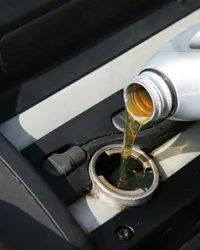
Decoding Oil Viscosity: Why the “W” Matters
Viscosity is just a fancy word for thickness. It determines how smoothly the oil moves through the engine to lubricate the moving metal parts. If the oil is too thick, it chokes. If it’s too thin, it slides off like water. You want an middle ground where the oil actually sits between the components.
There are two ways to measure this. Single-grade oils uses a simple test. Society of Automotive Engineers (SAE) Oil is transported through standardized pipes. Calculate the time it takes to flow from one end to the other. Results are rounded to the nearest 10 seconds. Therefore, it takes about 30 seconds for SAE 30 oil to pass through this pipe. This number is also called the “weight” of the oil.
Here’s the problem. Oil viscosity changes with temperature. One class only tells the performance of the oil when it is already warm. It says nothing about a cold winter morning. When it’s cold, the same oil flows much more slowly. A low temperature viscosity grade is also required.
This is where multi-grade ratings comes into play. They give you both numbers. Take 10W-30. “30” is warm viscosity. Meets SAE 30 testing. “10W” is the cold rating. SAE has developed a specific system for winter use. “W” stands for winter. It is not a variable. It’s a season.
The myth of black oil
You will often see black sludge when you look at the dipstick. They think that the black color means that the oil is dirty and dead. They change it immediately. This is a common misconception. Dark oil does not necessarily mean that it is bad oil. Modern detergents keep contaminants suspended in the fluid. That’s why it turns black. It’s doing its job. Don’t judge the life of your oil by its color alone.

Before we go any further, let’s clear up one more misconception. You will see a dipstick. The oil looks like black sludge. your engine is filling up with gunk and your instincts scream that you must stop immediately.
Stop.
Modern synthetic oils and traditional high-quality blends contain detergent additives. These aren’t just for keeping the outside of your engine clean. They’re working inside. They suspend microscopic contaminants such as carbon, metal shavings and soot in the liquid. The oil is doing its job, which is why it turns black. Keeps sediments in suspension and prevents particles from settling into sludge in the bearings.
If the oil is clear, your engine would likely be dying of abrasion.
So why does everyone still think they need to change their oil every 3,000 miles?
The 3000 mile oil change rule is Dead
This is probably the most persistent myth in the auto repair world. You’ve probably heard this story from a gas station clerk, an old-school mechanic, or a well-meaning relative. The rules are simple. No matter what the manufacturer says, change the oil every 3,000 miles.
This is wrong.
This guideline has its roots in the era of poor quality motor oils and less precise manufacturing tolerances. If your engine clearance is looser and your oil is less refined, 3,000 miles is a safe buffer. today? This is a financial waste at best.
What this manual actually means
Automakers spend millions of dollars testing engines. They know exactly how long their synthetic blends can protect modern engines. If your owner’s manual says 7,500 miles, 10,000 miles, or even 15,000 miles, stick with it.
Modern synthetic oils are designed to resist breakdown far longer than their predecessors. It maintains viscosity better at high temperatures and is resistant to oxidation. It does not turn into sludge even after thousands of kilometers.
Of course there are exceptions. Driving in extreme conditions (heavy towing, frequent short trips in cold weather, or dusty off-road environments) the oil degrades faster. In such cases, you can shorten the interval by half. But what about normal daily driving? The 3000 mile rule is a thing of the past.
Why is this myth still so strong?
Since this is a recurring job, the service center will extend the 3,000 mile interval. More visits increase income. This is a business model, not a mechanical necessity.
Your car’s computer knows better. Modern vehicles are equipped with advanced oil life monitoring systems. These systems monitor engine speed, temperature and driving habits and calculate when the oil has truly lost its protection. If the sticker on your windshield is just a warning, ignore it. Trust the data.
Conclusion
Don’t judge an oil by its color.
Don’t be afraid of the dipstick.
don’t let a outdated rule bleed your wallet dry.
Check the user manual. Follow the manufacturer’s schedule. Change the oil when the warning light comes on or when the recommended mileage has been reached. Your engine will thank you. So does your bank account.
But wait. How about that oil filter? Does that need to be changed as well?

The old rulebook is gone. We followed the 3000 mile rule. If you leave it for a long time, the sludge will solidify. it covers everything. Moving parts rub against each other. Performance decreases. The engine was seized. This is simple but terrible logic that keeps service bays busy.
Now the logic has changed.
Modern synthetic and fully synthetic blends have a much better cleaning ability. Suspends impurities better. Longer resistance to heat damage. At the same time, manufacturing tolerances for modern engines have tightened significantly. Gaps are smaller. Friction is reduced. result? You can now safely extend oil change intervals up to 7,500 miles (12,070 kilometers).
But the 3,000-mile myth persists. It’s everywhere. It is a product especially in specialty shops for quick-lube shops. You hear it from mechanics who rely on high turnover rates. You hear it from a friend of mine who studied car maintenance in 1995.
Consumer Reports explicitly debunked this. Their position is clear. Draining and refilling every 3,000 miles is not necessary unless you drive in harsh conditions. What is considered severe? Constant stop-and-go traffic. Very hot. Dusty roads. Towing heavy loads. If you only drive on the highway, 7,500 miles is enough. The engine will not be damaged.
Additive illusion
Now for the second lie. ** Engine oil additives improve engine performance. **
You can see it at any gas station. Zinc, molybdenum or some proprietary “ceramic” sludge bottles. The argument is always the same. When added to engine oil, the engine will run smoother. Horsepower increases. Reduces noise. Wear will vanish.
This is marketing. That’s it.
How modern oil is formulated
Today’s motor oils are more than base oils. They are complex chemical mixtures. The base oil, whether group III hydrocracked, group IV polyalphaolefin (PAO) or group V ester, is treated with a precise additive package before bottling.
This additive package includes:
– Detergents keeps the acids neutral and the deposits suspended.
– Dispersants keep soot and sludge particles in solution.
– Anti-wear agents such as zinc dialkyl dithiophosphate (ZDDP) protect the camshaft and lifters.
– Viscosity index improver. Hot temperatures keep the oil thicker, cold starts keep the oil thinner.
– Friction modifiers reduces internal drag.
When you buy a bottle of Mobil 1, Castrol Edge or Pennzoil Platinum, you are buying an oil that already contains these chemicals in optimal proportions. Manufacturers specify the exact balance required for a given viscosity grade.
Why adding is dangerous
The addition of aftermarket additives disrupts this delicate balance. It’s not just about adding “more good stuff”. It dilutes the technical formula. You may be bringing in too much zinc. You might upset the ratio of detergent to dispersant. This can have the following consequences:

It is a common misconception that oil needs to be repaired after it has been in the pan. The truth is simple. Reputable motor oils on the market are already complex chemical mixtures. Manufacturers spend millions of dollars developing these formulations to achieve specific goals. This means that the oil is pre-loaded with a viscosity index improver. These ensure proper fluid flow, whether you’re idling in winter traffic or towing a trailer in the summer heat.
It also contains cleaning agents to prevent sludge at bay, anti-rust agents to prevent internal corrosion and anti-wear agents to protect metal surfaces from abrasion. It is a balanced ecosystem. Injecting extra “additives” from the gas station aisle will not improve this balance. You’re disrupting it.
Dilution problem
Adding chemicals to an already optimized mixture can actually dilute the base formula. This makes the proprietary blend less effective. These additives can compete with each other or exceed the base oil’s ability to suspend contaminants. Unless your car is a rare high-revving machine with very precise clearance requirements, you’re probably just wasting your money.
Check your owner’s manual. Do not add special additives unless specifically requested. Stick to what the manufacturer engineered.
Can synthetic oil cause leaks?
This brings us to another big myth that is prevalent in DIY mechanics. the idea that synthetic motor oil causes leaks. There are rumors that synthetic compounds are “thinner” or more aggressive and eating away at gaskets and seals. The reality is even more nuanced.
Synthetic oils have different flow characteristics. More stable in different temperature ranges. In older engines with worn seals, high performance synthetic oils can reveal small imperfections that traditional oils would grab and hide. Oil does not cause damage. It only reveals the existing wear and tear. If the seals are old and brittle, you may experience small leaks when changing from thick conventional oil to thin synthetic oil. However, leaks can occur regardless of the type of oil.
The most important thing is the viscosity. When changing from conventional 10W-30 to synthetic 0W-20, the thickness of the film changes. This is a deliberate choice for fuel efficiency and cold start protection, and is not a fault. For high mileage vehicles, manufacturers often produce certain “high mileage” synthetic oils. They include a seal conditioner designed to slightly expand worn seals, helping to prevent small leaks without affecting flow.
If you have problems with the seal integrity of your older car, we recommend using a regular motor oil or a high mileage synthetic blend. But claiming that synthetics are the “cause” of leaks is like blaming a pressure washer for cleaning a dirty patio. It’s just doing its job too well.

Synthetic Oil Spill Myths
In the 70s, synthetic motor oil was a novelty. Instead of regular oil, they use chemical base oils such as polyalphaolefins. These fluids may not be compatible with older rubber seals. Chemicals can cause the seal to shrink. Petroleum based oils cannot do this. As a result, mysterious oil stains appear in the parking lot. Some people still believe this will happen. Out of fear, they stick to traditional oil.
Most of these concerns are misplaced. Oil manufacturers revolutionized synthetic blends decades ago. They adjusted the chemistry so that the seal does not shrink. We do not find modern synthetic materials that are harmful to healthy seals.
There is one exception. It applies to old cars. If your car is more than 15 years old and uses conventional oil, this switch can reveal hidden problems. Synthetic oil is a stronger cleaner. Wash off the sludge. This sludge may be trapped in the seal. Sludge can stick to small cracks. When the synthetic material cleans the seal, the blockage is removed. The leak is back. This is not harmful. This reveals the wear and tear that is present.
Newer cars don’t have this problem. Their seals are different. Better material compatibility. If you drive a newer vehicle, you can switch with confidence. If you drive a classic car or just an older daily driver, drive carefully. Turning the switch suddenly can reveal leaks that were previously hidden by dirt.