


Nissan Ariya is gone. Volvo EX30 is irrelevant. Volkswagen ID.4 is dead. Chevrolet Bolt is… well. Dead again.
Tesla has sat alone at the top for seven years. The Model Y isn’t just the popular kid. At one point it was the most sold vehicle on earth. Every legacy maker tried to kill it. They all failed.
Rivian is different.
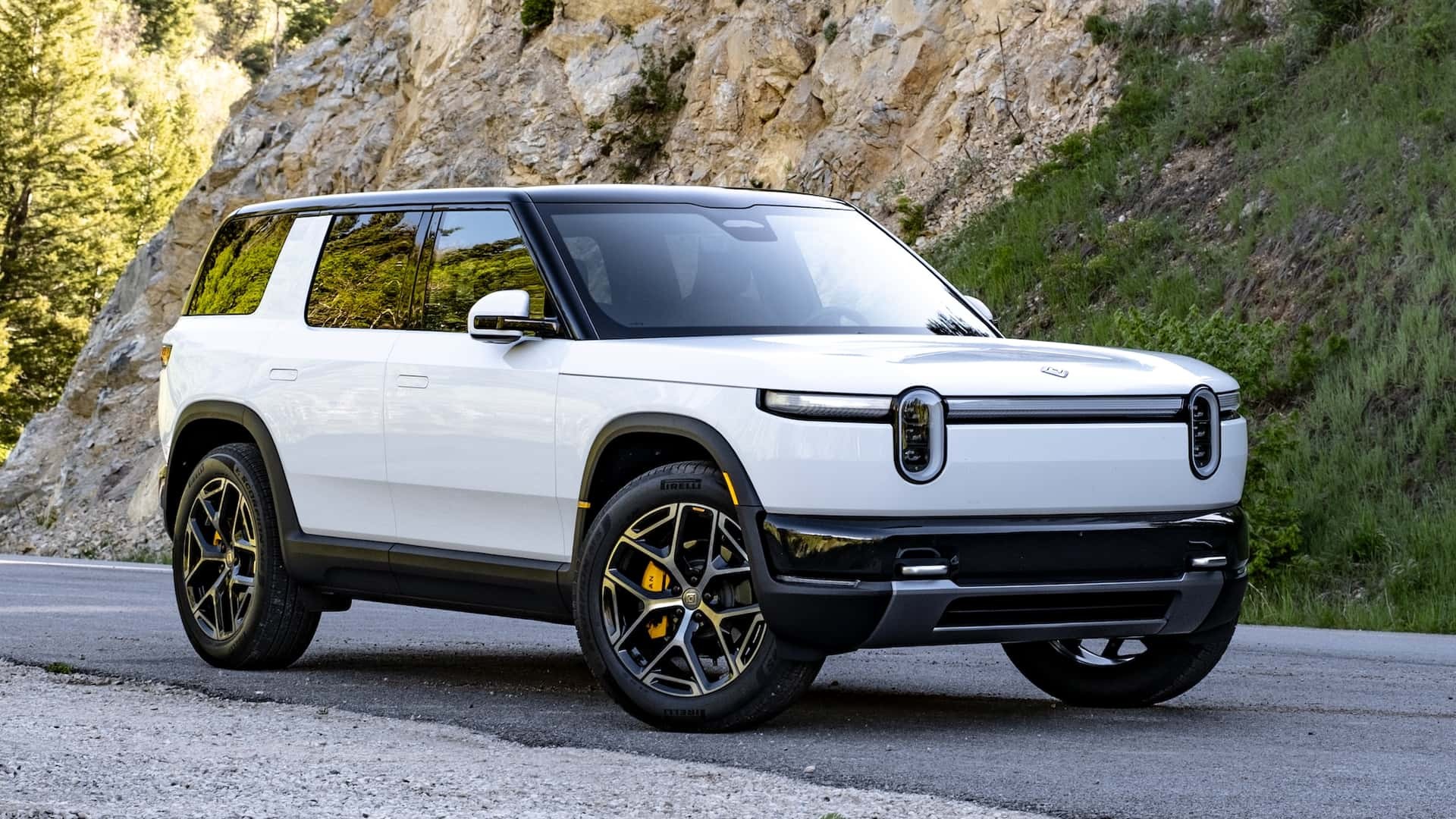
They’re not legacy. They’re pioneers. And their new R2 aims directly at Tesla’s throat. It’s the smaller sibling to the massive R1S, sharing its DNA, its tech, and that rugged look Americans actually buy into now. Can it beat the Y? Maybe not fully. But after driving it through Utah’s salt and stone, it looks ready to fight. Better, some would say.
Rugged Design, Without The Bloat
The industry is going rugged. Rivian owns this lane. The R2 looks like a shrunk R1S, which is a good problem to have. But look closer. The details matter.
I couldn’t tell them apart at first glance. Neither could most people. But the R2 fixes one annoyance on the bigger truck.
“On the R1S, packaging constraints forced fixed glass between the rear window and the back seat. We hated it,” said Jeff Hammoud, Chief Design Officer.
On the R2, every pane of glass retracts. All of it. It looks cleaner from the side. It costs less to make. And it gives you that open-air feeling people claim to want but rarely use.
Simplicity wins here too. No logos littering the sides. Just one illuminated marker near the front tire. Clever.
Wheel choices run 20 or 21 inches. The base wheels aren’t weak. They wear chunky off-road rubber that actually fills the well. The bigger options look aggressive in thinner tread.
Colors got an update. Esker Silver is subtle. Catalina Cove is lovely. Compass Yellow calipers add a pop. It doesn’t scream “EV.” It looks like a truck that happens to be electric.
Interior: Premium Feel, Compromised Build
The inside is copy-paste from the R1S. Mostly. The layout works. Materials feel unique. That 15.6-inch screen sits perfectly in the dash.
But cost-cutting happens where your hands won’t touch it.
A stylish wood trim stretches across the dash. It’s only half the piece you get in the R1S. Nobody will know unless you have both cars in the driveway. It still looks good.
Below the beltline, Rivian swapped premium plastics for injection-molded bits. Their rule is simple: if you don’t touch it daily, make it cheaper. I agree. The leather armrests and wood above still feel expensive.
Size matters here. At 185.6 inches, the R2 sits in the premium compact slot. It’s smaller than the Model Y (188.6 in) but nearly identical to the BMW iX3 and Porsche Macan Electric.
Don’t let the size fool you.
Despite being 15 inches shorter than the R1S in wheelbase, the R2 actually has more rear legroom. 40.4 inches vs 36.6 in the bigger car. Cargo space drops slightly to 28.7 cubic folds. Fold the seats? Boom. 79.4 cubic feet. Plenty.
Tech That Looks Pretty But Feels Wrong
Here is the sticking point. No Apple CarPlay. No Android Auto.
Rivian is doubling down. Hard. They’d rather argue with customers than fix it. The R2 runs their Android-based system. It has AI. They plaster the acronym everywhere.
The interface is gorgeous. Crisp graphics. Smooth animation. But it is convoluted.
You dig through menus. Left side menu. Bottom bar. Center screen options. Why so many layers? Basic things are fine. Adjust drive mode with an axle icon. Toggle maps with an arrow. But anything complex takes three taps too many.
Rivian heard the complaint about missing buttons. Sort of.
Two metal rings sit on the steering wheel spokes. The “Haptic Halo.” No knobs. No dials. Just rings.
“The left halo controls audio. The right controls climate and cruise.”
It’s brilliant in theory. Horrible in practice.
Setup phase: The rings adjust mirrors and seat positions. Do it once. Get it right. Because you can’t adjust the steering wheel height on the fly.
While driving: Scroll the left ring for volume. Click right/left for songs. Press down to mute. It’s too sensitive. I muted my podcast five times trying to raise the volume. The right ring does the same for temp and cruise. Customize all you want, I found myself fighting it.
The scrolling resistance feels nice, I’ll admit. But precision is nonexistent.
On Road: Surprisingly Sporty
Rivian had to cut costs. So they ditched the air suspension. Good move.
The R2 uses McPherson struts front, multi-link rear. Semi-adaptive dampers. It drives better than the bloated R1S.
Driving through Park City mountains, the R2 felt… fun? Sporty? I didn’t expect that from an EV startup.
No sloshing. No body roll. It’s lighter. 2,000 lbs lighter than the R1S.
Why? Traditional unibody construction. No separate chassis to carry dead weight. The battery pack braces the structure.
Rivian simplified everything. 2.3 miles less wiring than the big truck. Smaller harnesses. In-house modules instead of supplier junk. It adds up.
Two electric motors drive the axles. I tested the Performance model.
- 656 horsepower
- 609 lb-ft torque
The Premium trim is slower: 350 hp / 355 lb-ft. The Performance model hits 60 mph in 3.6 seconds. A quarter mile in 11.6s. Rivian loves to compare this to a Ferrari Enzo. It’s accurate, technically.
The drivetrain sends power rear-bias. 60/40 standard. But in “Conserve” mode on the highway? The front axle disconnects entirely. Pure RWD feel.
It flicks through corners nicely. Little torque steer. The power delivery is linear. Boring. Fast. Boring, but fast.
Active safety comes standard. Hands-free driving assist works for highways. Occasionally, neighborhood streets if you’re brave.
Charging caps at 230kW. 10 to 80% in under 30 mins. EPA estimates 330 miles range for the dual motor setups.
Off-Road: Capable But Not King
You don’t buy a Rivian to drive on pavement. You buy it to climb mountains.
The R2 keeps the DNA but drops the price tag equipment. No hydraulic suspension. Too expensive. Rivian execs say customers at this price don’t care.
Bigger miss? No locking differentials.
Neither the R1S nor R2 has them. This class competitor gap is real. Take an R2 against a Bronco or Wrangler on real rock crawling terrain? You lose.
Keep it moderate? The R2 shines.
Steep hills. Deep ruts. Big rocks. It shrugs them off. Instant torque means precise control over tricky stuff. Steering gives feedback on tire position.
Geometry is solid:
- 25-degree approach
- 26-degree departure
- 9.6 inches ground clearance
Beats the Subaru Forester Wilderness (9.3 in) handily on most trails. It’s tough. Just don’t call it extreme off-road capable.
The Verdict: Tesla Has a Problem
The Rivian R2 isn’t just good. It’s a serious competitor. And it isn’t cheap-cheap, but it’s accessible.
Launch Pricing (2026):
- Performance Launch Edition : $59,485 (Dual Motor)
- Premium Model : $55,485 (Later in year)
By 2027, things get cheaper.
- Standard RWD : Starts around $46,484. Best range. Up to 345 miles.
- Long Range RWD : $49,988
A single motor shouldn’t feel lacking. The car just works. It looks great. It seats you well. It handles like a premium car, not a truck.
The infotainment is annoying. No CarPlay hurts. Really.
But would you walk away from it because of a screen quirk? Probably not. The hardware is too strong.
Tesla thought it could sleep. The R2 wakes them up. It’s rugged, smart, and surprisingly nimble. For the first time in years, the Model Y doesn’t own the segment anymore. It has to share it.


