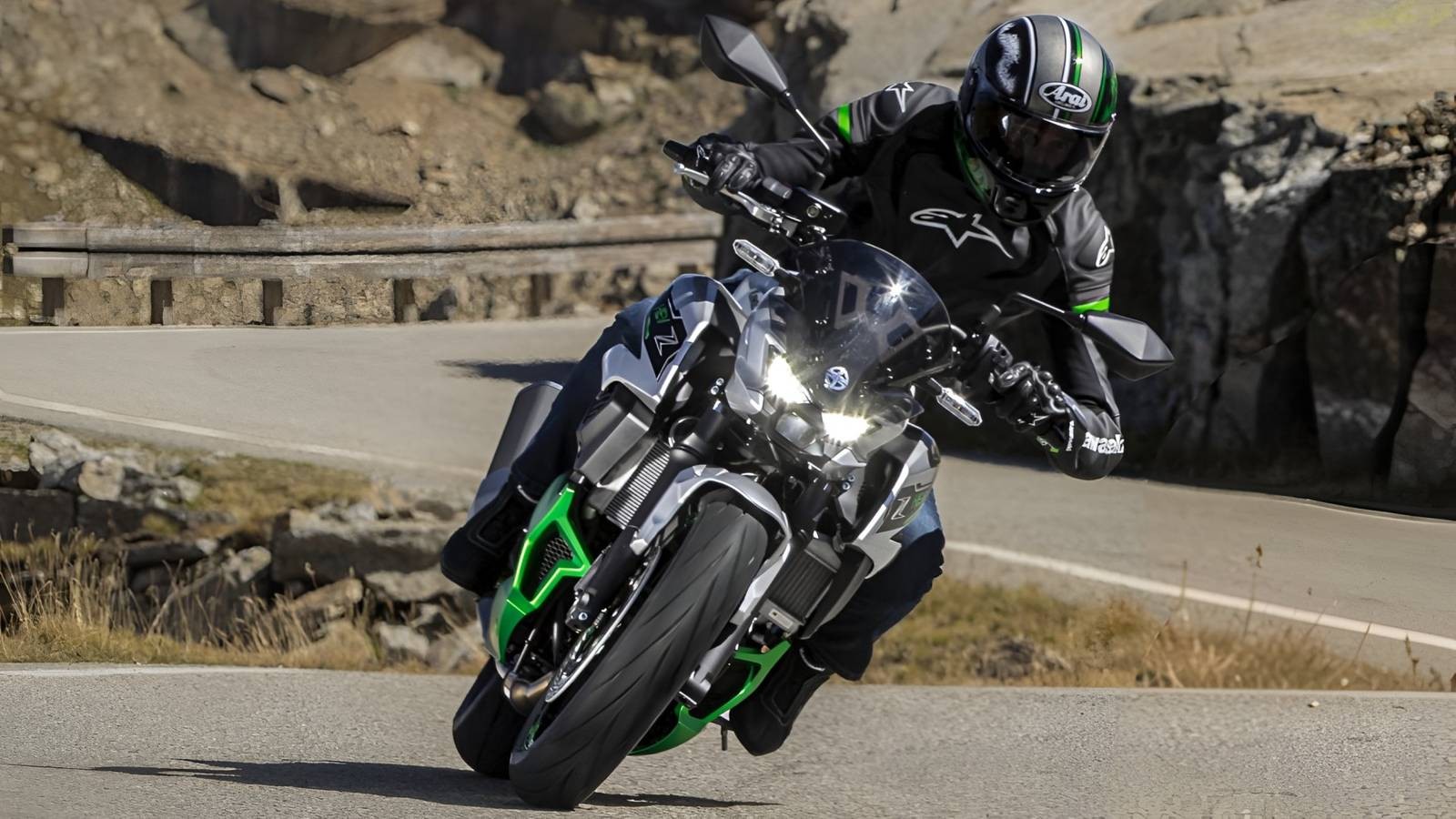
Let’s cut to the chase. Most naked bikes try to be everything to everyone. They want to be track toys and commuters and weekend warriors all at once. The Kawasaki Z7 Hybrid takes a different approach. It admits its limits. It’s not the fastest bike on the dyno. It isn’t the cheapest option in its class.
It is, however, arguably the most practical machine Kawasaki has ever built for actual human use.
The 2026 model year brings us a landscape of daily rides that vary wildly in intent. From the tiny, city-centric Z125 Pro to the supercharged madness of the Z H2. There is also the Z500 and Z650 which share DNA with the Ninja line. Even retro roadsters like the Z650RS exist for the style-conscious.
Then there is the Kawasaki Z7 Hybrid everyday riding. It stands apart. It is the company’s first production hybrid. It combines the sporty chassis of the Ninja 500 platform with a hybrid powertrain that prioritizes efficiency over outright speed.
This creates a specific identity crisis. It feels too practical for purists who crave raw mechanical engagement. It feels too expensive for commuters who just want to get to work. That tension defines the bike.
Is The Kawasaki Z7 Hybrid Worth The $12,499 Price Tag?
$12,499 is steep. Really steep.
For that money you could buy pure internal combustion engines with more horsepower and lower complexity. The Honda CB1000 SP costs $10,998. The Yamaha MT-09 is $10,898. Suzuki offers the GSX-S1000 at $11,988 or the smaller GSX-8T around $11.1k.
Why pay the premium for the Kawasaki Z7 Hybrid daily commuter?
Because it offers something the ICE-only competitors do not. An automated gearbox. Instant low-speed torque. EPA-estimated efficiency numbers that make gas stations feel like memory. The hardware is modern. The tech is integrated. You aren’t buying raw speed here. You are buying simplicity.
If your primary metric is cost-per-horsepower the math fails. If your metric is ease of use the value proposition shifts.
How The 451cc Parallel-Twin Hybrid Engine Actually Works
The heart of the Z7 is a dual-power setup. It takes the 451cc parallel-twin engine familiar from the Z500. That engine produces 58.3 HP on its own.
Then Kawasaki adds a 9kW electric motor.
Together they hit 68.5 HP. But the torque story is better. You get 44.2 lb-ft. The electric motor provides immediate grunt at the bottom end. This fills the power band. It pulls you off the line without needing to rev the gas engine into the red zone.
The 0-60 mph time is 4.3 seconds. Not scary fast. But brisk enough for traffic merging. The e-boost feature adds a burst of power when needed. It feels responsive. It feels instant.
This is not a track-focused machine. The peak power figure relies on the electric motor assisting the ICE. In Sport mode alone the ICE handles the load. In EV mode it’s just the electric motor. It’s a tool. A clever one.
Why The Automated Manual Transmission Changes Everything
This is the headline feature for city riders.
Gone is the left-foot clutch lever. Gone is the mental math of finding neutral. The Z7 uses a six-speed automated manual transmission. It works via a hydraulic system actuated by electronics. You shift using paddle buttons on the handlebars.
Or you don’t shift at all.
The bike can drive itself in the lower gears. This simplifies stop-and-go traffic immensely. Four ride modes control the character:
- Sport – Gas engine only. No electric interference. Manual shifting required.
- Sport-Hybrid – Both engines work together. Full performance. Idling stop disabled.
- Eco-Hybrid – Maximum fuel conservation. The electric motor does the launch. The gas engine waits until ~2000 RPM.
- EV – Pure electric mode. Quiet. Zero emissions. Limited range but perfect for parking lots or slow streets.
This transmission removes friction from the daily commute. Literally. And figuratively.
Does The Weight Hurt The Kawasaki Z7 Hybrid Handling?
Hybrids usually mean heavy bikes. Batteries add mass. Motors add mass.
The Z7 weighs 498 pounds (wet). That is light. Surprisingly light for what it carries.
The frame is high-tensile steel. A trellis design. The forks are 41mm telescopic with 4.7 inches of Travel. The rear uses a Uni-Trak monoshock. The braking setup uses dual 300mm front discs.
It sits low. Seat height is 31.3 inches short. Wheelbase is compact at 60.4 inches. You can dangle both feet at stoplights easily.
The handling feels planted. The added width from the tech doesn’t make it feel awkward in traffic. It moves with a certain heaviness sure but the center of gravity remains low. It inspires confidence rather than excitement. That’s intentional.
Real World Fuel Efficiency And Electric Range
Kawasaki claims 64 MPG in Eco-Hybrid.
That is absurdly efficient. Most bikes sit in the 40-50 MPG range.
In Sport-Hybrid you get 58.8 MPG still impressive. The difference is the character. Sport mode forces the ICE to wake up early. Eco mode keeps it asleep until you really need power.
The battery regenerates while you ride. The electric motor also powers a unique “Walk” mode. You want to move the bike out of a tight spot in the parking garage. Press a button. Roll the throttle. It walks forward. Close the throttle past neutral and it reverses.
It’s a small feature. One you forget about until you need it. Then you realize how useful it is.
“The biggest advantage… is the superior fuel efficiency, as heavy lifting is shared between two sources.”
It’s not just about saving cash on gas. It’s about reducing noise pollution in neighborhoods. It’s about not revving loud exhausts at 7 AM while your neighbors are sleeping. The EV mode lets you slip out silently.
The Identity Crisis Of The Kawasaki Z7
So who is this bike for?
Not the adrenaline junkie. There are better options there. Not the budget commuter. There are cheaper singles in the segment.
The Z7 sits in the middle. It is for the rider who wants a motorcycle that just works. A machine that connects to your phone via the Rideology app and color TFT. A bike that takes the hassle out of shifting gears. A bike that offers a legitimate electric-only mode for those short final-leg distances.
It struggles to find marketing clarity. Is it a sportbike? Too efficient. Is it a commuter? Too expensive. Is it eco-tech? Maybe.
It’s an experiment that succeeded more than people expected. The Z500-based ICE feels adequate. The chassis is sharp. The transmission is genuinely revolutionary for the segment.
The Z7 Hybrid remains an underrated naked motorcycle. It asks for trust. It asks for an upfront premium. But it rewards you with a daily experience that feels frictionless.
Maybe the future of riding isn’t faster. Maybe it’s easier.