The Lancia Thesis remains a ghost in the automotive pantheon. It was the most expensive, technologically advanced, and heavily researched vehicle Lancia ever attempted to build. And yet, fewer than 20,000 units were ever made. After just eight years on the market, it vanished from the brochure.
This isn’t just a story of a missed opportunity. It is a case study in why the Lancia Thesis never became a viable alternative to the BMW 5 Series or the Mercedes-Benz E-Class for discerning buyers in the UK and beyond. It shares DNA with Maseratis. It featured radar-guided cruise control years before it became standard. It looked like a medieval knight in a suit. But it had a fatal flaw.
The design compromise: From Dialogos concept to production reality
To understand why the Thesis feels so disjointed, you have to look at where it started. The car’s roots lie in the 1998 Dialogos concept car.
“The Dialogos promised something refreshing: clean flanks, a wooden floor, suicide rear doors, and a subtly sculpted dashboard.”
That concept was striking. It was Italian flair distilled into metal. But when the production version arrived in 2001, the nerve faltered. The result was a car of three distinct, conflicting personalities.
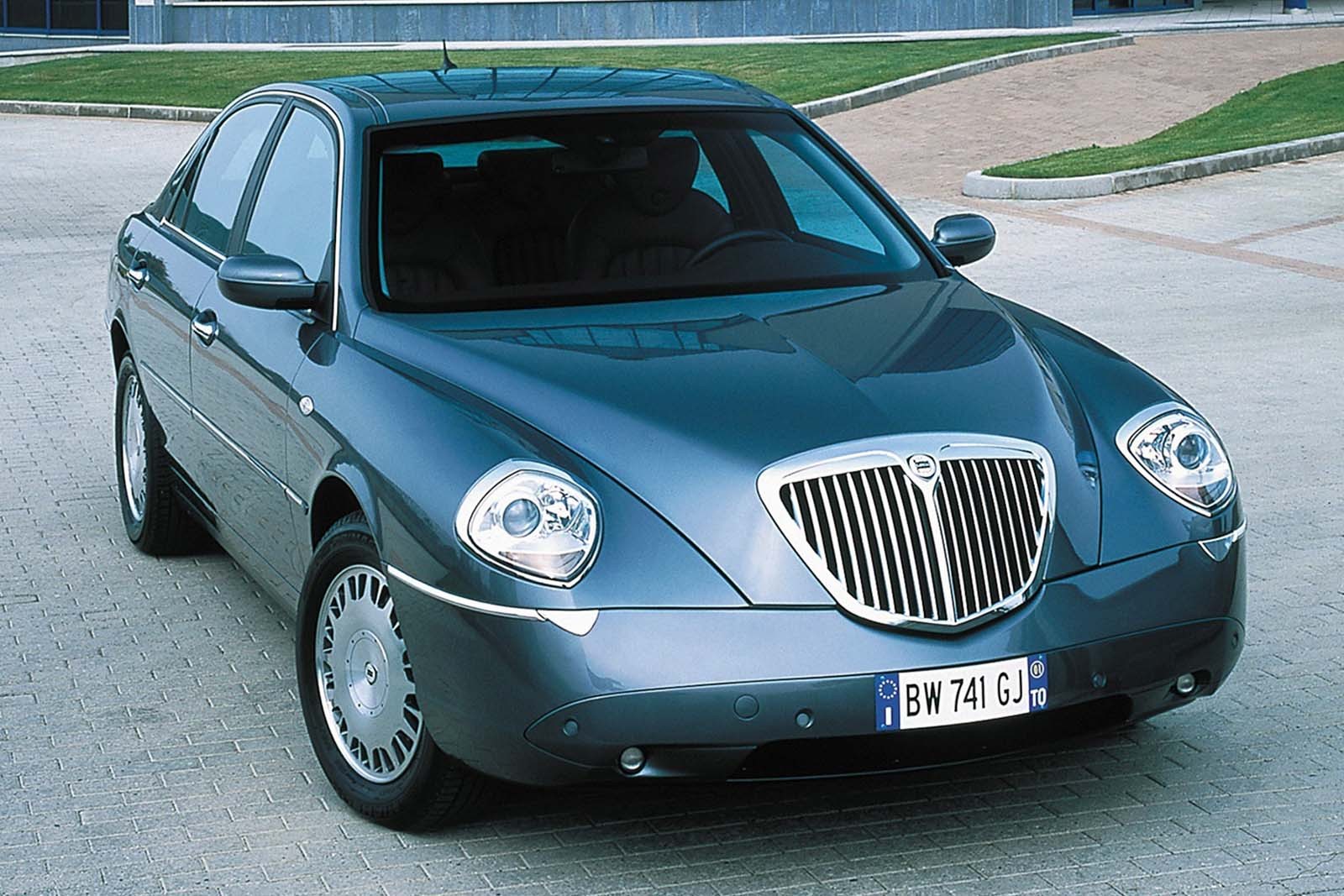
From the front, the Thesis commands attention. The chrome grille looks like a shield. It’s bold. Gothic almost. The tail-lights glow with a translucent intensity that gives the rear end a unique silhouette. But the side profile? Boring. A dull, elongated sandwich sits between the dramatic nose and tail. It lacks the flow of the original vision. You can see why people pronounce it ‘tay-sis’ to give it some gravity, but the car itself often feels like a compromise of banality.
Interior luxury vs. exterior anonymity
Inside, however, Lancia remembered why they were in the business.
If you ignore the lack of sales volume against the Audi A6, the cabin is genuinely special. You get cream-faced instruments, sparse but high-quality wood trim, and seats upholstered in rich leather. You could even get heated, cooled, and massaged seats in both the front and back. It feels like a first-class lounge.
It’s a strange dichotomy. The exterior tries to be understated, even dull in the center. The interior screams opulence. Is that enough to compete with a German rival? For some, maybe. For the masses? No. The Thesis never registered on any meaningful sales graph.
Why was the Lancia Thesis not sold in the UK?
The UK market never got the car. This absence creates a layer of mystique, but it also highlights a critical issue. The car was developed as a flagship, yet it remained “forbidden fruit” for British buyers.
When it finally launched in 2001, I had to wait years just to ride in one. And only as a passenger. This distance might have protected the brand’s image, but it also shielded buyers from the car’s most glaring technical deficit.
The fatal flaw: Build quality and chassis tuning
Here is the hard truth about the Lancia Thesis build quality. It inherited the worst trait of almost every Fiat Auto product from that era.
The issue? Sharp, transverse ridges on the road. Specifically, motorway expansion joints.
When you drive over these, the chassis should absorb the shock. The suspension should isolate the cabin. In the Thesis, it didn’t. The moment the wheels hit the gap in the asphalt, a creaky, plastic judder fired straight through the dashboard. It’s a faint sound. A tremor. But it breaks the illusion of solidity.
You expect a car built on a bespoke chassis, using suspension technology shared with the Maserati Spyder and Quattroporte, to handle this. You expect it to feel substantial. Instead, the dashboard quivered. That faint crack of plastic is the sound of premium aspirations meeting mid-range reality.
Conclusion: A car ahead of its time, behind on execution
So why did it fail? It wasn’t just the boring side profile. It wasn’t just the lack of UK availability. It was the feeling of mild flimsiness in the cabin that contradicted the price tag.
The Lancia Thesis had the tech. It had the design heritage. It had the comfort. But it couldn’t sell the feeling of robust engineering. In a market where the E-Class and 5 Series offered bulletproof reliability, a car that shudders at every road joint is a hard sell.
It remains a curious footnote. A car that tried too hard to be different, and ended up being just another victim of Fiat’s quality control issues of the early 2000s.