The 1975 Triumph Trident was a stubborn holdout. It continued the British company’s three-cylinder tradition until the market refused to pay for it. It was heavier, more expensive and slower than the coming wave of Japanese technology. The result wasn’t just a decrease in sales. This is a death sentence.
These machines didn’t die in a vacuum. They were victims of a certain moment in automotive history.
Anglo-American Union
The T150 Trident and its BSA twin Rocket 3 appeared on the US market in the summer of 1968. The goal was clear. The purpose was to prevent a Japanese invasion. Honda, Kawasaki and Yamaha were creeping up on the lucrative US market. Triumph and BSA merged in 1951 to pool resources. They shared a lot. But on the pavement they were different beasts.
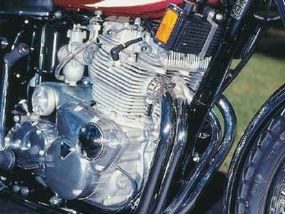
Unique style. engineering was divergent. The Trident keeps the cylinder vertical. Rocket 3 tilts the engine forward. Both are competent. Both promise performance comparable to the best of the time. Then came Honda’s CB750 Four. It arrived after a few months. It changed everything.
These British twins are decent motorcycles. They were not the revolution the market wants.
BSA Exit and T160 Overhaul
After 1968, the Trident survived with a few minor upgrades. Rocket 3, however, disappeared. BSA pulled the plug in 1973, and the Rocket 3 died with it. Triumph tried another approach. They rewrote the book for the T160 model.
The changes are immediately noticeable. The cylinders tilted forward. This lowered the profile. It also offers a more ergonomic riding position. Inside, the internal hardware has been improved. Durability improved. Added electric starter. The old kick-starter is gone.
In the United States, regulations dictate design. The shift lever moved to the left. The outdated front drum brakes were eventually replaced with 10-inch disc brakes. The Trident was modernizing. It was trying to catch up.
Models like Kawasaki’s new Z-1 raised the superbike ante.
The price of pride
The timing is terrible. The Kawasaki Z-1 had already set a new standard for speed and handling. Trident is improved, yes. But it is no longer the fastest two-wheeler. It was caught in a squeeze.
The Bonneville twins have also grown. In 1973, Triumph increased the displacement to 750 cc. Now the twin matched the triple in size. But the triple cost more. Why pay extra for a three-cylinder when a two-cylinder can offer the same power for less money?
The buyer looked at the price tag. They turned to their Japanese competitors. they made a choice.
After 1976, The triple faded out. The name survived, but the spirit is gone. Triumph brought back the Trident name in 1990. This new version is water cooled. It’s modern. Built by a new company. But the original 1975 model? The market moved on. Trident is still a remnant of a failed defense.
1975 Trident Triumph Trident’s Quiet Evolution
Triumph did not reinvent the Trident in later years. They tuned it. The 1975 model was no exception. The changes are subtle and designed to improve an already working machine rather than reinvent it.
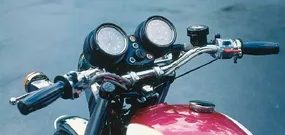
One particular adjustment stands out. The shift lever moved. It relocated to the left side of the bike. This is not just cosmetic edit. This is a strategic move. Triumph wants to expand the Trident’s appeal even further. In particular, it is aimed at the US market. American riders shift gears with their right foot. Standardizing this position makes the bike accessible to a wider range of users.
The underlying engine is still a three-cylinder unit. The chassis retained its rigid charm. But these subtle ergonomic updates show Triumph’s attempt to stay competitive. Trident is not the most spectacular bike on the market. It didn’t need to be. It was reliable. It is modest. In 1975, it was just trying to make one more sale.
Where can I find more gearhead content?
If you’re still looking for your next two-wheel fix, the web is full of archives. But it’s not worth browsing through all of them.
Classic Motorcycles
Old bikes have a way of sticking with you. The smell of oil. weight of cast iron. In this section, we delve into the history of the machines that defined the era. From pre-war wonders to the golden age of British steel, it’s a curated look at what made riders tick before electronics replaced the handlebars.
How Motorcycles Work
Curiosity can kill you, but it keeps mechanics in their jobs. This decomposition removes the chromium, and the mechanism is explained. Covers everything from combustion cycles to suspension geometry. You don’t need an engineering degree to get it. look under the fairing and understand why your bike is screaming at 10,000 rpm.
Triumph Motorcycles
No list of iconic brands would be complete without the triple-cylinder icons of Meriden. There’s a reason Triumph has a cult following. Their engineering has a soul. Whether it’s a vintage Bonneville or a modern Street Triple, there’s a specific kind of magic in their exhaust note. If you want to learn about British engineering that actually drives, this is the place for you.