


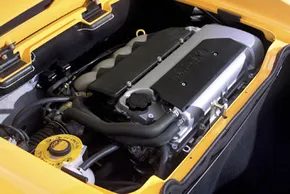
The average American sedan comes with roughly 120 horsepower. Even a hulking SUV usually packs at least 200, while a city commuter might get by with just 70. Then you look at a moped. It runs on a mere 1 or 2 horsepower engines but somehow hits 70 to 80 miles per gallon. It seems like a no-brainer, doesn’t it? Why not just slap a tiny engine into a regular car to boost those numbers?
The answer lies in the brutal physics of moving heavy metal through thick air.
The Power Cost of Just Existing
Let’s say you are cruising down a highway at 60 mph. You aren’t accelerating. You aren’t climbing a mountain. You are just maintaining speed. Even then, your car needs 10 to 20 horsepower just to keep moving. That energy is being burned off fighting wind resistance and the rolling friction of your tires.
On top of that, you have the parasitic loads. Turn on the headlights? The alternator draws power to generate electricity. Crank up the AC? The compressor demands more torque from the engine.
Now, imagine trying to do all that with a 1-horsepower engine. It wouldn’t just be slow. It would be paralyzed. That engine couldn’t sustain more than 20 or 30 mph. You’d have to drive with no lights and no AC. It’s not a car; it’s a liability.
The Agony of Acceleration
Then there is the issue of getting up to speed. Horsepower determines how fast you can accelerate from zero to 60 mph. With a conventional car and a 1-horsepower engine, that trip might take a couple of minutes. And that’s in a vacuum, ignoring wind resistance entirely.
In the real world, it would take forever. You’d be merging onto the interstate at 5 mph, praying someone slows down for you. The bigger the engine, the quicker you cover that gap. A 1-horsepower unit simply doesn’t have the muscle to overcome inertia quickly enough for normal driving.
Building the Perfect Ultralight
If you really wanted to run a car on 1 horsepower, you’d have to change the definition of “car.” You would need a vehicle that is tiny, incredibly lightweight, and shaped like a teardrop.
Think of a one-seater capsule rather than a sedan. By stripping away mass, you reduce the energy needed to accelerate. By shaping it to slice through the air, you minimize wind resistance. In this scenario, a 1-horsepower engine could push the vehicle to 60 or 70 mph with relative ease. You’d get those stellar mileage figures.
But you wouldn’t be driving a car. You’d be piloting a vulnerable, single-occupant shell that looks like it was launched from a sci-fi movie. The compromise between utility, safety, and efficiency forces us to stick with engines that have a bit more kick.


