


The fumes trailing from the car ahead in a gridlock aren’t just visual noise. They are the visible result of complex engineering fighting a losing battle against physics. One car emits relatively little. A highway packed with thousands of vehicles? That’s a massive, cumulative pollution event. The smoke you see rising into the smog layer didn’t just appear. It traveled from the engine combustion chamber, through a labyrinth of metal pipes, and out into the atmosphere.
Regulators noticed this decades ago. The 1970 Clean Air Act handed the EPA sweeping power to control these emissions. Standards tightened over the years. By 1977 and again in 1990, the scope expanded. New cars today are significantly cleaner than their 1980s predecessors. But drivers cover more ground now. We drive more often. The net result is still a heavy environmental load.
Manufacturers had no choice but to adapt. The exhaust system underwent a radical evolution to meet these mandates. It’s no longer just a pipe. It’s a sophisticated assembly of components designed to manage flow, heat, and noise while stripping out toxins.
The Anatomy of the Exhaust Pipes
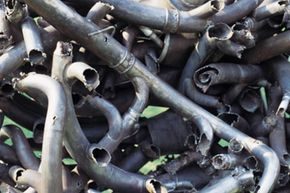
At first glance, the undercarriage looks like a tangle of rusty metal. It is structured, though. The system consists of various pipes, each bent to fit the specific contours of the chassis. These pipes wrap around axles and suspension components. They connect end-to-end or overlap to guide waste gases toward the rear bumper.
While the exterior view is uniform, the internal function varies by segment.
The Y pipe is a basic connector. Often shaped like the letter Y, it combines exhaust streams from two engine outlets. It bolts to the exhaust manifold, merging the flow before it moves deeper into the system. In some performance builds, a Y pipe is located at the rear. This configuration creates a dual exhaust look, with a tailpipe exiting on both the driver and passenger sides. It’s an aesthetic choice as much as a functional one.
Intermediate pipes link the front to the back. They attach to the muffler and resonator. These are critical for sound dampening. Balance pipes, found in true dual exhaust setups, equalize pressure pulses between the two sides. This prevents one side from dominating the backpressure, which can hurt engine efficiency.
Heat management is another key factor. Air gap pipes use a nested design. One pipe sits inside another, creating a chamber for airflow. This acts as a heat shield, insulating the cabin and other sensitive components from the intense heat of the exhaust gases.
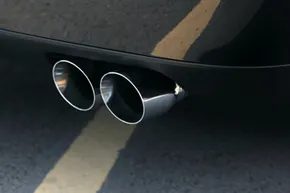
The tailpipe is the final exit point. It usually protrudes from beneath the rear bumper. It often features a larger diameter and a more robust finish. This gives the illusion of a high-performance system, a common trait in luxury and sports cars.
Why Not Just One Long Pipe?
It seems inefficient to use dozens of small segments instead of a single continuous tube. But manufacturing and maintenance realities dictate this design. Bending a long pipe to match every contour of a car is difficult. It requires expensive tooling and heavy materials. Connecting pre-bent small sections is easier and lighter.
Wear and tear also favor modular design. Exhaust systems degrade. Rust, road debris, and thermal cycling take their toll. If the system were a single piece, replacing a rusted section would mean scrapping the entire assembly. With segmented pipes, technicians can swap out just the damaged component. It’s cheaper and faster.
Fitting these pieces together requires precision. Some ends overlap for a secure seal. Others mate directly. But metal-on-metal contact isn’t enough. The joints need assistance to prevent leaks and ensure durability. This leads to the next layer of the puzzle.
Beyond the Pipes: Headers, Hangers, and More
The pipes are only half the story. The system relies on supporting structures and specialized front-end components to function correctly.
Headers replace the standard exhaust manifold. They provide individual runners for each cylinder, optimizing exhaust scavenging. This improves engine breathing and power output. Not all cars use headers, but performance enthusiasts swear by them.
Hangers suspend the system from the chassis. Rubber or polyurethane mounts isolate vibration. Without them, the constant oscillation of the exhaust would shake the entire vehicle. It would also accelerate fatigue in the metal pipes.
The catalytic converter is another critical piece, though its specific chemistry is a topic for deeper discussion. It sits in the flow path to reduce harmful emissions. Oxygen sensors monitor the mix, feeding data to the engine control unit. This loop ensures the engine runs efficiently and the exhaust stays within legal limits.
Each component plays a role. The pipes move the gas. The converters clean it. The mufflers quiet it. The hangers hold it all in place. It’s a balance of form and function, built to survive years of abuse while keeping the air we breathe slightly less toxic.


Hidden Heart: Headers and Seals
You can see the pipes clearly. They are the visible skin of the system. But the real story begins upstream. More precisely in the exhaust manifold. Also called the manifold. It’s not just about hoses. Typically made of heavy cast metal, it is a collection of adjacent tubes fused together. Its job is brutal. It collects exhaust gases directly from the engine block. Each hole corresponds to an engine exhaust port. The flanges ensure a tight seal. If this seal fails, gas escapes. Prematurely. Badly.
From there, the flow continues. But the gaskets keep it in check. A perfect metal-to-metal connection cannot be achieved. Not even close. So put a gasket between each joint. These aren’t just washers. They are made of fiber or heat-resistant material. Flexible enough to compress when squeezed. Tight enough to keep toxic gases in the system. When they fail, you can smell it. You feel it.
Noise reduction: silencers and resonators
Then there’s the muffler. Usually located near the rear of the vehicle. It looks like a large oval or round chamber. Simple design. Complex interior design. It has to silence the engine while letting gas flow. How? A labyrinth of chambers and pipes. Inside you will find stone, wool or synthetic fibers. They absorb noise. They control the wave patterns.
And it has to survive. Heat retention is a killer. Corrosion is continuous. Physical damage from road debris is a daily threat. The muffler must withstand all three.
Sometimes space is limited. Or the sound profile needs to be adjusted. Enter the resonator. It’s a secondary sound eliminator. It augments the muffler. In some compact models, it completely replaces the muffler. It clears certain frequencies. The one that makes the car sound… off.
Cleaning the Air: Catalytic Converters
If you want to know how modern cars stop polluting the air, look at the catalytic converter. The “cat.” It became the standard in the 1970s. It is the most effective way to reduce toxins. Inside, the structure is coated with precious metals. Platinum. Palladium. Rhodium. The mix varies by manufacturer and era.
Before the exhaust gases reach the cat, they are toxic. Carbon monoxide. Nitrogen oxide. Hydrocarbons. These are the chemicals tested during emissions checks. When they touch the metal coating, a chemical reaction occurs. It transforms toxins. Makes them less harmful. When the gas comes out of the cat, the levels are low enough to meet legal requirements. It’s chemistry that saves the planet, one liter of exhaust gas at a time.
Hardware that holds everything together
We have covered the major components. But the system needs more than just pipes and chambers. It requires hardware. Flanges act like metal seals. Sometimes cast right onto the pipe end. Clamps and brackets bolt everything together. They mount the exhaust to the vehicle frame.
Exhaust hangers are important. They literally hang the pipes from the underbody. You need strength to hold the weight. But also flexibility. The car moves. The engine vibrates. The frame twists. If the hangers are too rigid, the pipes crack. If they’re too loose, the exhaust bangs against the chassis.
And heat shields. Essential. Metal plates, sometimes insulated. They create a barrier. They are installed in places where the hot parts of the exhaust gas are too close to other parts of the vehicle. Or directly under the cabin. Without them, you’re cooking your floorboards. And passengers.
The Inescapable Truth of Incomplete Combustion
An engine that burns every drop of fuel perfectly is a myth. It simply doesn’t exist. Real engines are chaotic machines that deal with too many variables to achieve theoretical perfection. So there are leftovers. Unburnt fuel. Partially burnt remains. These byproducts have to get somewhere quickly to clear the cylinder for the next intake stroke.
This is where the exit route appears.
The gases start their journey in the exhaust manifold and merge from the individual cylinders into one flow. From there, it’s a long, winding road through interconnected pipes, eventually exiting near the rear bumper. These pipes? They are not just for show. They help cool the gases on their way, but their main job is to direct the flow through the heavy hitters: the catalytic converter and the muffler.
Why location is important for a catalytic converter
You can’t just bolt the cat anywhere. It must be hot to work. A catalytic converter relies on high temperatures to activate chemical reactions that neutralize toxins. For this reason, manufacturers place it as close to the engine as possible, often right after the manifold. The heat from the engine does the main work and quickly brings the converter up to operating temperature so it can start working.
As soon as the gases pass through the cat, up to 90 percent of the harmful pollutants are burned or transformed into less harmful substances. But the noise? This is still a problem.
Tame the Roar
After chemical cleanup, the priority shifts to sound management. The muffler and resonator are located directly after the converter. This is where engineering becomes subjective. Some systems are tuned to dampen the exhaust as much as possible, smoothing out noise in luxury sedans. Others are designed to be aggressive and let the engine’s personality shine in high performance cars. It strikes a balance between acoustic comfort and driver satisfaction.
The gases then flow through the remaining piping before finally exiting the vehicle.
Rotting from the inside out
It’s impressive that the exhaust system lasts at all. The environment in which it operates is hostile.
Externally, the pipes are take a beating. Trash on the street. Potholes. Snow. Ice. And the worst: road salt. These factors corrode the metal from the outside in. However, the real killer is within.
Combustion creates byproducts, and one of the most harmful is acidic moisture. It is an corrosive sludge that coats the inside of pipes. You can’t clean it. You can’t stop it. It sits there and slowly eats its way through the steel until the pipe rusts through.
The hidden danger of exhaust leaks
If the metal gives way or the joint loosens, an exhaust leak will occur.
Symptoms are usually obvious. A loud, ticking or hissing sound. Perhaps a variation in performance or a strange smell in the interior. But the noise is not the biggest problem.
If the leak happens after the catalytic converter, it’s usually a malfunction and a failed emissions test. However, if the leak occurs before the catalytic converter, the exhaust bypasses the treatment process entirely. Unfiltered, toxic and scorching hot chemicals are released directly into the atmosphere.
This isn’t just bad for the planet. It’s bad for you. Carbon monoxide and other harmful fumes can enter the cabin if the leak is close to the firewall. It’s a health hazard, not just a mechanical one.
Keep the pipes clean
You cannot prevent corrosion. Chemistry cannot be fixed. But you can limit the damage. Regular checks are important. Look for rust, especially on joints and hangers. Pay attention to changes in sound. If the exhaust rattles or sounds harsher than usual, it may be time to take a closer look.
Some owners opt for stainless steel exhaust systems, which are more corrosion resistant than standard steel. Others use ceramic coatings to protect the pipes from acidic moisture. But even then, nothing lasts forever.
The exhaust system is a sacrificial component. It withstands heat, chemicals and abuse, so you don’t have to. And when it eventually breaks, it’s not just about replacing the part. It’s a safety issue.
So if you hear this rattling sound, don’t ignore it. The exhaust system is not just noise. It’s about leaving dirty things where they belong.
The diesel engine has taken a serious hit over the years. It is often blamed for dumping disproportionate amounts of toxic fumes into the air. But that reputation might be getting a reprieve. New exhaust filters are claiming to cut emissions by about 25 percent. There is a bonus, too. Fuel economy gets a lift.
Several carmakers with a history of diesel models are rolling out systems that mix high-powered catalytic converters with diesel particulate filters. Volkswagen’s BlueMotion turbodiesel lineup is one example. It is sold mostly in Europe and South America. Mercedes’ BlueTec diesels are another. These OEM components and car models often use weight reduction and other streamlining techniques to improve overall efficiency.
Why Back Pressure Matters
Improved exhaust efficiency is critical to getting the most out of your car. You can even upgrade an older ride. Just make sure the car is in generally good condition. A performance exhaust system won’t work miracles on a total jalopy. A mechanic can usually order identical original replacement parts. But there are also alternatives from aftermarket performance parts suppliers. These often give the car a facelift. At least, as much as the car’s underbody can be spruced up, anyway.
There are several frequently-mentioned benefits of performance exhaust systems. Aftermarket manufacturers know the auditory experience is critical to a pleasurable drive. It also lets nearby drivers know that a little extra coin was spent on the car. Most manufacturers offer a variety of systems. They range in sound from a subtle throatiness to an all-out roar.
A good aftermarket performance exhaust can improve throttle response. That is how fast, and smoothly, the car reacts to the pressure applied to the gas pedal. It can also give a boost in horsepower. Some systems can even improve fuel economy. Performance exhausts provide this power boost because they are less restrictive than stock exhausts. If the engine can push out more air, it can also take in more air. That helps the engine make more power.
But here is the catch. Contrary to what you might think, a totally free-flowing system will be counterproductive. Aftermarket exhausts are engineered to provide just the right amount of back pressure. This ensures the engine doesn’t end up running at sub-peak output. That is why it is important to choose one designed and optimized for your specific vehicle. Before you go ripping out your exhaust pipes, make sure the system you want is street-legal. It won’t cause your car to fail its emissions test.
Don’t Fall for the Gaudy Tips
Understand, too, that a real performance exhaust system cannot provide mind-blowing benefits for a trivial investment. Beware of cheap products. Clip-on or screw-on “performance” exhaust system components or exhaust tips claim to give the look of a full performance system. They won’t help the car’s drivability. They may even hinder it by adding extra weight and wind resistance. And besides, those gaudy tips really aren’t fooling anyone.
Auto Exhaust System FAQ
How much does it cost to replace an exhaust pipe?
According to Repair Pal, it costs between $803 and $830 to replace an exhaust pipe.
What are the parts of an exhaust system?
The exhaust header, exhaust pipes, gaskets, muffler, and catalytic converters are some parts of the exhaust system.
What do exhaust pipes do?
Each pipe is responsible for moving the exhaust gases toward the back, but many of the segments are specialized.
Do exhaust systems add horsepower?
Yes, a good aftermarket performance exhaust can improve throttle response and give a boost in horsepower.
Is it bad to have a hole in your exhaust pipe?
Yes. Exhaust fumes can leak into your vehicle, putting you at risk of carbon monoxide poisoning.


