Potholes matter. Speed bumps? Yeah, those kill suspension too. For years, navigation apps treated every rider like they were behind the wheel of a tank. Waze is changing that. Or at least, they’re trying to.
It’s not just about two wheels, though. The app is getting smarter in general, leaning heavily on artificial intelligence to stop being so annoying while actually knowing your habits better than you do sometimes.
It Knows Your Habits (And Your Preferences)
Personalized navigation is rolling out globally right now.
What does that mean? It means the app learns. You take the highway? It assumes you want the highway. It suggests routes based on your past behavior rather than just calculating the mathematically shortest distance every single time. It builds a profile of your driving style.
You might not want that. Some people hate algorithms guessing.
No pressure to follow the AI’s gut.
You can toggle it off. Easy as that.
Then there is the noise.
Drivers. We want silence. We want our music. Not every minor turn announcement. Waze added a “less chatty” mode. It strips down the updates to the bare minimum. Critical hazards stay. Turns stay. The fluff goes away. It rolls out now. Finally.
The Motorcycle Update Is The Real Deal
Here is the part that actually matters for riders.
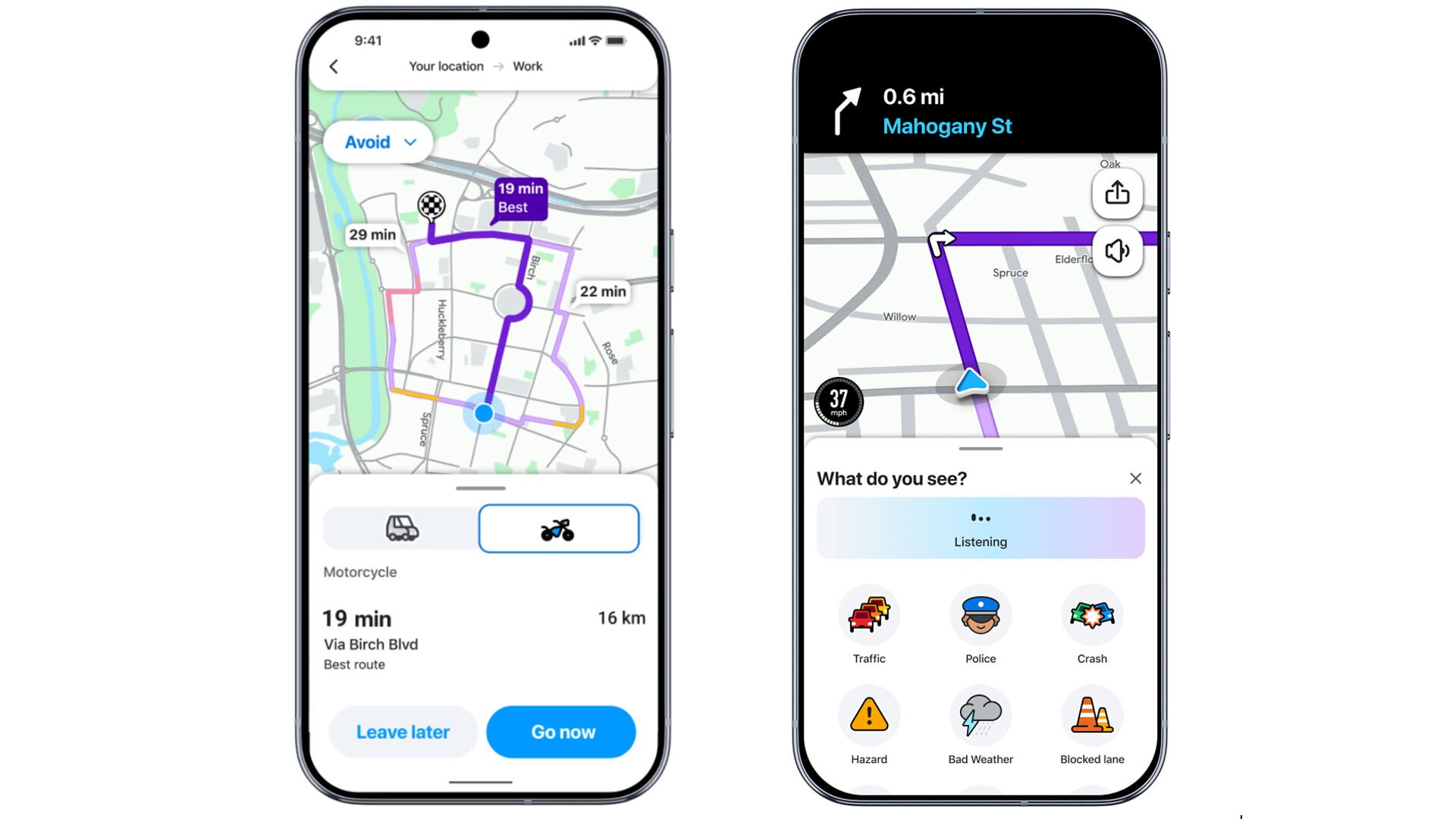
Waze introduced Motorcycle Mode. It launches in specific regions first. Argentina, Brazil, Colombia, Mexico, Peru. The Philippines. Malaysia.
It sounds minor but it isn’t. The software acknowledges that bikes can slip through gaps cars cannot. Narrow alleys? Yes. But it also knows bikes die on potholes. Speed bumps ruin rides. Raised crosswalks are dangerous.
The app now flags these specifically. Cars don’t care about a raised crosswalk as much as a motorcycle does. The routing adjusts for this sensitivity.
How do they get this data? Real-time traffic info helps, sure. But it’s mostly a dedicated team of motorcycle map editors. Humans identifying the hazards that AI might miss or not prioritize for four wheels.
Reporting With Your Voice
Gemini integration gets deeper.
Remember having to type out that the road was closed while parked on the side? Boring. Now you just talk to the phone.
“The road is closed here.”
The app captures the audio. Sends the data to editors. They verify. The map updates. Conversational reporting removes the friction between seeing a problem and fixing the navigation data. It feels natural. Is it always accurate? Probably not always, but the speed is there.
You can also use the voice icon for general questions. You don’t even need a destination.
- Find a coffee shop open now.
- Parking near Grand Mall.
- Cheapest gas station close by.
It pulls from live data and suggests options without you digging through menus. It’s useful when you’re lost or just lazy.
So is Waze perfect now? No. The motorcycle feature isn’t everywhere yet. Personalization still requires you to train the bot for a while. But it feels less like a rigid GPS device and more like something that adapts to the user.
Whether you want it to be quieter or whether it can spot the pothole you’re about to hit—the gap between digital maps and actual riding experience is closing. Maybe not completely. But closer than it was yesterday.