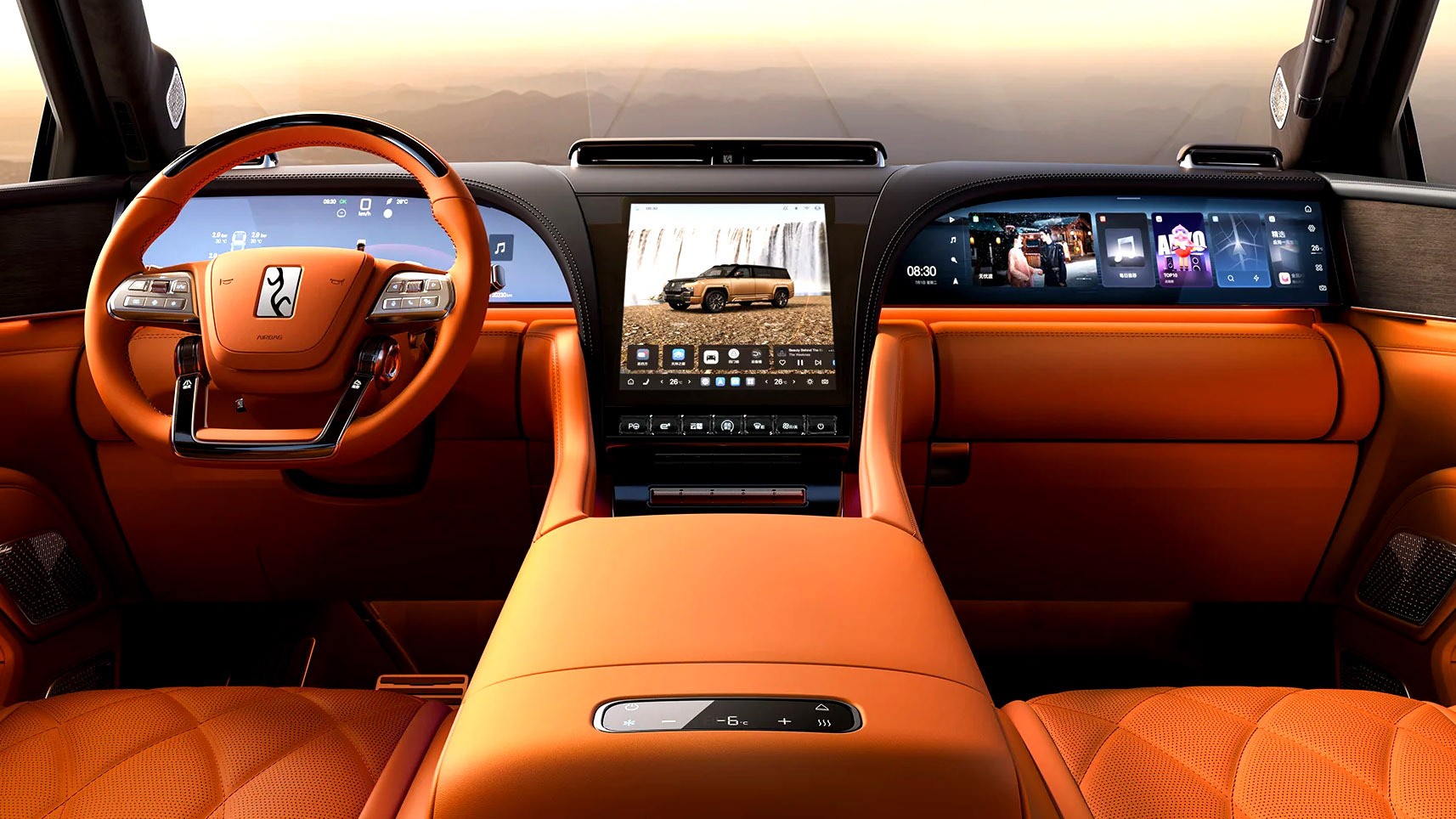
The automotive industry is undergoing a fundamental shift. Vehicles are transitioning from purely mechanical machines into “tech showpieces on wheels,” where the user experience is increasingly defined by software rather than hardware. In this new landscape, a car’s lifecycle is no longer fixed at the moment of purchase; instead, it evolves through continuous digital refinement, much like a smartphone.
Recent data reveals a massive disparity in how different manufacturers are navigating this transition, with Chinese firms significantly outpacing traditional Western giants.
The Software Gap: BYD vs. The World
While companies like Tesla pioneered the concept of Over-the-Air (OTA) updates—software patches delivered wirelessly to a vehicle—the scale of implementation varies wildly between brands. According to reports from Nikkei Asia, the sheer volume of updates released in 2025 highlights a growing technological divide:
- BYD: ~200 updates (across Ocean and Dynasty brands)
- Tesla: 16 updates
- Toyota: 8 updates
- Volkswagen: 5 updates
This massive gap suggests that while legacy automakers are treating software as an occasional maintenance task, Chinese manufacturers are treating it as a core component of the vehicle’s lifecycle.
Case Study: The Evolution of the BYD Han L
A prime example of this rapid iteration is the BYD Han L, a flagship sedan in the Dynasty series. In mid-February, BYD released its fourth OTA update for this model. Rather than requiring a trip to a dealership, owners can install the update in approximately two hours via their vehicle’s connection.
The update specifically targets the Advanced Driver Assistance Systems (ADAS), utilizing end-to-end AI to improve how the car perceives its surroundings and makes decisions in complex traffic scenarios. This ability to “sharpen” a car’s intelligence months after it has left the showroom is a significant competitive advantage.
Why the Disparity Exists: Vertical Integration
The ability to push hundreds of updates is not merely a matter of will; it is a matter of architecture. BYD’s dominance in this area is largely driven by its vertical integration model.
Unlike many traditional automakers that rely on a patchwork of third-party suppliers for different components, BYD designs much of its own:
* Semiconductors (chips)
* Operating systems
* Hardware components
By controlling the entire “stack” from the chip to the user interface, BYD can deploy software changes rapidly and efficiently without worrying about compatibility issues between disparate systems. This control allows for a seamless user experience where software and hardware are perfectly synchronized.
Challenges and the “Catch” for Legacy Brands
The industry is beginning to realize that OTA capabilities must be planned before a car even hits the market. Isao Sekiguchi, managing director of Dongfeng Nissan, noted that updates must be part of the initial lifecycle design to remain competitive. However, even established players are finding success through partnerships; Nissan’s recent N7 electric vehicle—a joint project with Dongfeng—was able to roll out its first update just two months after launch.
Despite the benefits, two major hurdles remain for the industry:
- Development Costs: Creating, testing, and deploying frequent updates requires massive ongoing investment in software engineering.
- Monetization: While updates keep cars relevant and maintain resale value, it remains difficult for manufacturers to find consistent ways to turn these digital improvements into direct revenue streams.
Conclusion
The automotive race is no longer just about horsepower and aerodynamics; it is about the frequency and quality of software iterations. As Chinese manufacturers leverage vertical integration to dominate the OTA space, legacy automakers face the urgent challenge of restructuring their entire development models to keep pace.