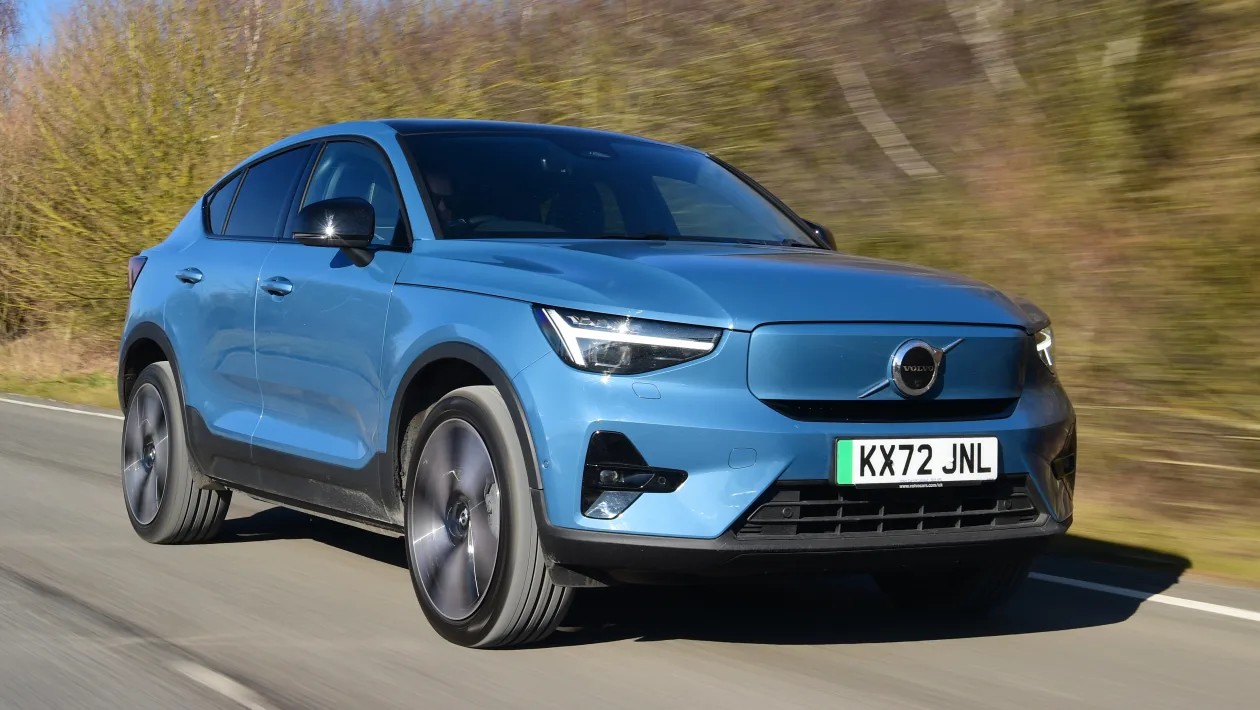
The Volvo C40 Recharge, now EC40, represents an interesting proposition on the used EV market. While the Swedish automaker has a century of innovation behind it, the C40 is a relatively recent entry – an all-electric crossover spun off from the XC40 in 2021. It offers a stylish design and usable range, but comes with compromises that made it less popular when new. Now, as a second-hand buy, the C40 may represent value, though alternatives deserve serious consideration.
History and Model Variations
Volvo introduced the C40 Recharge in March 2021, with first deliveries in early 2022. Initially available only online, it featured a 78kWh battery offering up to 261 miles of range. The original dual-motor AWD configuration delivered 402bhp, accelerating from 0-62mph in under five seconds.
In March 2022, a single-motor, front-wheel-drive version arrived with a 69kWh battery and a slightly extended 269-mile range. This was later replaced in January 2023 by a rear-wheel-drive single-motor model with options for 69kWh or 82kWh batteries. Twin-motor AWD variants also transitioned to the larger 82kWh battery pack from this point.
A significant update came in April 2024 with the renaming to EC40, followed by a much-improved infotainment system in February 2025. These changes matter because earlier models may feel dated compared to later iterations.
On the Road: Performance and Refinement
All C40s are electronically limited to 112mph. Even the single-motor version provides brisk acceleration (0-62mph in 7.3 seconds), while the dual-motor models are noticeably quicker. Handling is competent for a high-riding SUV, though not particularly engaging. The C40 excels in refinement, making it a comfortable choice for highway driving.
Which C40 Should You Buy?
The long-range models are the most practical due to their usable range and resale value. While price premiums may exist, they are often justified. Shopping around is crucial, as prices vary significantly. All C40s come well-equipped, even the base “Core” trim including LED headlights, powered tailgate, parking sensors, heated seats, a panoramic roof, and a nine-inch touchscreen. Higher trims (“Plus” and “Ultimate”) add features like heated rear seats, electric seat adjustment, and a premium sound system.
Pricing and Alternatives
Used C40s can be found for as little as £18,000 with around 60,000 miles, though lower mileage examples command higher prices. However, buyers should compare the C40 to competitors.
The Volvo EX40 is the most obvious alternative, offering similar traits with more interior space. The Polestar 2 provides a more engaging driving experience. The BMW iX1 is superior in most respects, though less comfortable. The Cupra Born, Mercedes EQA, Tesla Model Y, Kia EV6, Audi Q4 e-tron, Volkswagen ID.3, MINI Countryman, BMW iX2, Hyundai Kona/Ioniq 5, Renault Megane E-Tech, and Ford Mustang Mach-E all warrant consideration.
Common Issues and Reliability
Some owners have reported infotainment glitches, including Apple CarPlay connectivity problems. Suspension rattles and steering wheel vibrations due to electric motor issues have also surfaced.
The C40 can tow up to 1,800kg in twin-motor form, though this significantly reduces range. Single-motor variants are limited to 1,500kg. Charging speeds vary: dual-motor models from 2023 can charge at up to 200kW, while single-motor versions are capped at 130kW.
Volvo offers a standard three-year/60,000-mile warranty, extendable to four years/80,000 miles. The battery is covered for eight years or 100,000 miles. There have been two recalls: one in January 2023 for brake-control module software and another in June 2025 for braking issues in one-pedal downhill mode.
Interior and Running Costs
The C40’s interior is stylish but uses some cheaper materials. The portrait-format touchscreen is intuitive, and there is enough room for three adults in the back, though it’s not overly spacious. Boot space is competitive at 404 liters (1,196 liters with seats down).
VED (road tax) is £195 per year for models registered before April 2025, rising to £620 thereafter. Insurance groups range from 34 to 43 depending on the model. Maintenance costs are moderate: services are due every two years or 18,000 miles, costing around £210, including brake fluid and a pollen filter.
Conclusion
The used Volvo C40 offers a stylish and refined EV experience, but its compromises in cabin quality and rear visibility, along with competition from more compelling alternatives, mean buyers should weigh their options carefully. The EC40 is a sensible second-hand purchase, but only if the price reflects its limitations.