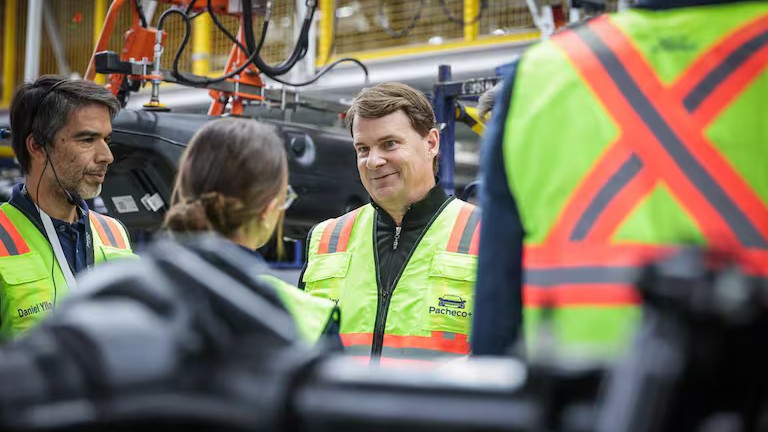
Ford Motor Co. CEO Jim Farley is publicly acknowledging the technological superiority of Chinese electric vehicle (EV) manufacturers, going so far as to commute daily in vehicles like the Xiaomi SU7 to understand the competition firsthand. Farley’s candid assessment, revealed in an interview with Argentina’s La Nación, underscores a growing panic among Western automakers facing rapid innovation from Asia.
The Xiaomi SU7: China’s “Apple on Wheels”
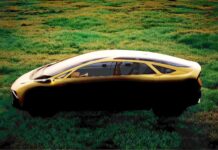
Farley described the Xiaomi SU7 as delivering a seamless digital experience rivaling Apple’s products. Key features include automatic phone integration via facial recognition, a built-in AI assistant, and blistering acceleration – reportedly from 0 to 100 km/h in under three seconds. He explicitly compared the vehicle’s performance to that of a Porsche Taycan, signaling a high level of respect for Chinese engineering.
Ford’s “Operation China”
To better understand the threat, Farley ordered his management team to acquire five top Chinese EVs. These vehicles were shipped to Chicago and driven across the country to Ford’s Michigan headquarters, where they’re now used for daily commutes by the executive team. The initiative is a blunt admission that Ford risks repeating past failures in other Asian markets, notably Japan and South Korea.
Catching Up Is the Only Option
Farley has previously conceded that Chinese EV makers are ahead of competitors. When Ford hired Doug Field – a former Tesla engineer and Apple car executive – Field reportedly told Farley that the company’s tech infrastructure was “25 years behind.” This included outdated parts release systems, IT architecture, and CAD design tools. The implication is clear: without radical modernization, Ford cannot compete with industry leaders like BYD.
Why This Matters
This is not just about one automaker. Western industries face a broader challenge: China’s EV sector is advancing at an unprecedented pace. Even without significant U.S. market penetration yet, Chinese EVs are already setting benchmarks in digital integration, performance, and manufacturing efficiency. The speed of innovation requires Western firms to adapt rapidly or risk being left behind.
“Ford missed Japan, Ford missed South Korea, so we can’t miss China,” Farley said, underscoring the existential stakes.
The situation is forcing Ford – and likely other Western automakers – to confront uncomfortable truths about their technological debt. The CEO’s actions suggest that understanding the competition is now the highest priority, even if that means admitting defeat in key areas.