No one waits to pump gas. The bill stings. The decision at the pump stings more. You want the cheapest gallon. But you also don’t want to damage the engine.
Is premium gasoline a waste of money? Or is it necessary?
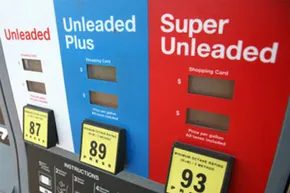
Most stations sell three grades. Regular is 87 octane. Mid grade is 89. Premium sits at 92 or 93. Station pumps have bright yellow stickers. The numbers are there. The confusion remains.
High-octane fuel is commercially available in large quantities. The oil companies promote it. But does your car really need it?
To answer this question, you need to understand compression ratios. And detonation.
Effect of compression ratio on fuel selection
The car has a four-stroke internal combustion engine. Almost all of them.
The mixture of air and fuel enters the cylinder. The piston moves upwards. Squeeze the mixture. The spark plug ignites. The explosion forces the piston down. Power is generated.
Compression Ratio determines the strength of the compression.
Let’s take a standard 2 liter 4 cylinder engine as an example. The volume of each cylinder is about 500cc. The piston compresses that 500 cc charge down to 50 cc. The ratio is 10:1.
The higher this ratio, the denser the mixture. Denser mixtures ignite more violently.
Normal combustion is controlled. The spark plug ignites the mixture at a certain moment. The flame front spreads evenly.
Detonation is chaos. This happens when the fuel explodes before the spark plug ignites. Or if some of the fuel ignites prematurely due to heat and pressure.
Engineers call it detonation. Drivers call it “knock” or “bang”.
Imagine pedaling a bicycle. Steady, even pressure is needed. The explosion is like pressing the pedal. difficult. Quickly. confusion. Energy is released too quickly. This can cause shocks to engine parts.
Over time, this knocks damage pistons. eat seals. Efficiency decreases.
Explanation of octane number
Octane ratings measure resistance to detonation.
High-octane fuel prevents pre-ignition. It burns slower. More controlled.
Regular gasoline (87) has the lowest resistance. Premium (91-93+) has the highest.
This resistance is needed if the engine compresses the fuel strongly. Otherwise, the fuel will ignite from the pressure alone. The spark plug is irrelevant.
Engines with high compression ratios need premium fuel. It cannot function properly without the risk of serious damage.
Engines with low compression ratios don’t care. They run fine on regular.
This is where the marketing gets tricky. Some cars are sold “using only premium fuel”. Some people say, “I recommend the premium version, but the regular version is fine.”
It helps to know the compression ratio. But you don’t need to calculate it.
Knock sensor and engine timing
You might hear the knocking. A metallic clatter is heard when accelerating. It sounds like marbles in a tin can.
Sometimes you don’t hear it at all.
Modern cars are equipped with knock sensors. These are piezoelectric microphones that are bolted to the engine block. They listen for vibrations caused by detonation.
When the sensor detects a knock, it communicates with the ECU (Engine Control Unit). The ECU adjusts the ignition timing. It delays the spark. Delays firing to prevent additional damage.
This protects the engine. It also reduces power. And fuel efficiency.
If you constantly slow down the timing of your car to avoid knocking, your driving ability will decrease. May require high octane fuel. Or it could be a mechanical fault.
Mechanics rarely calculate compression ratios for stock cars. The owner’s manual lists the required fuel grade. Check yours.
The motor transformer calculates it for you. They guess the octane number their body needs. The inventory controller has just filled up.
Why radio stations advertise peak prices
Gas stations make more profit with premium fuel.
This is a simple fact.
They offer high-octane options. They use confusing words. “Improve your performance!” “Burn the cleaner!”
For most daily drivers this is not necessary.
But what about a high-performance engine? This is what you need.
If your engine runs on conventional fuel, switch to premium fuel. If you’re on track, stick to the routine.
Don’t guess. Check the user manual.

Don’t think too much about your fuel pump. You don’t need a degree in mechanical engineering to figure out what’s in your tank. The answer is already in the passenger seat. Open the owner’s manual. Find the recommended fuel. If it says you need premium, buy premium. If it says regular is fine, save money.
“Putting high-octane fuel into a car that only requires low-octane fuel is a complete waste of money,” says Arman.
This isn’t just about being cheap. This is all about physics. High octane fuel resists premature detonation. If your engine is built to handle that resistance on regular 87 octane, pumping in 91 or 93 octane won’t change anything. AAA’s Nielsen confirms this. Using a higher octane rating than necessary will not damage the engine. This doesn’t help either. You’re just paying an extra 15 to 20 cents per gallon for nothing.
There is one exception.
Is your engine knocking? Pinging? Does that sound like angry marbles rattling around in a tin can?
Knocking and pinging are symptoms of detonation. The mixture explodes early in the combustion chamber. Occasional pings during hard acceleration may be normal on some high-compression engines, but a constant noise is a red flag. This means that the fuel does not withstand the pressure well.
In this particular case, the logical diagnostic step would be to try higher octane fuel.
“Go up one grade of fuel and see if that solves the problem,” Amann said. “It usually does.”
If the knocking stops, the engine is either too hot or too lean on regular gas. If the sound persists, it means a mechanical problem. Don’t ignore the persistent detonation. Over time, this can cause serious damage to the engine. Pistons can crack. Rings can fail. Ignoring the sound is cheaper now, but more expensive later.
Understanding compression ratio and Octane Ratings
The terms bounce around a lot. Here’s what these really mean for your wallet and the health of your engine.
Compression Ratio
All engines compress the air/fuel mixture before ignition. Compression ratio is the mathematical ratio of cylinder volume when the piston is at the bottom of the stroke to when it is at the top of the stroke. Generally, the higher the compression ratio, the more energy is obtained from the fuel. But they also create more pressure. This pressure requires fuel that does not explode prematurely.
Octane Rating
This is simply a measurement of a gas’s ability to resist detonation of a gas. Think of this as the fuel’s anti-knock index.
How They Connect
High compression engines require high octane fuel to prevent knocking. Low-compression engines do not.
Compression ratios do not need to be calculated. You don’t need to understand the thermodynamics behind it. Most owner’s manuals clearly state the required octane rating because the calculations have already been done for you. If your manual doesn’t specify premium, your engine may not have a high enough compression ratio to benefit from it.
Which fuel should I use?
Follow the manufacturer’s recommendations. It’s not a suggestion. It’s a specification.
- Regular (87 octane): Standard on most low compression cars and trucks.
- Mid-grade (89 octane): Usually not needed. This is in no man’s land and most engines have no real advantage over regular for most engines.
- Premium (octane rating 91-93): Required for high-performance or high-compression engines. Can be recommended for older engines with carbon deposits that cause pre-ignition