


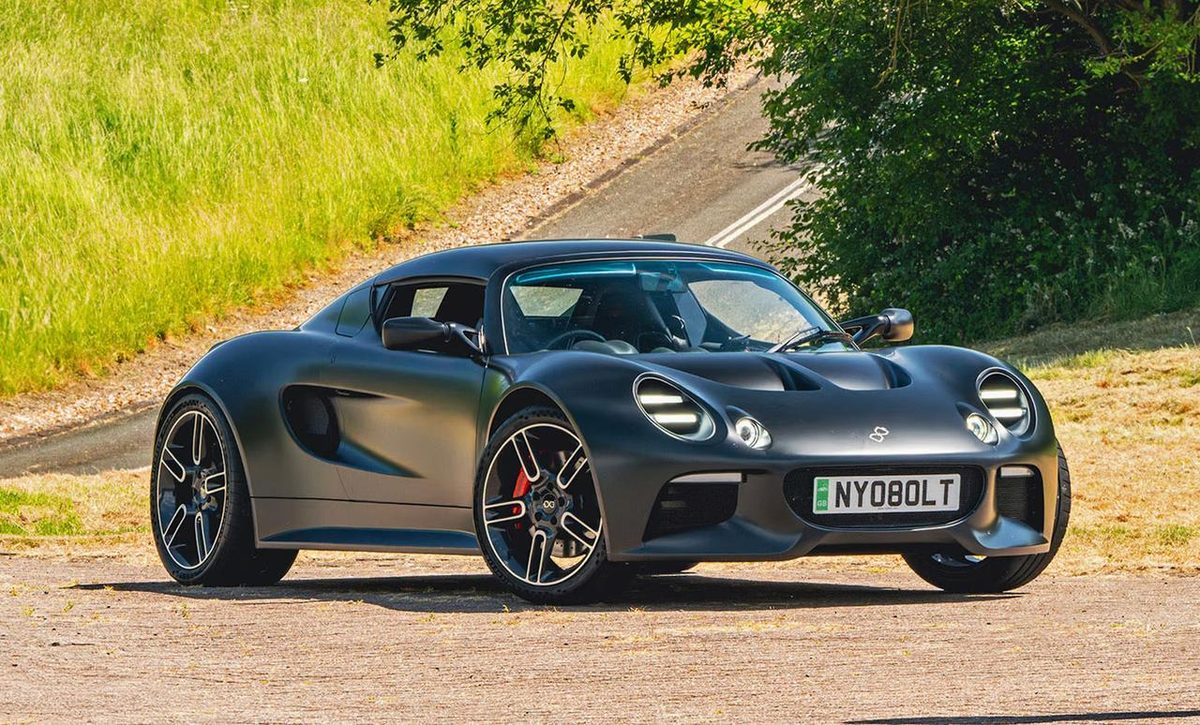
A year ago, a simple but bold promise was made: electric cars that can be charged in less than six minutes. Now this promise is more than just a slideshow. This is a working prototype. British startup Nyobolt has gone beyond buzzwords and delivered real design, proving that with enough grit and precise chemistry, it is possible to bridge the gap between concept and reality.
result? The vehicle can restore a range of 190 kilometers in just four minutes.
This is not magic. It is active heat management and new materials. The car can be connected to a standard 350 kW, 800 V DC fast charger. But there’s a problem. To achieve this number, the charger must provide a constant 500 amps for the first four minutes. Supporting this level of power consumption requires state-of-the-art infrastructure. Charging the battery from 10% to 80% takes just 4 minutes and 37 seconds.
The chemistry behind speed
How do you push lithium-ion batteries beyond their traditional limits without melting them? Nyobolt didn’t just tweak the formula. They changed the structure of the cells.
The core of innovation is in the anode. They used a composite of tungsten oxide and niobium instead of the usual graphite. This material enables faster ion movement. But speed creates heat. Heat shortens battery life. Therefore, Nyobolt also has to solve the cooling problem.
They installed a radiator and a special cooling system using a mixture of glycol and water. The compressor keeps the battery at a constant temperature of 60°C. Maintaining this temperature is important to keep chemical reactions efficient and stable during fast charging.
“The battery can support approximately 4,400 charging cycles while maintaining 80% of its capacity.”
Lighter than mass
Most electric vehicle manufacturers are currently competing for larger batteries. They packed more batteries on the floor and achieved a range of more than 500 kilometers. Nyobolt looked at the strategy and said no.
Their approaches are very different. They created a car that weighed only 1250 kilograms. The battery capacity is limited to 35 kWh and the starting range is 250 kilometers. On paper, the limits seem high. But look at the combustion engine sports car that inspired this design. Its range is also rarely exceptional.
Lighter cars and smaller batteries reduce the energy needed to move mass. Very fast charging compensates for the smaller battery. You don’t need to refuel for a weekend trip. All you have to do is fill up quickly between driving segments.
Durable and does not wear out
The main concern with super fast charging is battery degradation. High currents often burn the cells. Nyobolt claims the company’s technology avoids this pitfall.
Tests have shown that the battery lasts more than 4400 cycles. It can travel up to 250 kilometers on a single charge, which corresponds to a driving life of more than 965,600 kilometers. Even after thousands of cycles, the battery retains 80% of its original capacity. It’s not just a sprint. This is a sprint marathon.
Design line and future production
If this silhouette looks familiar, that’s because it is. The body was designed by Julian Thomson, the man responsible for the original Lotus Elise. Its proportions reflect the philosophy of a light mid-engine. It is not a mass market device. This is a driver’s car.
Nyobolt does not expect mass production of this concept. The goal here is another. The real value is in the battery technology itself. Other manufacturers are also taking a wait-and-see approach. If this tungsten-niobium anode technology scales up, it can be licensed to large companies.
Production of these battery packs is expected to begin in early 2024. Larger applications such as luxury cars, trucks and buses increase energy density. But these larger batteries require megawatt-scale charging infrastructure to maintain the same speeds. The infrastructure must keep up with the development of chemistry.
For now, the Nyobolt EV concept is just a proof of concept. This calls into question the assumption that fast charging requires its own battery charger. Works on existing high-end networks. This proves that weight, range and speed do not have to be mutually exclusive. The prototype is ready. The question is whether the network and the riders are ready.


