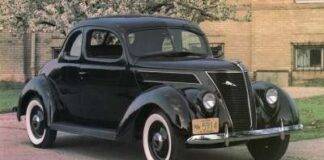
This is the American dream, or at least that’s what you think of it in your head. You spend months, maybe even years, tuning a brand new hot rod in a cramped New York garage. The paint is shiny. The sound of the engine is like thunder. We hope to have it on display at the big summer auto show in Daytona Beach. You’ve documented your build online, and your forum friends are already asking for photos.
The logistics seemed easy. You borrowed your friend’s flatbed trailer. Load the car onto the trailer. You are the one who binds it. Head south on Interstate 95, blast some Van Halen, and get ready for the weekend of your life.
Still, flow is flow. You are from New York. You’ve covered it before. Construction zone in front of mandatory lane closures. the department of transportation compressed the road into two lanes. Small, nimble cars like Honda Civics can see darting between big trucks and weave through slow-moving crowds.
I can see the space. It’s tight. It might not have been good to press too hard, but you hit the gas.
Then came the shock. The platform shook violently. There was a loud crash of metal from behind. Cursing, you looked in your rearview mirror, expecting to see a reckless driver hit you and scrape the bumper of your Camaro.
Nothing was visible in the mirror. Only empty asphalt and a row of cars honking their horns.
Your stomach drops. The trailer is empty. Your car is missing.
It might sound like a horror story, but it’s true. Flatbed trailers are designed to carry a variety of loads, including free rolling vehicles. If the car is not properly secured, gravity and inertia don’t care about your restoration efforts. In the next section, we’ll explain how to tow safely and what accessories can help you escape this nightmare.
Purpose of the flatbed trailer
A flatbed trailer is basically a flat chassis on wheels. It lacks the enclosed sides of a box trailer or the low-profile ramps of an open utility trailer. This open structure makes it easier to load vehicles that can drive on and off, as well as goods that need to be lifted from above.
The goal is simple. It is the transfer of load from point A to point B without losing load. However, the car has no internal structure to attach it to the trailer bed, so it is completely dependent on external constraints.
Why Low Boy Trailers Dominate Heavy Hauling
Flatbeds aren’t just for general cargo. You’ll find them moving massive commercial goods like industrial piping, lumber stacks, and heavy machinery. But when the load is truly monstrous, you switch to a low boy trailer. These flatbed variants sit aggressively close to the ground. That low center of gravity is why construction sites and strip mines rely on them for hauling large tractors and earth-moving equipment. The stability difference is night and day compared to a standard deck.
Towing anything heavy on a flatbed is a different beast entirely. The load is often top-heavy. If you’re hauling vehicles, you add the complication of rolling mass. The physics are unforgiving. You need to take extra precautions with how you load your cargo, or you risk disaster.
Essential Tie-Down Accessories for Flatbeds
You cannot hit the road until that load is fastened securely. Skip this step, and you’ll lose your cargo. It’s that simple. Here are the accessories that keep things in place:
- Nylon strap : Reinforced nylon webbing used to secure loads. Available in varying widths and lengths to match your needs.
- Basket strap : A web-like nylon strap that drapes over wheels. It hooks directly to the trailer’s eyelets for a solid hold.
- V-Straps : Nylon straps with steel hooks on both ends. These latch onto parts underneath a vehicle’s undercarriage to prevent shifting.
- Ratchet : A steel ratcheting mechanism. It works with nylon straps to tighten the load down with serious tension.
If nylon isn’t an option, chains work too. The same accessories listed above are available in chain form for heavier or sharper-edged loads.
The Proper Procedure for Loading a Car
Let’s say you’re prepping a car for a show. First, position the vehicle evenly on the trailer, centered over the axles. Pull the car as far forward as possible without touching the trailer’s front wall. Set the parking brake. If it’s a manual transmission, put it in gear. Place chock blocks in front of and behind at least one wheel. More chocks are better. Stability is key.
Now, secure the load. Start with basket straps. Place one over each tire. If you only have one, use it on the front. Position the ratchets in front of the front tires and behind the rear tires. Once the tires are pinned, move underneath the vehicle. Use a V-strap on the front and rear. If your car has tow hooks, use them. Most vehicles have tie-down eyelets near the bumpers.
Do not hook V-straps to suspension parts. You don’t want to tear up your control arms or bushings. Run the straps in opposite directions so you can pull the car both ways. Ratchet everything down tight. Check your lights, hitch, and safety chains. Then you’re ready to roll.
Driving Heavy Loads Safely
Driving a car on a flatbed trailer requires discipline. Keep your speed reasonable. Avoid quick maneuvers. Sudden moves can destabilize a top-heavy load. Give yourself extra room to brake. Drive smoothly through curves and turns. Take it easy. Add time to your trip if necessary. Rushing leads to accidents.
For more details on towing techniques and selecting the right accessories, check out the related articles below.
More Resources
Related Articles
- How Boat Towing Safety Works
- How to Brake While Towing
- How to Pass While Towing
- How to Shift While Towing
- How to Turn While Towing
- Trailer Towing Quiz
External Links
- The U.S. National Transportation Safety Board
- The U.S. Department of Transportation (DOT)
Sources
- Eascapees.com. “Towing a Trailer; Being Equipped for Safety.” (Oct. 12, 2008)http://www.escapees.com/edocs/Towing.pdf
- Towex.com. “Towing Accessories.” (Oct. 13, 2008)http://towx.com/category_s/78.htm