


The fuel burns in the engine. That is the literal definition. In an average car, gasoline ignites in the cylinder head. This explosion releases energy. Energy pushes pistons. The pistons turn the crankshaft. The crankshaft turns the wheels. It is a closed loop of chemical to kinetic conversion.
This internal approach is lean. It requires less space than external combustion systems such as steam engines. Steam engines burn fuel outside the cylinder to heat water. The resulting pressure does the work. Internal combustion is tighter. It is more efficient for the weight it carries.
The race for efficiency: gasoline vs. diesel
Gasoline engines weren’t always the gold standard. In 1876, the first gasoline engine entered the market. It was inefficient. It consumed fuel like a steam engine. Thermal efficiency was poor.
Rudolph Diesel saw waste. He wanted a better way. He started development in 1878. In 1892, the diesel engine was born. Core advantage? Better thermal efficiency. A diesel compresses air until it is hot enough to ignite the fuel without a spark plug. It’s a different path to the same result.
But the early diesel engines were loud. They spew black smoke. They shook apart at idle. They were loud. Manufacturers first put them in trucks and industrial machinery. The cars stayed away. It took decades to curb noise and emissions. Today, modern diesels are cleaner. Quieter. Still efficient, but much less polluting than their soot-covered ancestors.
The essential difference between gasoline and diesel is not only the fuel. This is how this fuel becomes energy. Gasoline needs a spark. Diesel is based on heat of compression. Two different burning strategies. Common goal: to moving mass forward.
Rotating hot air: gas turbines
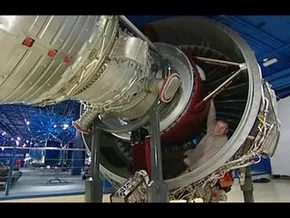
Not all internal combustion engines have pistons. Turbines use rotating blades instead. Wind turbines use nature. Steam turbines use boilers. Gas turbines use fire.
A modern gas turbine burns fuel to produce pressurized gas. Propane can be used. Natural gas. Kerosene. Selection depends on availability and application.
The process is straightforward. The fuel burns. The heat rises. Air expands. The expanding air flows through the turbine blades at high speed. The blades rotate. Spinning creates power. No pistons. No crankshafts. Only constant rotational force.
This is why jet engines are so powerful. They bypass the mechanical complexity of piston engines. You trade complexity for simplicity of movement.
Under the hood: core components
If you look at a traditional piston engine, you’ll notice that certain parts do the heavy lifting. The cylinder block is the skeleton. It has cylinders.
The piston moves up and down in each cylinder. This is the primary moving part. It compresses the fuel-air mixture. It receives the blast.
The crankshaft is below the pistons. It converts the linear motion of the pistons into rotation. Without a crankshaft, the pistons would simply slam into place. No wheel movement.
These components work in close synchronization. Timing is everything. A single cylinder misfire affects the entire system.
Why it matters
Smoking changed everything. It shrunk the engines. It improved fuel economy. It made personal transportation accessible.
Steam engines needed water boilers. They were big. Slow start. The internal combustion engine ignited immediately. Ready to go.
Diesel engines provided the torque. Efficiency. Durability. They replaced steam in many industrial applications.
Gas turbines offer a power-to-weight ratio that pistons cannot match. They power jets. They power some race cars. They produce electricity for generators.
The technology is not new. It has evolved. From the soot-stained diesel engines of the 1890s to today’s precision fuel injection systems. The basic principle remains the same. Burn fuel. Capture energy. Move the car.
What happens when the fuel is changed? Electric vehicles skip combustion entirely. But for now, the combustion engine still runs the world. It is efficient. It is compact. It’s everywhere.
Until the next innovation takes over


