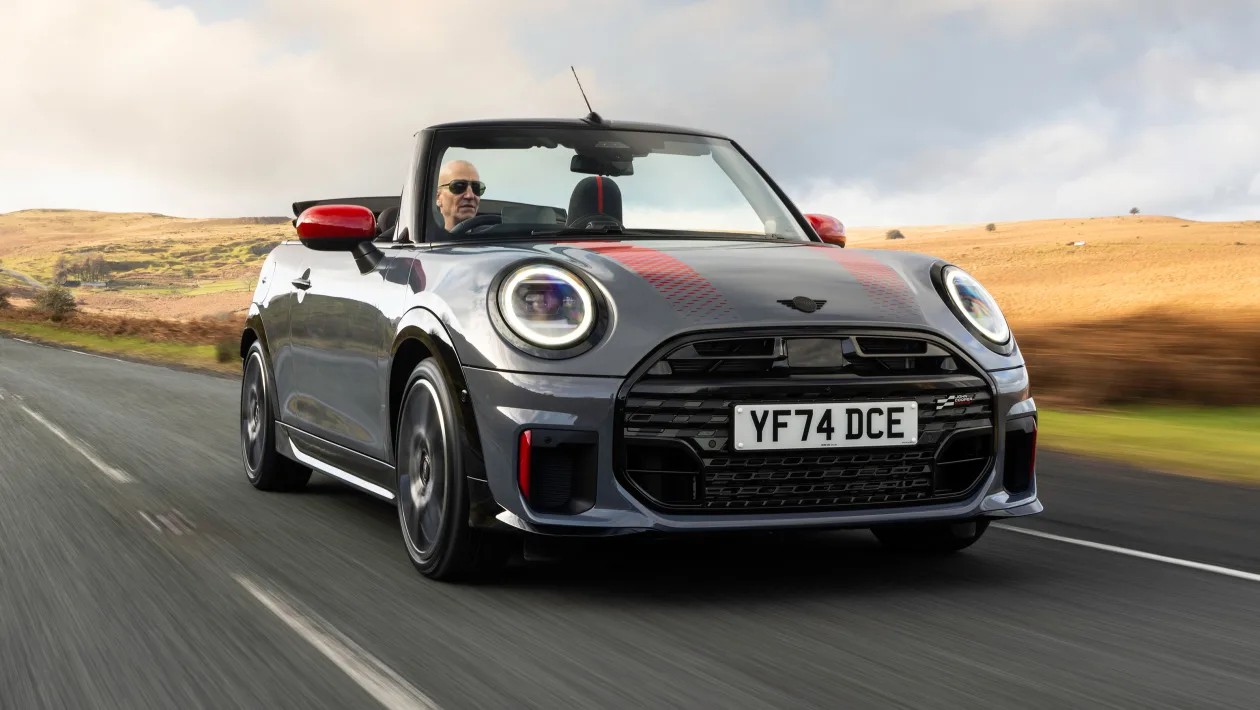
It smiles. Almost instantly. That is the first thing you notice. The MINI Cooper Convertible remembers its lineage. It pulls the old tricks out of the hat—grinning faces on the dashboard, playful cues—but underneath? It is something new. Different tuning for the suspension. New steering weights. A fresh take on an old formula.
We liked it. Maybe we liked it too much.
Under the Hood: All Gas, No Gears
Here is the deal. Forget the little three-cylinder turbo. The Convertible demands the 2.0-liter four. It sounds better. A proper burble. A civilized purr when you want to be quiet, a shout when you want attention. Electric version coming? Maybe. We are waiting. But for now? Petrol rules the roost.
The power numbers are clean. No fluff.
- Cooper C: 161 bhp. 8.2 seconds to 62 mph.
- Cooper S: 201 bhp. 6.9 seconds to 62 mph.
- JCW: 228 bhp. 6.4 seconds to 62 mph.
The S version felt like the sweet spot. Plush enough to drive daily, sharp enough to wake up the neighbors. The JCW? It is zesty. Loud. But you pay more for a few extra ponies and the same general feeling. Why rush the money away?
The gearbox is automatic. Always. No manual stick available. Ever.
It is a seven-speed dual-clutch. Usually fine. Then you stomp it. Hesitation. A half-second delay where the car wonders what you want. Switch to Go-Kart mode? Response sharpens. The car wakes up. It wants to go now.
The exhaust note is a key selling point. It adds soul to a metal box that otherwise lacks it.
The Ride: Brutally Honest
This is the catch. The ride is hard. Not just “firm sporty.” Hard. Like driving over coins glued to the road. Hit a pothole? You feel it. Really feel it. The car jiggles on rough patches. Your spine remembers every millimeter of uneven tarmac.
Yet… it is stable. The handling? Sharp. The steering is heavy but connected. You feel the road through your fingers, even if you feel it in your lower back. Cornering is a joy. The body stays flat. Grip is there. It drives like a kart, minus the cartilage-shredding bumps.
In the city? Perfect size. Park anywhere. Visibility with the top down is great. You see everything. Except the cracks in the road you are about to hit.
Highways? Noisy if the roof is up, quiet enough if down. Wind noise is managed surprisingly well for a fabric roof. But the firmness does not let up at 70 mph. Large bumps get swallowed up by speed, but the tension remains.
Costs: The Sting in the Tail
It is pricier than the hatch. Uses more fuel. Not by much. But enough to notice at the pump.
- Cooper C: Claims 43.5 mpg.
- Cooper S: Claims 42.8 mpg.
- JCW: Claims 40.9 mpg.
The hardtop hatch gets nearly 48 mpg for the same engine. That folding roof has weight. That weight costs cash in gasoline.
Insurance is a beast. Groups 23 to 29. Compare that to the Mazda MX-5? The MINI looks cheap. Compare to a Toyota Corolla? Not so much. Company car drivers? Hold on. No electric model yet means no tax breaks. Wait for the EV if your employer cares about BIK tax. Otherwise, pay the standard VED. And watch out for the £40k luxury tax threshold on fully loaded trims.
Depreciation is actually decent. Hold 47-52% of value after three years. The Mazda MX-5 loses nearly 60%? MINI keeps its value surprisingly well. People still want this car. Even when it rains.
Inside: Digital Detox, Physical Pain?
The cabin is fancy. Vegan leatherette that feels nice. Recycled materials you can’t spot. Build quality is high. Touches metal, touches soft plastic, touches screen.
That screen.
The 9.4-inch OLED circle dominates the dash. Bright. Clear. Visible in sunlight even with no roof overhead. Responsive. But… where are the buttons?
There are almost none. Climate control? On the screen. Radio? On the screen. Drive modes? A few toggles left. Start the car? A button. Everything else is touch.
Minimizing switchgear is trendy. Using your phone to drive is not.
One nice touch: An “Always Open Timer.” It tells you how many minutes you spent with the roof down. Poetic? Or taunting? In Britain, it is taunting. We drive with the top down for maybe ten weeks a year. The timer will remind us.
Rear seats? Exist. Isofix points included. They are not for adults. Legs will tangle. Headroom is okay, space is tight. It is louder back there too. Slender windows offer little insulation. Think of it as two-seater-plus. The trunk shrinks from 215 liters to 160 when the roof folds. But drop the rear seats? 665 liters. Useful if you are carrying groceries. Not golf bags.
Safety: Good Enough, Not Rated
Euro NCAP? The Convertible hasn’t been tested yet. The hardtop got five stars in 2025 though. Same structure. Roll-over protection hoops are behind the seats. They deploy instantly if you tip over. Smart.
Standard kit includes autonomous braking, lane-keep assist, and cruise control. Level 3 pack adds adaptive cruise and parking aid.
Reliability? Driver Power 2026 ranks the MINI 32nd out of 50 for owners. They like the driving. They hate the ride. Manufacturer score? 22nd of 30. Poor value perception hurts.
Is it a good car? It makes you smile. That has value.
The road fights back. You feel it in your teeth. Your joints might protest by Sunday. But when the sun hits your face and that four-cylinder sings… do you care?
Maybe.