


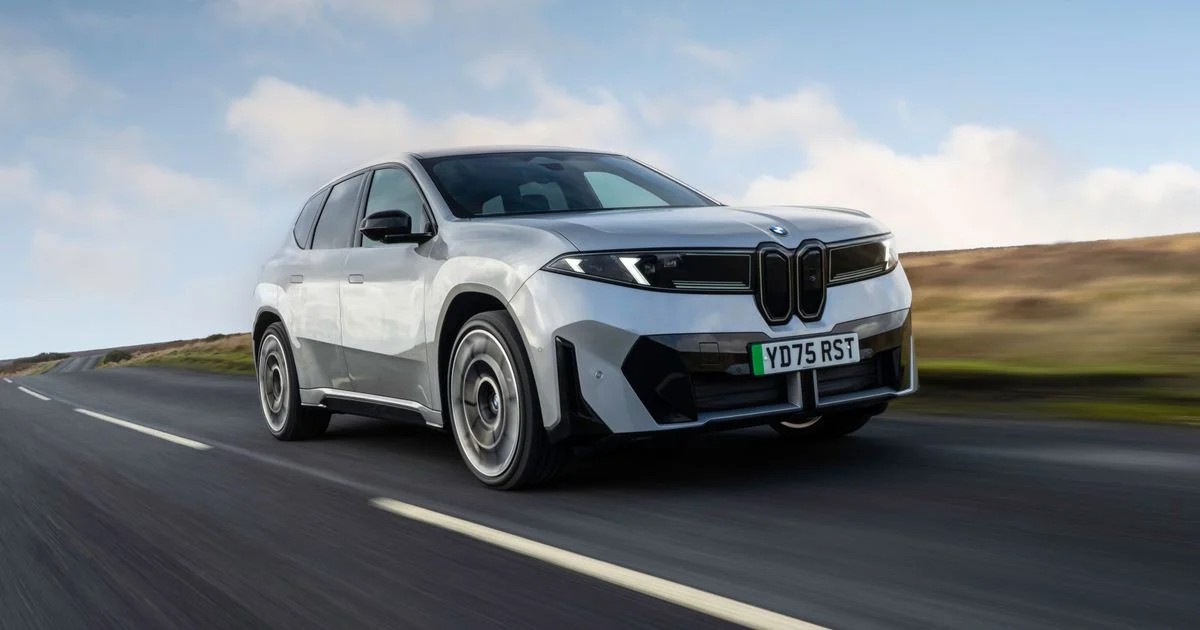
It doesn’t happen often. An automaker launches something genuinely new. The second-generation BMW iX3 fits that bill.
Look at the specs. It’s built on BMW’s dedicated Neue Klasse EV platform. New architecture. New battery chemistry. A design language so distinct from the old model you’d swear it wore a different name. This isn’t a facelift. It’s a rebirth.
Unlike the Chinese-built predecessor, this one offers all-wheel drive from the get-go. We tested the BMW iX3 50 xDrive here in Australia. It debuts with the more powerful twin-motor setup. The rear-wheel-drive 40 variant lands in Q4 2026.
Customer deliveries have already started. But should rivals be worried? Yes. The iX3 isn’t just another EV. It’s a statement.
Design language: Slimmer grilles and slick aerodynamics
You won’t confuse the iX3 for anything else. Not even its gas-powered cousin, the X3, sitting next to it in the showroom.
The transition from concept to production was surprisingly clean. Few compromises. If you were skeptical about the styling, go see one. I urge it. The slim double-kidney grille nods to the original Neue Klasse models that saved BMW decades ago. The flanks are smooth. The haunches muscular.
It doesn’t look over-styled. Unlike the iX, which some call melted, the iX3 looks athletic. Sharp.
Aerodynamics play a huge role here. A closed, smooth underbody. Active shutters. Air curtains. The drag coefficient? A stellar 0.24 Cd. BMW claims that’s even better than the old i8.
Flush door handles pulsate to shake off ice. Cool feature. Useless in Sydney. But it signals where the tech is heading.
Every iX3 in Australia comes with either the M Sport pack or the M Sport Pro. Australian buyers love these packages. I prefer them too. The base model probably won’t be missed.
Price points and the competition landscape
Price is the hook. The BMW iX3 50 xGuide starts at $109,900 drive-away (before on-roads). The upcoming RWD 40 starts at $89,900.
Why does the 40 matter? It has a smaller battery. It slips under the Luxury Car Tax threshold. That means Fringe Benefits Tax exemption for employees. That’s a huge selling point for corporate fleets.
The premium EV market is brutal. Look at the rivals for the 50 xDrive:
- Mercedes-Benz GLC 400 e: ~$110k–$112k. Direct AWD competitor.
- Cadillac Lyriq: ~$90k. Rear-wheel drive only in many markets, but priced aggressively.
- Genesis Electrified GV70: ~$132k. More expensive.
- Lexus RZ 500e: ~$84k. Rear-wheel drive. Less power.
- Porsche Macan 4: ~$137k. The benchmark for handling, but significantly pricier.
- Audi Q6 e-tron: No AWD version under $150k available locally yet.
The iX3 sits in a sweet spot. Range leaders are usually more expensive. Cheaper rivals often lack AWD or have less power.
Interior tech: Panoramic Vision replaces traditional screens
The interior is the biggest shock. It’s the most dramatic departure from BMW interiors since iDrive launched in 2001.
Even then, the rotary dial remained. Here? It’s gone. Physical buttons? Mostly vanished.
The headline act is the Panoramic Vision display. It’s a 43.3-inch strip running pillar to pillar across the base of the windshield. Not one screen. Three projection panels. Customizable. You see speed, time, trip data right in your line of sight.
Australian models include a head-up display. I found myself using that instead of the Panoramic screen. Good. Less distraction.
There’s a catch. No traditional digital cluster behind the wheel means no map view there. You must look at the central 17.9-inch touchscreen for navigation maps. I’d miss that feature. But turn-by-turn directions still appear in the head-up display.
The central touchscreen runs BMW Operating System X. The interface is distinct. Not just a tablet stuck to the dash. An anchored shortcut bar handles climate controls. No physical buttons on the center stack.
Volume adjusted via a slider on the center console. A handful of buttons remain for demisters, park brake, hazards. Voice assistant helps when you’re driving.
Surround-view camera quality is sharp. The reversing camera has a distorted fish-eye look. Like some Porsches. Frustrating.
Storage? Upright wireless charger. Two 45W USB-C ports. Easy to reach. No burying hands under consoles. The shelf above is small. Small purses only.
Comfort and material quality
Steering wheels come in three designs. Front seats are 10-way M Sport or 8way Multifunction. Both offer memory, massage, heating. M Sport seats add electric headrests and manual thigh support. Lateral grip is excellent on winding roads.
No ventilated seats. Not in any market. BMW offers them in the gas X3. Hope they add them mid-life.
Colorways include Black, Digital White, Agave Green, and Castanea. Materials range from Veganza leatherette to Merino leather. PerformTex suede highlights available. Fabric trim runs across the dash. It adds a modern, funky touch. Backlighting helps.
Gloss black trim is almost gone. Thank goodness. Lower dash and door pockets use hard plastic. Door pockets lack rubber lining. Items clatter. Otherwise, soft touches abound.
How does the fabric age? Who knows. White steering wheel will need careful cleaning.
ShyTech controls appear only when functions are active. Assisted Parking? It shows. Assisted Driving on open road? It appears. Adaptive interface.
The M Sport Pro wheel looks traditional. Four spokes. Two vertical. Switchgear is easy, though the right-hand “Enter” button is narrow. Sometimes needs a second press.
Rear seat space and practicality
Step into the back. Bench seat. Plenty of room. Flat floor. Technically, the iX3 is narrower than the gas X3. You don’t notice it.
Air vents. USB-C ports. Fold-down armrest with cupholders. BMW calls them Travel & Comfort connectors. Physical mounts for tablets or hangers. Useful.
Three ISOFIX points. Three top-tethers. Child seats install easily.
Missing? Map pockets. Grab handles. Some scratchy plastic on front seatbacks ruins the vibe slightly.
Panoramic glass roof blocks 100% UV-A and UV-B. Tinting keeps the cabin cool in the sun. We tested on a cloudy day. Summer testing needed to verify Aussie heat protection.
No electrochromatic opacity. No button to darken the glass. No sunblind included, but BMW sells one as an accessory.
Boot space? 520 liters. More than the old iX3. Less than the Audi Q6 e-tron or Porsche Macan. No spare tire. Expect it with an EV.
Fridge under the bonnet? 58 liters. Only the second BMW to offer this since the i3. Perfect for charging cables.
Range, charging, and performance specs
The BMW iX3 50 xDistance is a range beast. 805 km WLTP. It beats the competition on paper.
Sixth-generation eDrive tech. Nickel Manganese Cobalt chemistry. Cylindrical cells. 113.4 kWh gross capacity. 20% better energy density than previous Gen5 prismatic cells.
Range drops 5% per inch of wheel size. Standard 20-inch wheels get the max range. 21 or 22 inches hurt range and comfort. Aero wheels add 5–6 km.
We drove ~200 km during launch. Rural high-speed roads. Consumption? 18.3 kWh/100km. Solid.
Charging flap opens automatically. Intelligent Charging Flap. Opens if you navigate to a charger. Or if it’s saved in memory. AI learns to open it at other opportune moments. Closes if no plug is inserted.
Driving dynamics: A rear-biased EV that handles like a sports car
BMW calls it the “Heart of Joy.” One of four superbrains. Controls drivetrain, brakes, recuperation, steering. Processes info 10x faster than conventional units.
But how does it feel?
We drove in New South Wales’ Northern Rivers. Scenery. Winding roads. Potholes.
A luxury SUV should ride comfortably. The iX3 is heavy. No air suspension. No adaptive dampers standard. 20-inch wheels standard.
Ride quality on the 21-inch wheel test car? Surprisingly good. Firm, like a BMW should be. No hard edge over rough roads.
Weight distribution: 49/51 front/rear. Rear-biased drive. Power goes to the rear wheels by default. Front motor engages only when needed.
Cornering? Plunging. Steering feedback is excellent. Road feel is present. Rewarding on back roads. Steering weight is spot-on in default mode.
Heavy? Yes. Cumbersome? Never. One of the most enjoyable EVs in this segment. Porsche should take note.
Body roll is minimal. Tied down on undulating roads. Performance is sharp. 4.9 seconds to 100 km/h.
The iX3 doesn’t just compete. It leads. In design. In range. In driving feel.
What happens when the RWD 40 arrives? Will the 50 xDrive lose its crown? Or is the dual-motor setup essential for true performance?
We’ll find out later this year. Until then, the iX3 stands alone.


